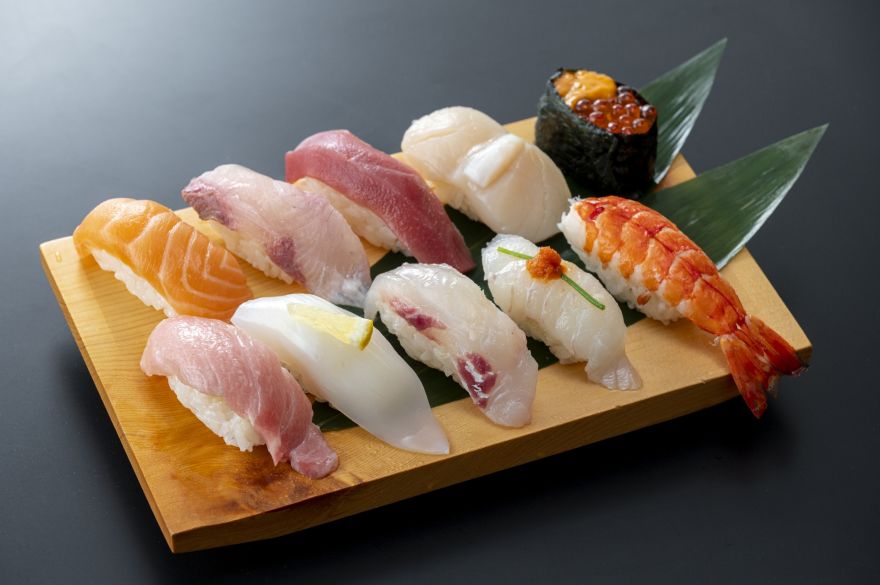
Not sure what to order when a sushi menu lists kohada, engawa, hamachi, or uni? The easiest way to understand Japanese sushi is to separate two things: the topping or filling (neta) and the style of sushi, such as nigiri, gunkan, or maki.
Tuna, salmon, and shrimp are familiar choices, but Japanese sushi counters offer far more: delicate white fish, richly flavored silver-skinned fish, crunchy clams, sweet roe, cooked eel, egg, and vegetables. This guide explains their Japanese and English names, flavors, textures, and the differences that matter when you order.
Sushi Toppings List: Japanese Names, English Names, and Flavors
A sushi topping is called neta in Japanese. Most menus group toppings by culinary tradition, appearance, or ingredient, rather than by strict biological classification. Availability varies by restaurant, region, and season.
| Category | Japanese menu name | English name or explanation | Typical taste and texture |
|---|---|---|---|
| Lean tuna | Akami | Lean tuna | Meaty, savory, relatively firm |
| Fatty tuna | Chutoro | Medium-fatty tuna | Rich but balanced |
| Fatty tuna | Otoro | Extra-fatty tuna | Very rich, buttery, soft |
| Tuna | Bin-toro | Fatty albacore tuna | Gentle flavor, soft texture |
| Tuna preparation | Zuke maguro | Soy-marinated tuna | Seasoned, savory |
| Tuna preparation | Negitoro | Chopped tuna with green onion | Soft, rich; often served as gunkan or a roll |
| Red-fleshed fish | Katsuo | Bonito or skipjack tuna | Distinctive, robust flavor |
| White fish | Tai / Madai | Red sea bream | Delicate sweetness, gentle firmness |
| White fish | Hirame | Flounder or flatfish | Subtle, clean, firm |
| White fish | Suzuki | Japanese sea bass | Light and refreshing |
| White fish | Isaki | Chicken grunt | Mild, sometimes pleasantly rich |
| White fish | Kisu / Shirogisu | Japanese whiting | Delicate, lightly sweet |
| Silver-skinned fish | Aji | Japanese horse mackerel | Savory, fresh-tasting |
| Silver-skinned fish | Saba / Shime saba | Mackerel / vinegar-cured mackerel | Rich, often tangy |
| Silver-skinned fish | Kohada | Gizzard shad | Concentrated, gently tangy when cured |
| Silver-skinned fish | Iwashi | Sardine | Full-flavored, sometimes oily |
| Silver-skinned fish | Sanma | Pacific saury | Rich, distinctive |
| Rich fish | Salmon | Salmon | Soft, fatty, mild |
| Rich fish | Buri / Hamachi | Japanese amberjack (often called yellowtail) | Rich, firm; naming varies |
| Rich fish | Kanpachi | Greater amberjack | Firm, clean, moderately rich |
| Specialty fish | Nodoguro | Blackthroat seaperch | Rich, silky white flesh |
| Specialty fish | Kinmedai | Splendid alfonsino | Sweet, rich; often skin-seared |
| Specialty fish | Shima aji | Striped jack | Refined richness and firm bite |
| Specialty fish | Kue | Longtooth grouper | Full-bodied white fish |
| Fish cut | Engawa | Fin muscle of a flatfish | Chewy or crunchy, often rich |
| Shrimp | Amaebi | Sweet shrimp | Soft, distinctly sweet |
| Shrimp | Botan ebi | Botan shrimp | Plump, sweet, tender |
| Cooked shrimp | Mushi ebi | Steamed shrimp | Springy, sweet |
| Crab | Zuwai gani | Snow crab | Sweet, delicate flakes |
| Shellfish | Hotate | Scallop | Sweet, tender |
| Shellfish | Akagai | Ark shell clam | Firm, briny |
| Shellfish | Hokkigai | Surf clam | Springy, lightly sweet |
| Shellfish | Tsubugai | Whelk (sea snail) | Crunchy, pleasantly chewy |
| Shellfish | Awabi | Abalone | Dense, firm; softer when simmered |
| Shellfish | Aoyagi | Aoyagi clam | Distinct shellfish flavor |
| Shellfish | Mirugai | Geoduck-type clam; species varies | Crisp, sweet |
| Shellfish | Torigai | Cockle-type clam | Soft to springy |
| Squid | Yariika / Aoriika / Kouika | Spear squid / bigfin reef squid / cuttlefish | Sweet, from silky to chewy |
| Octopus | Madako | Common octopus | Springy, savory |
| Sea urchin | Uni | Sea urchin gonads | Creamy, rich, ocean-like |
| Roe | Ikura | Salmon or trout roe | Salty, juicy, popping texture |
| Roe | Tobiko | Flying fish roe | Tiny, crunchy beads |
| Roe | Kazunoko | Herring roe | Firm, fine-grained crunch |
| Cooked seafood | Anago | Saltwater conger eel | Soft, mildly sweet, often glazed |
| Cooked seafood | Unagi | Freshwater eel | Rich, tender, usually glazed |
| Egg | Tamago | Japanese omelet | Sweet or savory, soft |
| Vegetables | Kappa maki / Kanpyo maki | Cucumber roll / seasoned gourd roll | Crisp / sweet-savory |
| Soybeans | Natto maki | Fermented soybean roll | Sticky, savory |
These English names are practical menu translations, not guarantees of a particular species. The same Japanese market name can cover more than one species, especially with some clams, flatfish, and yellowtail-type fish.
What Do Akami, Shiromi, and Hikarimono Mean?
Akami: Red-fleshed fish and lean tuna
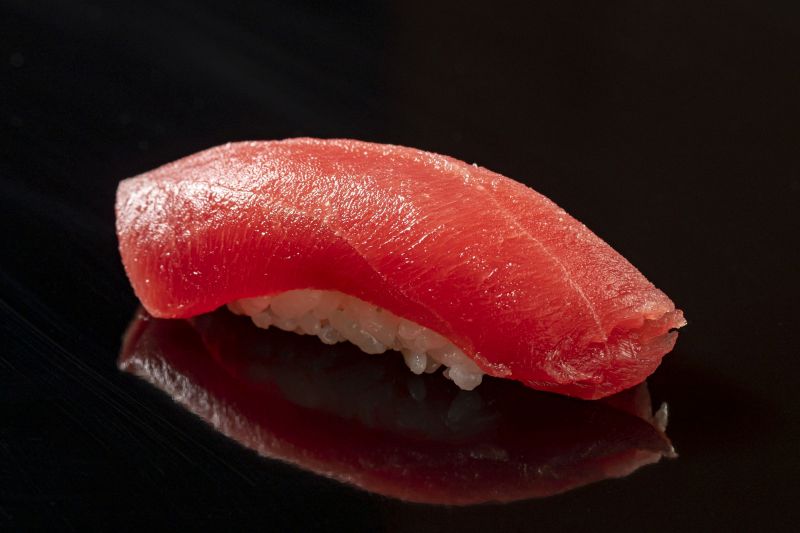
Akami literally refers to red flesh. At a sushi counter, it often means the lean portion of tuna rather than an entire category of fish. Tuna akami has a pronounced savory flavor without the heavy richness of fatty belly cuts. Katsuo (bonito or skipjack tuna) is another familiar red-fleshed choice.
Shiromi: White-fleshed fish
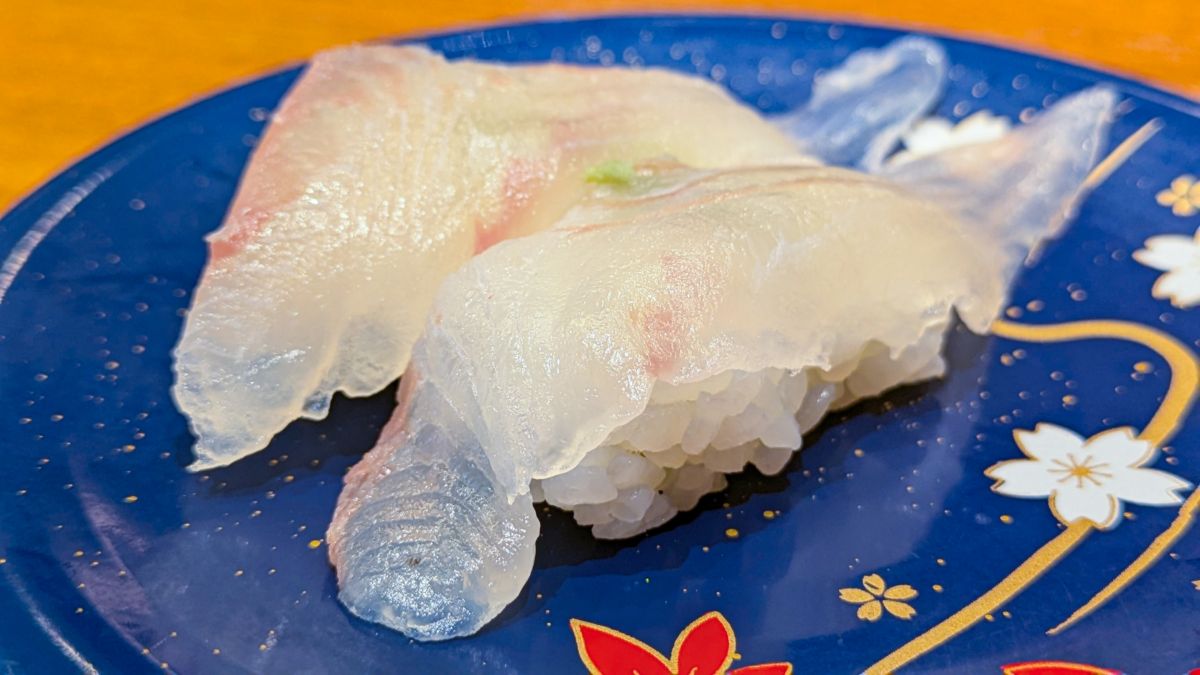
Shiromi includes tai (sea bream), hirame (flounder), suzuki (sea bass), and similar fish. They tend to have delicate flavors, though individual fish differ in sweetness, firmness, and fat. Some restaurants season them with salt, citrus, or kombu-jime—a preparation that places fish against kelp to draw out moisture and add umami.
Hikarimono: Silver-skinned fish
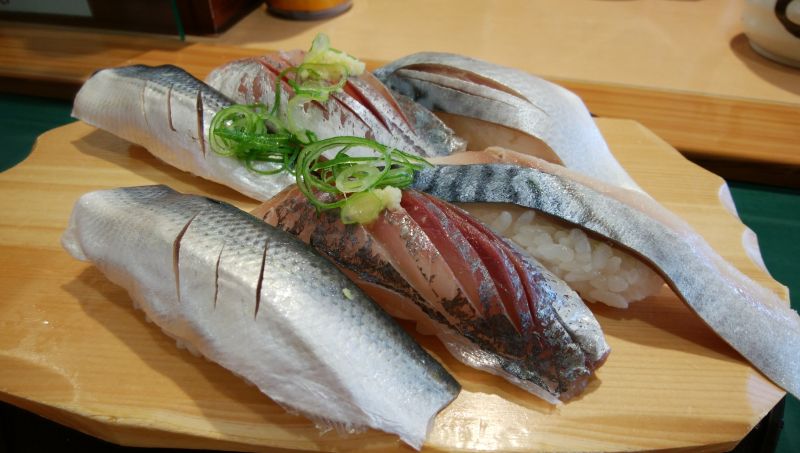
Hikarimono means shiny or silver-skinned fish, not simply any fish with oily flesh. Common examples include aji, saba, kohada, iwashi, and sanma. These fish can have a bolder flavor than white fish; ginger, green onion, salt, or vinegar curing is often used to complement them.
The categories are culinary conventions. For example, salmon looks orange but is not automatically placed in the traditional sushi category of akami. Restaurants often list it separately. Likewise, engawa names a cut of fish, not a species.
Tuna Sushi: Akami vs. Chutoro vs. Otoro
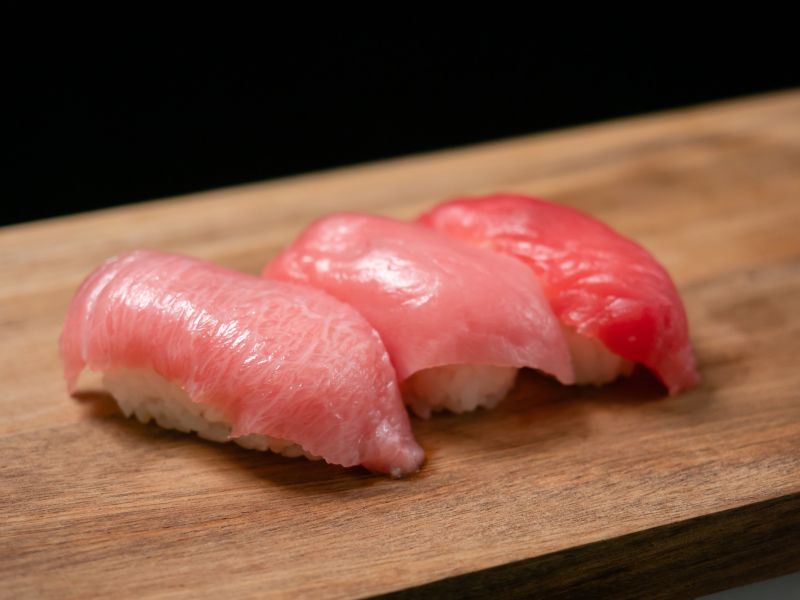
Three tuna names appear repeatedly on Japanese sushi menus. They usually describe the amount of fat in the cut, not three different fish.
- Akami: Lean, firm, and intensely savory. A good choice if you want a clear tuna flavor.
- Chutoro: Medium-fatty tuna with a balance of meaty flavor and buttery texture.
- Otoro: The richest fatty cut, prized for its exceptionally soft, melting mouthfeel.
Bluefin tuna, including the variety known in Japan as honmaguro, is especially associated with prized toro cuts. Other tuna used for sushi include southern bluefin, bigeye, yellowfin, and albacore. A menu’s bin-toro usually refers to a fatty cut of albacore.
Two familiar variations are zuke maguro, tuna seasoned or marinated in a soy-based mixture, and negitoro, finely chopped tuna often paired with green onion and served in rolls or gunkan. Fatty tuna is not necessarily “better” than lean tuna; it depends on whether you prefer richness or a stronger fish flavor.
White Fish Sushi: Tai, Hirame, and Other Delicate Choices
Tai and hirame
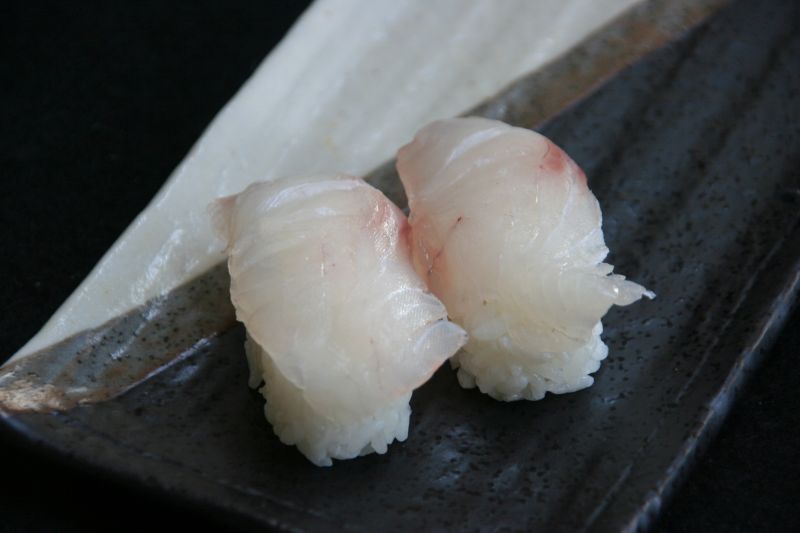
Madai, Japanese red sea bream, has mild sweetness and a satisfying, gently firm bite. Hirame, a type of flounder, is subtler and often has a clean, tight texture. Trying these two side by side is a useful introduction to white fish sushi.
Suzuki, isaki, and kisu
Suzuki (Japanese sea bass) is a light, refreshing option. Isaki (chicken grunt) may become richer at certain times of the year. Kisu or shirogisu (Japanese whiting) is known for its fine texture and delicate sweetness.
White fish is a good place to start if you dislike heavy or oily flavors. Taste the chef’s seasoning before adding extra soy sauce; salt or a little citrus may already be part of the preparation.
Silver-Skinned Sushi: Aji, Saba, Kohada, and Sardine
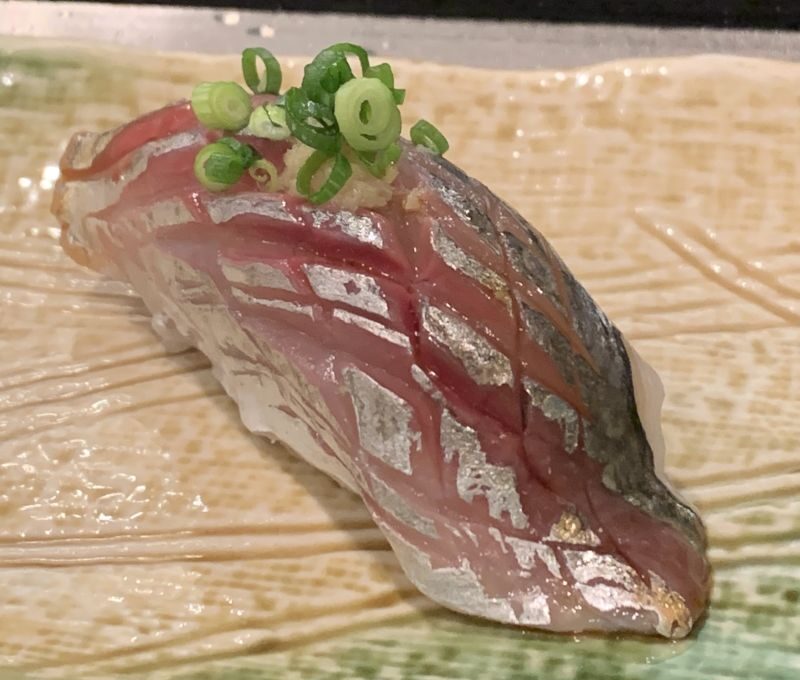
Silver-skinned fish are an important part of traditional Japanese sushi, particularly Edomae-style preparations.
- Aji (horse mackerel): Savory and relatively approachable, often topped with ginger or scallion.
- Saba (mackerel): Naturally rich and commonly served as shime saba, cured with salt and vinegar.
- Kohada (gizzard shad): A classic Edomae topping, frequently cured to emphasize its concentrated flavor. Very young kohada may be called shinko.
- Iwashi (sardine): Rich, distinctly flavored, and especially satisfying when the fish is in good condition.
- Sanma (Pacific saury): Known for its characteristic aroma and changing richness across the seasons.
If stronger-tasting fish makes you hesitate, start with aji or ask about the shop’s kohada. Curing changes flavor and texture, but it does not by itself make raw fish free of parasite risk.
Salmon, Hamachi, Buri, and Kanpachi: What’s the Difference?
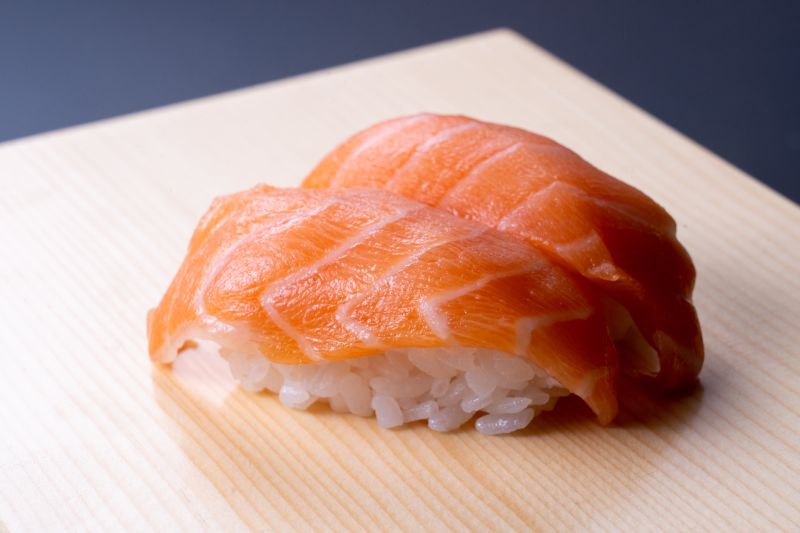
Salmon is a popular choice for its soft texture and mild, fatty flavor. Menus may also offer aburi salmon (surface-seared salmon), onion-topped salmon, or salmon with mayonnaise. Salmon served raw must come from seafood appropriately sourced and handled for raw consumption; ordinary salmon sold for cooking is not automatically suitable for sushi.
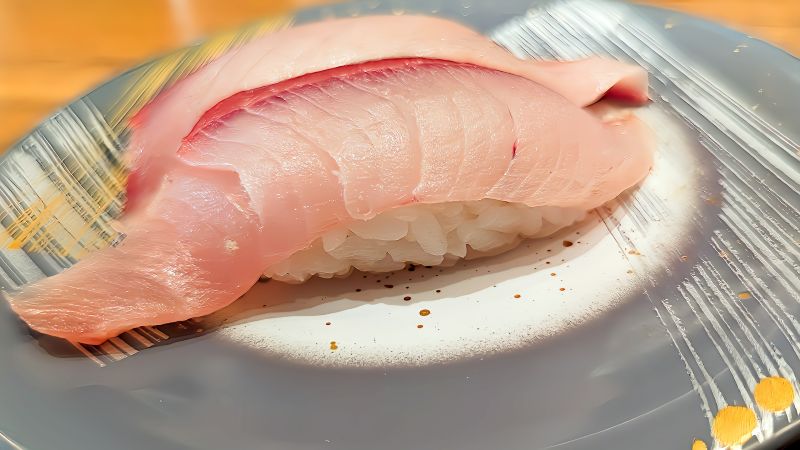
Buri and hamachi are Japanese names associated with Japanese amberjack, a fish often labeled “yellowtail” in English. The naming depends on size, region, and sometimes whether the fish is farmed. In many contexts, hamachi refers to a younger or smaller fish, while buri refers to a larger or mature one. The menu terms do not always follow a universal size rule.
Kanpachi (greater amberjack) is a different fish. Compared with softer salmon, kanpachi often offers a firmer bite and a cleaner impression of richness. Winter kanburi (cold-season buri) is especially associated with a deeply fatty flavor in Japan.
Specialty Sushi Fish: Nodoguro, Kinmedai, Shima Aji, and Engawa
Some of the most interesting sushi toppings are unfamiliar outside Japanese restaurants:
- Nodoguro (blackthroat seaperch): A rich white fish that may be lightly seared to enhance its aroma.
- Kinmedai (splendid alfonsino): A deepwater fish valued for its sweetness and fat; some chefs sear the skin.
- Shima aji (striped jack): Refined richness with a firm, satisfying texture. Despite the name, it is not the same fish as common aji.
- Kue (longtooth grouper): A substantial white fish with a distinctive savory depth.
- Kawahagi (filefish): Delicate flesh, sometimes paired with liver in restaurants that handle it appropriately.
- Engawa: The muscle near a flatfish’s fin, typically from flounder or a related flatfish. It is a cut, not the name of a fish, and can be chewy, crunchy, and pleasantly rich.
Other fish you might encounter include houbou (gurnard) and mejina (largescale blackfish). These specialties may appear only when a restaurant receives a suitable catch. Ask what today’s fish tastes like rather than relying on the name alone.
Shrimp, Crab, Clams, Squid, and Octopus
Amaebi, botan ebi, cooked shrimp, and crab
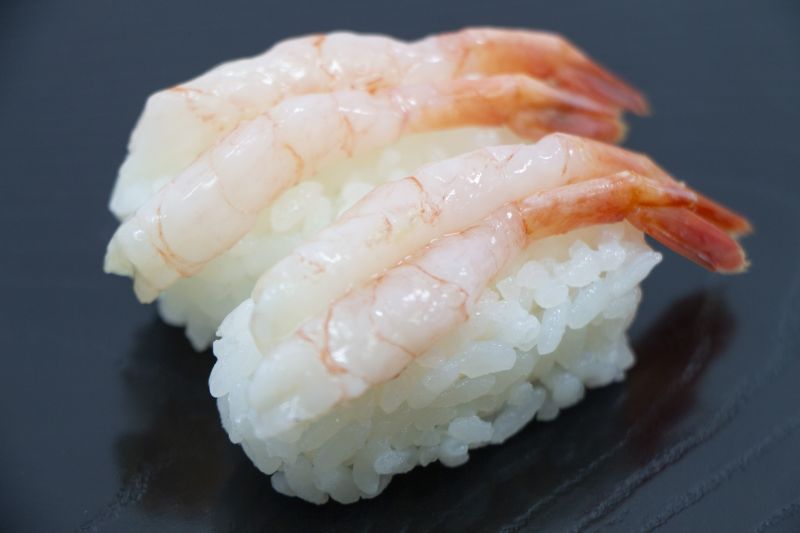
Amaebi is sweet shrimp with a soft, delicate texture. Botan ebi is a larger shrimp known for its sweetness and plump flesh. Cooked or steamed shrimp has a firmer, springier bite and is often easier for someone who prefers fully cooked seafood.
Crab toppings may feature snow crab (zuwai gani), red snow crab, or king crab. They can be served as a piece of leg meat on nigiri or as flaked meat in gunkan. Imitation crab (kanikama), often used in rolls, is processed seafood and not the same as crab meat; check its ingredients if you have allergies.
How Japanese shellfish toppings compare
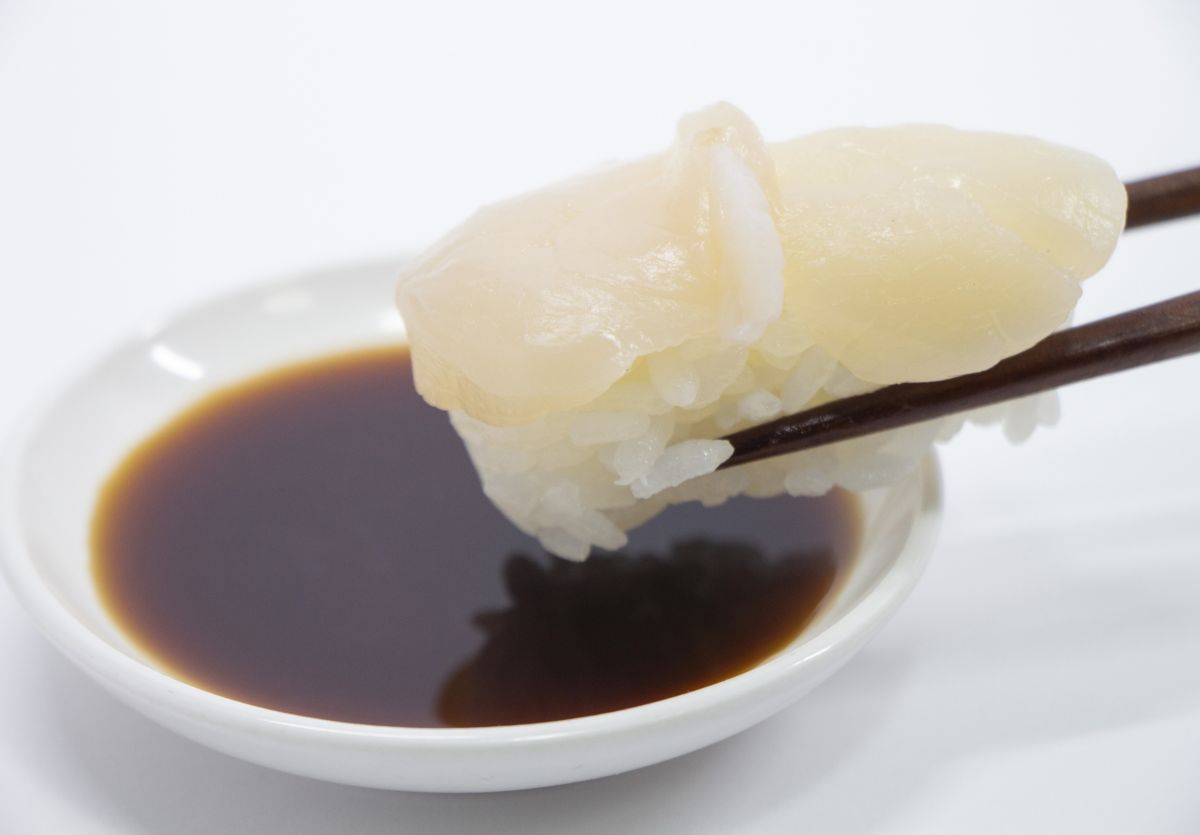
Hotate (scallop) is usually tender and sweet. Akagai (ark shell) has a more pronounced briny flavor. Hokkigai (surf clam) is springy and can change color when cooked. Tsubugai (whelk) has a firm, crunchy bite, while awabi (abalone) can be notably dense when served raw or more tender when steamed.
Other names include aoyagi, mirugai, torigai, and hamaguri. Traditional ni-hamaguri is simmered clam, often finished with a sweet-savory glaze. Shellfish names can refer to different species in different markets, so ask if precise identification matters to you.
Squid and octopus
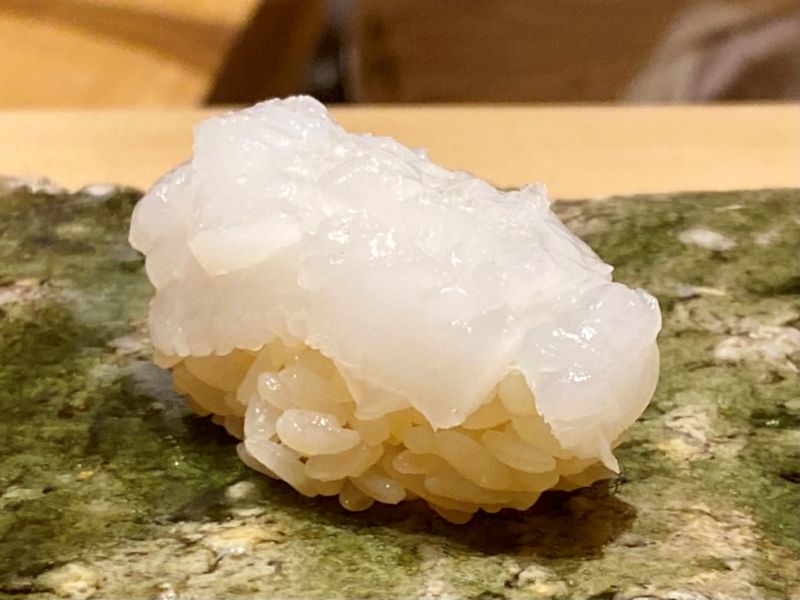
Japanese sushi menus include several kinds of squid: yariika (spear squid), aoriika (bigfin reef squid), surumeika (Japanese flying squid), and kouika (cuttlefish). Some feel silky and slightly sticky; others are pleasantly chewy. Fine knife cuts on squid can make a piece easier to bite through.
Madako (common octopus) is frequently served cooked, with a springy texture. Mizudako (giant Pacific octopus) may be more tender depending on its preparation. Salt, lemon, and ginger can complement both squid and octopus.
Uni, Ikura, Tobiko, and Other Roe Toppings
These ingredients often appear as gunkan, where a strip of nori surrounds the rice and holds loose toppings in place.
- Uni (sea urchin): Creamy, deeply flavored, and ocean-like. The edible part is the sea urchin’s reproductive tissue, not fish eggs.
- Ikura: Salmon or trout roe, often marinated in soy sauce. The large beads release salty, savory liquid when bitten.
- Tobiko: Flying fish roe with tiny, crisp grains; common in rolls and gunkan.
- Kazunoko: Herring roe, valued for its firm, densely packed grains.
- Tarako and mentaiko: Salted or seasoned pollock roe, sometimes used in modern gunkan or seared toppings.
For creaminess choose uni; for a juicy popping sensation try ikura; for tiny crunchy grains choose tobiko or kazunoko.
Cooked, Egg, Vegetable, and Modern Sushi Toppings
Sushi does not have to contain raw fish. In Japan, familiar cooked choices include anago (simmered saltwater conger eel), unagi (typically grilled freshwater eel), mushi ebi (steamed shrimp), and tamago (Japanese omelet).
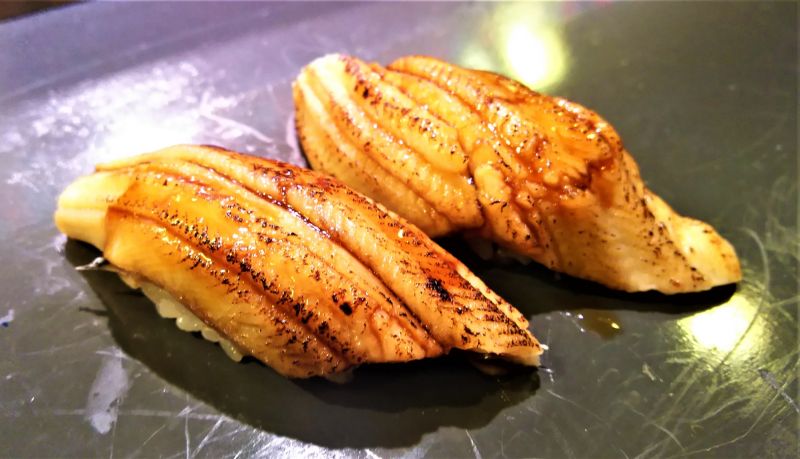
Anago is often soft and gently sweet, while unagi tends to be richer. Both may be brushed with a sweet-savory sauce called tsume or another glaze. Tamago ranges from fluffy and sweet to savory and dashi-flavored, depending on the restaurant.
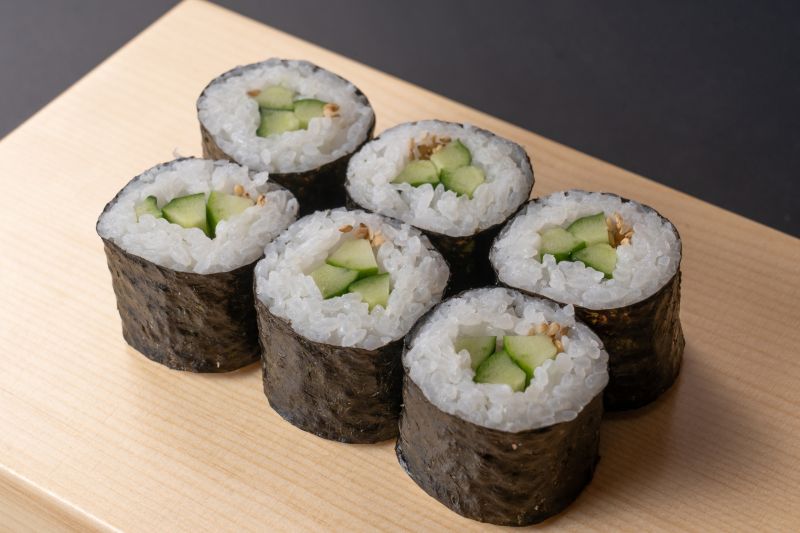
Plant-based options include kappa maki (cucumber roll), kanpyo maki (sweet-savory simmered gourd strips), natto maki (fermented soybeans), avocado rolls, seasoned shiitake, and pickled vegetables. Inari sushi—rice tucked into a seasoned fried tofu pocket—is another classic fish-free choice, although broths and seasonings may contain fish.
Casual restaurants and conveyor-belt chains also offer shrimp tempura, roast beef, prosciutto, cheese, corn mayonnaise, and other contemporary toppings. These are not necessarily traditional Edomae sushi, but they show how flexible seasoned rice can be.
Types of Sushi: Nigiri, Gunkan, Maki, and More
The topping and the shape of sushi are separate decisions. Tuna can become nigiri, a narrow roll, or a chopped-tuna gunkan, each with a different balance of rice, seaweed, and filling.
| Sushi style | What it looks like | Common examples |
|---|---|---|
| Nigiri | Hand-shaped mound of seasoned rice with a topping | Tuna, sea bream, shrimp, egg |
| Gunkan maki | Rice surrounded by a wall of nori, with a loose topping | Uni, ikura, negitoro |
| Hosomaki | Thin seaweed-wrapped roll, usually with one main filling | Tekka maki (tuna), kappa maki (cucumber) |
| Futomaki | Thick roll with several fillings | Egg, shiitake, cucumber, kanpyo |
| Chumaki | Medium-sized roll | Mixed seafood or salad fillings |
| Temaki | Hand-rolled nori cone | Tuna, salmon, vegetables, roe |
| Uramaki | Inside-out roll with rice on the exterior | California-style roll |
| Oshizushi | Sushi pressed into a mold or box | Pressed mackerel or trout sushi |
| Chirashizushi | Seasoned rice topped or mixed with assorted ingredients | Seafood chirashi; home-style vegetable chirashi |
| Inarizushi | Seasoned rice inside a sweet-savory fried tofu pocket | Plain or mixed-rice inari |
Regional sushi styles worth knowing
Japanese regional sushi traditions extend well beyond nigiri. Toyama’s masuzushi uses trout and seasoned rice pressed in a container, often lined with bamboo leaves. Kakinoha-zushi from areas including Nara and Wakayama wraps fish and rice in persimmon leaves. Shima-zushi from islands such as Hachijojima features soy-marinated fish and may use mustard instead of wasabi. Kochi’s inaka-zushi can highlight vegetables and konjac.
Traditional Edomae sushi developed techniques such as vinegar curing, simmering, and soy marinating to prepare seafood. An even older tradition, narezushi, involves fermented fish and rice and is quite different from modern nigiri. For a broader introduction to these styles, see the Japan National Tourism Organization’s sushi guide.
Seasonal Sushi Toppings in Japan
Japan has a tradition of enjoying seafood at its seasonal best, called shun. The following are useful examples, not a fixed nationwide calendar: local waters, fishing seasons, farming, and refrigeration all affect availability.
| Season in Japan | Examples to look for | What makes them interesting |
|---|---|---|
| Spring | Madai (sea bream), hatsugatsuo (early-season bonito), sayori (halfbeak) | Delicate white fish and fresh-tasting bonito; sea bream is associated with spring celebrations |
| Summer | Aji (horse mackerel), isaki (chicken grunt), suzuki (sea bass), anago (conger eel) | Light white fish, flavorful small fish, and tender simmered eel |
| Fall | Sanma (Pacific saury), modorigatsuo (returning bonito) | Fish known for strong seasonal changes in flavor and richness |
| Winter | Kanburi (winter yellowtail), hirame (flounder), saba (mackerel) | Often associated with fuller fat or firm, delicate flesh |
Bonito is a particularly useful comparison: spring hatsugatsuo is often described as leaner and fresher-tasting, while autumn modorigatsuo can be richer. Farmed fish and well-managed frozen seafood may be available throughout the year. If you are eating in Japan, asking about the day’s catch is more useful than treating any seasonal chart as a rule.
How to Choose Sushi by Flavor and Texture
If you like mild, clean flavors
Try tai, hirame, suzuki, ika (squid), or akami tuna. Cucumber rolls are a refreshing non-fish option. These are sensible starting points when you want to taste subtle differences without a heavy fatty finish.
If you like rich, buttery flavors
Look for chutoro, otoro, salmon, buri, nodoguro, or uni. Ask whether the chef recommends the fish raw, lightly seared, or with a particular seasoning.
If you like chewy or crunchy textures
Choose tsubugai, akagai, awabi, squid, or octopus. Scallop makes an interesting contrast because it is usually softer and sweeter than whelk or abalone.
Is there a correct order for eating sushi?
There is no mandatory order. If you want to compare flavors, try progressing from lighter fish such as tai or hirame to akami and silver-skinned fish, then richer pieces such as toro, uni, or glazed eel. But it is perfectly acceptable to begin with your favorite.
One practical approach is to order a familiar piece and then one unfamiliar recommendation. You could ask: “Is this fish mild or rich?”, “Does it have a firm texture?”, or “What’s especially good today?”
Japanese Sushi Menu Terms That Make Ordering Easier
| Japanese term | Meaning |
|---|---|
| Neta | Sushi topping or filling |
| Shari | Seasoned sushi rice |
| Gari | Pickled ginger, often eaten between pieces |
| Agari | Tea in traditional sushi-shop vocabulary |
| Aburi | Surface-seared or flame-seared |
| Shime | Cured, as in vinegar-cured mackerel |
| Zuke | Marinated, commonly in a soy-based preparation |
| Kombu-jime | Fish prepared with kelp for moisture control and umami |
| Tsume | Sweet-savory reduced sauce often used on eel or simmered seafood |
| Omakase | Chef’s selection |
You do not need special vocabulary to order politely. Simple descriptions of what you enjoy are enough. If a menu says “yellowtail,” “white tuna,” or “snapper,” remember that English restaurant labels do not always identify the exact Japanese species; ask when that distinction matters.
Raw vs. Cooked Sushi: Safety and Allergies
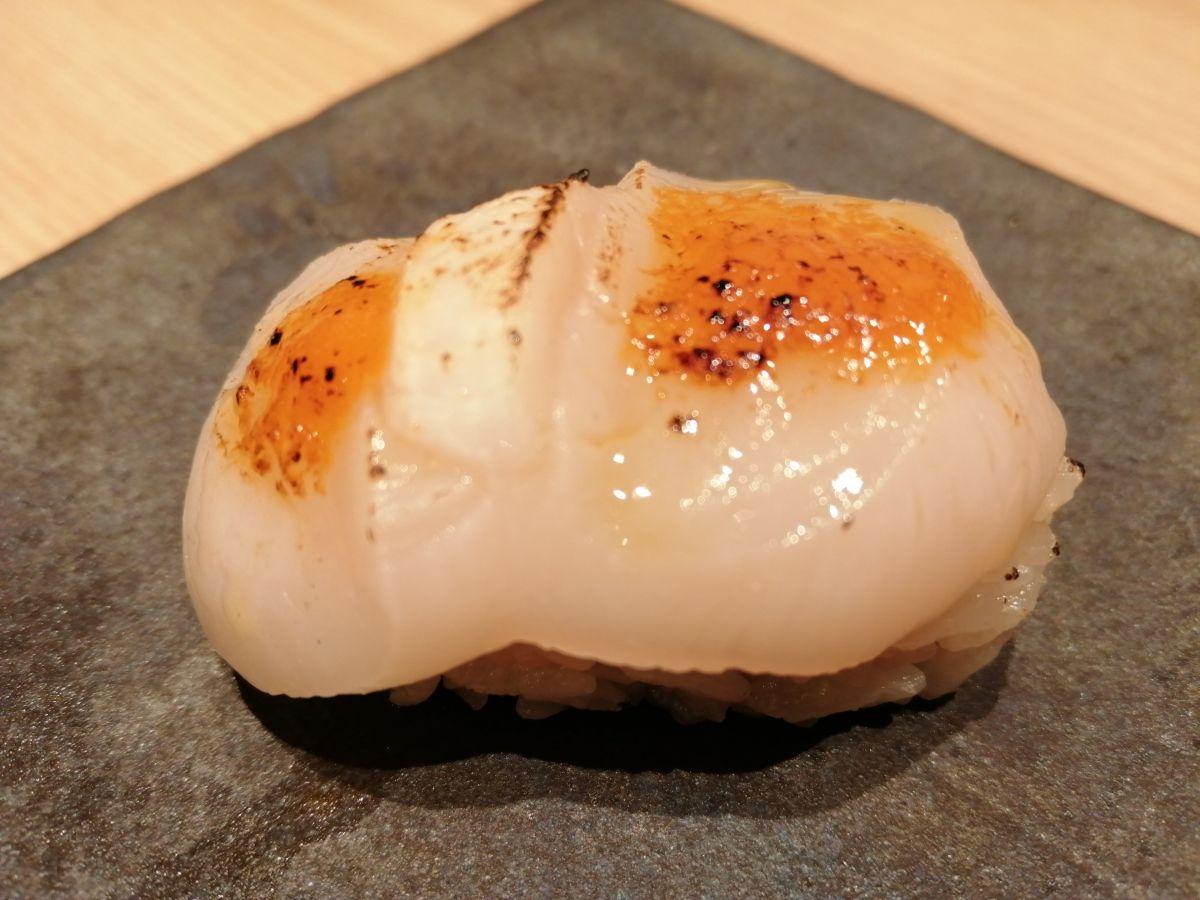
Some sushi contains raw seafood; other sushi is cooked, simmered, or vegetarian. Aburi means the surface has been seared, but the center may still be raw. If you need fully cooked food, confirm that explicitly rather than assuming seared sushi is cooked through.
Raw fish and shellfish can carry bacteria or parasites. The U.S. Food and Drug Administration’s seafood safety guidance explains how to choose, refrigerate, and handle seafood. Japan’s Ministry of Health, Labour and Welfare notes that vinegar, soy sauce, salt, and wasabi do not reliably kill Anisakis parasites. Proper commercial controls, which may include specified freezing procedures, matter for fish intended to be eaten raw. Freezing also does not eliminate every food safety hazard.
For homemade sushi, obtain seafood specifically supplied for raw consumption from a trustworthy source, follow its storage instructions, keep it properly refrigerated, and avoid cross-contamination. Do not assume ordinary fish labeled for cooking is safe to eat raw or that a typical home freezer provides a validated parasite-control process. Cooked shrimp, tamago, cucumber rolls, and fully cooked eel can be simpler options if you prefer not to prepare raw seafood.
Check ingredients and cross-contact risks if you have food allergies. Fish, shellfish, eggs, soy, wheat in some soy sauces, sesame, and mayonnaise ingredients may be relevant. Imitation crab and mixed gunkan fillings can contain ingredients that are not obvious from the name. People who are pregnant or at increased risk of foodborne illness should follow applicable medical and public-health advice about avoiding raw seafood.
For serving-size information, see our guide to how much a piece of nigiri sushi weighs.
Frequently Asked Questions
How many types of sushi toppings are there?
There is no fixed number. Menus may list different species, cuts, preparations, seasonal fish, cooked ingredients, and modern variations as separate toppings.
Which sushi toppings are best for beginners?
Akami tuna, salmon, tai, cooked shrimp, and tamago are approachable choices. Choose tai for a mild flavor, salmon for richness, and cooked shrimp or egg if you prefer cooked food.
Are hamachi and kanpachi the same fish?
No. Hamachi is a name used for Japanese amberjack, often called yellowtail. Kanpachi is greater amberjack, a different species that typically has a firmer texture.
Is engawa a type of fish?
No. Engawa is the muscle near the fin of a flatfish, commonly flounder or a related species. The exact fish can vary by restaurant.
Is aburi sushi fully cooked?
Not necessarily. Aburi usually means the surface has been seared. The center may remain raw, so ask the restaurant if you need a fully cooked topping.
Can I enjoy sushi without eating raw fish?
Yes. Try tamago, steamed shrimp, simmered anago, grilled unagi, cucumber rolls, kanpyo rolls, or inari sushi. If you avoid fish or animal products entirely, confirm the broth, sauces, and other ingredients.