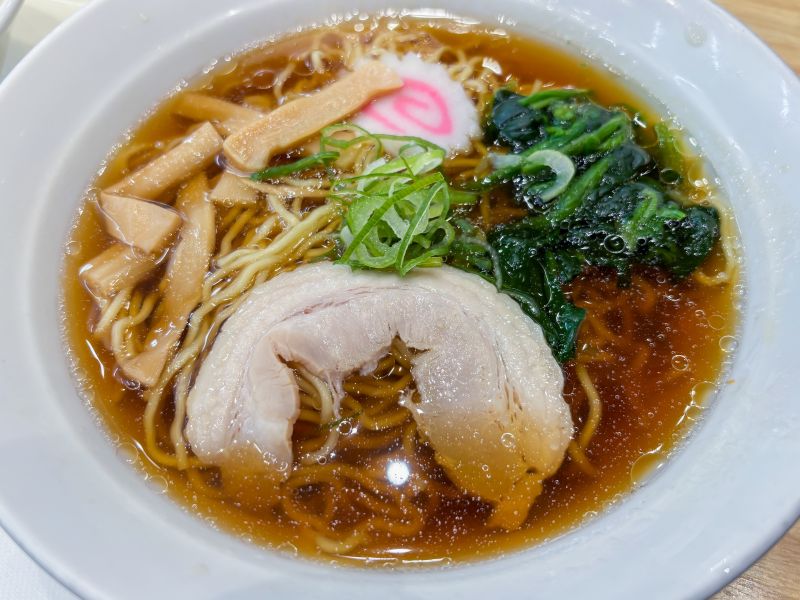
For ramen-shop-style spinach, blanch fresh spinach separately for about one minute, cool it briefly in cold water, and squeeze out the excess moisture before adding it to the bowl. This gives you tender green leaves that won’t water down the broth. You can also use a microwave or frozen spinach when you’re short on time.
Spinach is especially familiar in iekei ramen, a rich Yokohama-style noodle soup. But the same topping works with shoyu (soy sauce), miso, and shio (salt-based) ramen. The best preparation depends on whether you want a traditional topping or just a handful of greens in quick instant noodles.
How to Prepare Fresh Spinach for Ramen
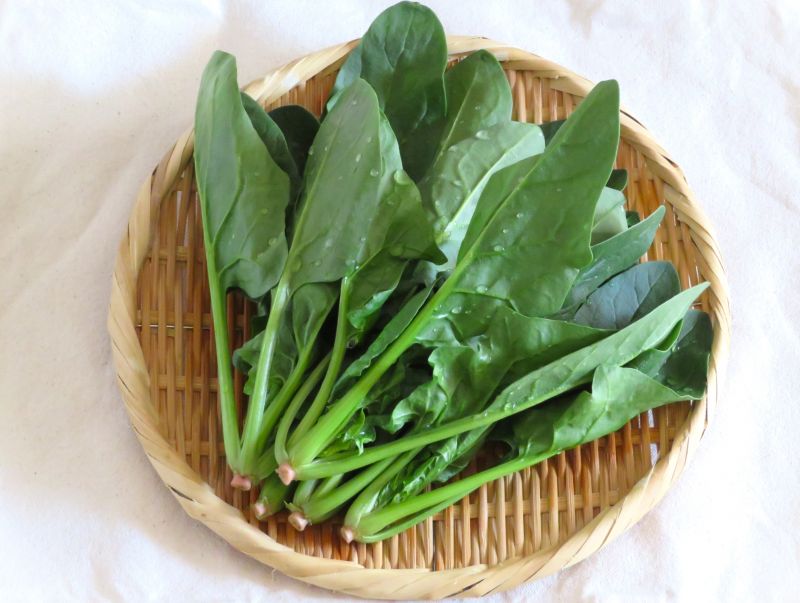
The classic method is simple: wash, blanch, cool, drain, and cut. It works well for regular mature spinach with thicker stems and leaves.
What You’ll Need
- About 200 g (7 oz) fresh spinach, enough for several ramen toppings
- A large pot of water
- A pinch of salt, optional
- A bowl of cold water, a colander, and a clean kitchen towel or paper towels
Step-by-Step: Blanch Spinach in About One Minute
- Wash the spinach well. Separate the stems slightly and rinse around the base, where grit can collect. Trim away any damaged ends.
- Bring plenty of water to a boil. Add a pinch of salt if you like; plain water also works.
- Cook the stems first. Lower the thicker stem ends into the boiling water for about 30 seconds.
- Submerge the leaves. Push the whole bunch into the water and cook for roughly another 30 seconds. Adjust slightly for very thick or delicate spinach. The leaves should be just tender and vividly green.
- Cool immediately. Transfer the spinach to cold water to stop further cooking, then drain. A brief rinse also helps remove some of its characteristic bitterness.
- Squeeze and cut. Gently press out as much water as practical without crushing the leaves. Cut into approximately 1.5–2 inch (4–5 cm) lengths and arrange in small bundles.
For the Japanese-style topping, place a compact bundle on the finished bowl rather than scattering wet leaves throughout the soup. One minute is a useful starting point, not a rigid rule: baby leaves need less time, while large stems may need a little longer.
Why Does Iekei Ramen Have Spinach?
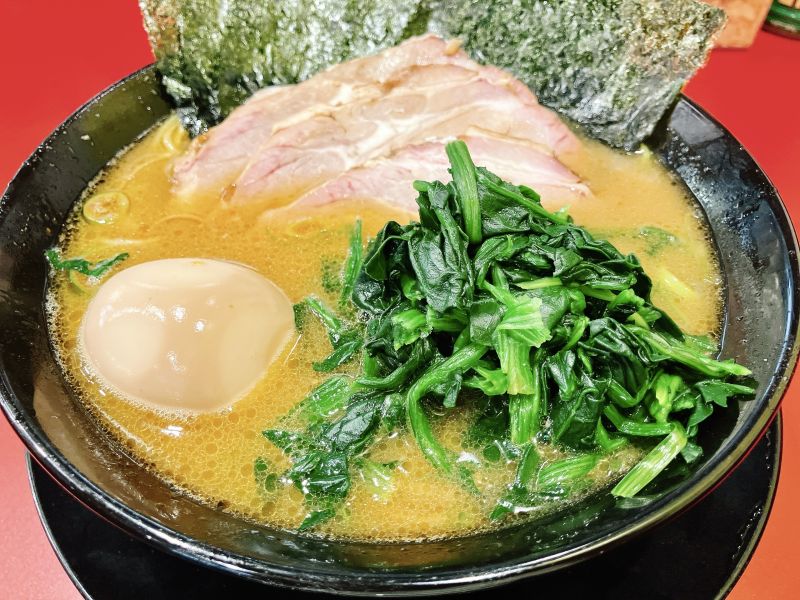
Iekei ramen originated in Yokohama, Japan, and is known for its rich pork-bone-and-soy-sauce broth, thick noodles, and aromatic chicken oil, called chiyu. Blanched spinach, sheets of nori seaweed, and slices of chashu pork are classic toppings. If you’re curious about the wider background, see our guide to the history of ramen in Japan.
Spinach does three useful things in an iekei bowl. Its bright green color contrasts with the brown broth, its mild earthy flavor offers a break from the richness, and its tender leaves pick up some of the savory soup and chicken oil. It also adds vegetables to a noodle-heavy meal.
Spinach contains fiber, folate, vitamin K, beta-carotene, and minerals such as iron, although a small topping doesn’t make ramen a nutritionally complete meal. The Japanese food composition database lists these nutrients in raw spinach.
How Is Spinach Seasoned at Iekei Ramen Shops?
Usually, the spinach is simply blanched, drained, and added without a strong separate seasoning. The pork-and-soy broth and chicken oil supply most of the flavor. For an iekei-style bowl at home, avoid heavy soy sauce, garlic, or sesame dressing on the spinach itself. Let it soak up a little hot broth before eating it with the noodles or nori.
Can You Cook Spinach With Ramen Noodles?
Yes, especially for instant ramen—but blanching it separately gives you more control. These are two different cooking situations, so there’s no need for a blanket rule.
For Restaurant-Style Ramen: Blanch It Separately
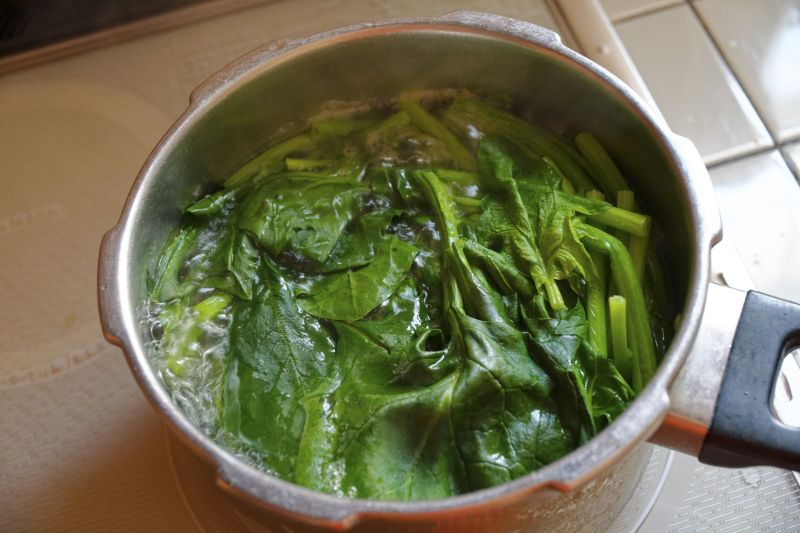
Mature spinach contains water-soluble oxalates, which contribute to its slightly astringent taste. Boiling it in plenty of water and discarding that water helps reduce the bitterness. Japan’s Ministry of Agriculture, Forestry and Fisheries recommends boiling spinach for about a minute and rinsing it afterward.
Cooking the greens separately also makes it easier to stop them from turning mushy and to drain them before they reach a carefully seasoned broth. If you’re building shoyu or iekei ramen from separate noodles and soup, this is the preferred approach.
For Instant Ramen: Add Tender Leaves Near the End
For a quick bowl of instant ramen, a small handful of washed baby spinach can go straight into the simmering noodles or broth for roughly the last 30–60 seconds, until wilted. This is convenient, although it won’t remove oxalates in the same way as boiling spinach in water that you discard.
If you’re using mature spinach, dislike its bitterness, or want a more authentic iekei-style topping, blanch it separately first. Either way, don’t boil tender leaves for the full noodle cooking time.
How to Microwave Spinach for Ramen
Microwaving is a useful option when you don’t want to heat a pot of water. It cooks the greens quickly, but because there is less cooking water to discard, the spinach may taste more astringent than separately boiled spinach.
- Wash about 200 g (7 oz) spinach thoroughly, including the stems, and leave a little rinse water clinging to the leaves.
- Place it in a microwave-safe dish and cover loosely with a vented microwave-safe lid or wrap intended for microwave use.
- At 600 watts, begin checking after roughly 2½ minutes; about 2½–3 minutes may be enough for this amount. Stop when the spinach is evenly wilted and tender. Microwave power, container size, and leaf thickness affect the time.
- Open the cover carefully, away from your face, to avoid steam burns. Cool the spinach in clean cold water, drain, and squeeze out excess moisture.
For a higher-powered microwave, check earlier and continue in short bursts as needed. If bitterness is your main concern, the boiling-water method remains a better choice.
Can You Use Frozen Spinach in Ramen?
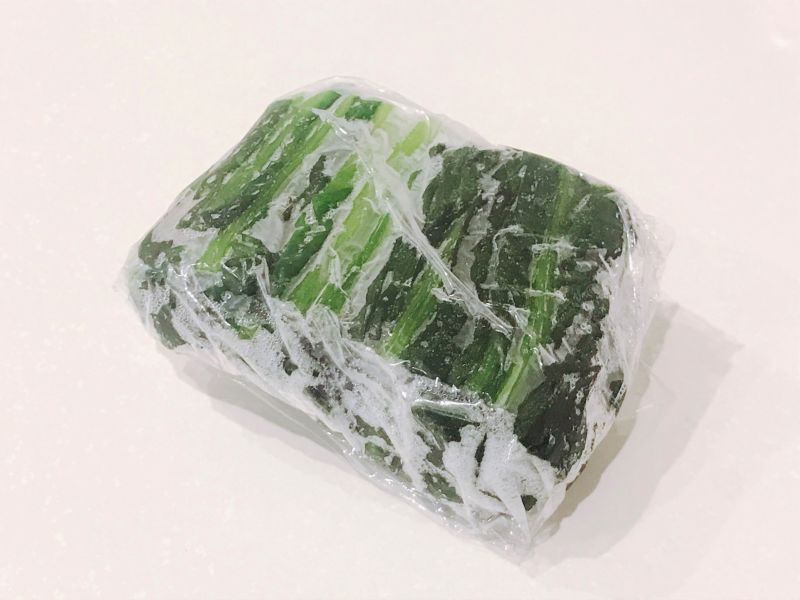
Yes. Plain frozen spinach is one of the easiest ramen toppings to keep on hand. Choose an unseasoned product rather than creamed spinach, and follow its package directions for cooking or reheating.
Store-Bought Frozen Spinach
Heat the frozen spinach according to the package instructions until it is thoroughly hot. Drain it in a fine-mesh strainer and press out the water before placing it on the noodles. Chopped frozen spinach is convenient, although whole-leaf spinach often looks more like a ramen-shop topping.
Don’t assume a frozen block will fully heat through just because it’s sitting in a finished bowl of hot soup. A large, cold portion can also cool the broth.
Freeze Your Own Ramen Spinach Portions
- Blanch washed spinach until just tender, cool it promptly, and squeeze out the moisture.
- Divide it into single-bowl portions and wrap tightly or place in small freezer-safe containers.
- Label each portion with the date and freeze promptly at 0°F (-18°C) or colder.
- For the best flavor and texture in ramen, aim to use your homemade portions within about a month. Properly frozen food can remain safe longer, but quality gradually declines.
- When needed, reheat the portion thoroughly, drain away released water, and add it to the ramen just before serving.
Freezing softens leafy vegetables, so previously frozen spinach won’t have quite the same texture as freshly blanched greens. That’s rarely a problem when it’s served in hot broth.
Best Spinach Seasonings for Different Ramen Broths
For strongly flavored ramen, plain spinach is often all you need. For lighter broths, a small amount of seasoning can make the topping more interesting. Keep the seasoning subtle so it doesn’t compete with the soup.
| Ramen Style | Spinach Preparation | Why It Works |
|---|---|---|
| Iekei / tonkotsu-shoyu | Plain blanched spinach, squeezed dry | Absorbs the rich soy-pork broth and chicken oil |
| Shoyu (soy sauce) | A few drops of sesame oil, a pinch of salt, and sesame seeds; or a little butter and soy sauce | Adds gentle aroma without overwhelming a lighter broth |
| Miso | Lightly sautéed with butter and corn; optional chili oil | Pairs with the deep, savory character of miso |
| Shio (salt-based) | Plain spinach, or a few drops of shirodashi with optional yuzu kosho | Keeps the flavor clean and the green color prominent |
Shirodashi is a concentrated Japanese light-colored seasoning commonly made with dashi and soy sauce; dilute or use it sparingly according to the label. Yuzu kosho is a spicy Japanese citrus-and-chili condiment, so a tiny amount goes a long way. Both are optional, and the plain version works beautifully.
How to Keep Spinach From Diluting Your Ramen Broth
The most important finishing detail is removing excess water. Blanched spinach holds more moisture than it appears to, and that water can weaken the flavor of a small bowl of broth.
- Wash the stem ends thoroughly. Grit trapped around the roots can spoil an otherwise good topping.
- Drain before squeezing. Give the spinach a moment in a colander, then squeeze gently in small portions.
- Blot if needed. For a particularly concentrated broth, pat the cut spinach with a clean towel or paper towel after squeezing.
- Season lightly. Too much soy sauce, sesame oil, or butter can change the character of a carefully balanced soup.
- Add the spinach at the end. Arrange it on top of the finished ramen and let it warm in the broth rather than simmering it for several minutes.
Frequently Asked Questions
Can I put raw spinach directly into ramen?
Yes, particularly washed baby spinach in hot instant ramen. Let it wilt fully before eating. For the traditional iekei topping or less bitterness, blanch mature spinach separately and drain it first.
Is baby spinach better than regular spinach for ramen?
Baby spinach is faster and more tender, making it convenient for instant noodles. Mature spinach holds its shape well when blanched and bundled, which is useful for a ramen-shop-style presentation.
Can I prepare ramen spinach the day before?
Yes. Cool it promptly after blanching, squeeze it dry, refrigerate in a covered container, and use it soon for the best texture. Reheat as needed before serving, and don’t leave cooked spinach at room temperature for extended periods.
What can I use instead of spinach in ramen?
Try blanched bok choy, komatsuna (Japanese mustard spinach), or another mild leafy green. They won’t taste identical to spinach, but they provide color and a similar vegetable contrast.
Do I need to salt the blanching water?
No. A pinch is fine for flavor, but plain boiling water works. The more important steps are cooking the spinach briefly, cooling it, and draining it thoroughly.
What is spinach called on a Japanese ramen menu?
Spinach is hōrensō (ほうれん草). On an iekei ramen menu, hōrensō-mashi (ほうれん草増し) usually means an extra portion of spinach.