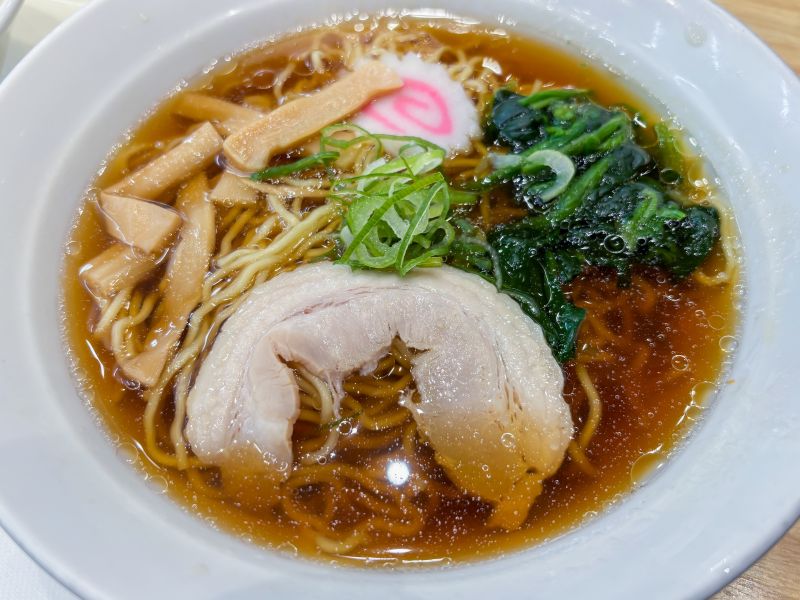
Ramen has Chinese roots, but the dish we know today developed in Japan. So if you’re wondering where ramen originated, the answer is more interesting than simply choosing China or Japan.
Chinese noodle-making traditions provided the foundation, while Japanese cooks transformed those noodles into a distinct food culture. Cities such as Yokohama, Tokyo, Sapporo, and Kurume each played a part in that transformation.
There’s also no single inventor of ramen. Its history includes a noodle dish recorded in Kyoto in 1488, an early restaurant advertisement in Hakodate in 1884, and a hugely influential ramen-serving restaurant that opened in Tokyo in 1910.
To understand where ramen really came from, it helps to separate the origins of the noodles, the development of the modern dish, and the invention of its regional styles.
Where Did Ramen Originate—China or Japan?
Ramen originated from Chinese noodle traditions, but modern Japanese ramen developed in Japan.
This distinction is important because ramen wasn’t invented as a complete dish at one particular moment. It evolved through centuries of cultural exchange, especially after Chinese immigrants began establishing restaurants in Japanese port cities during the nineteenth century.
Chinese cooks brought their knowledge of wheat noodles, broths, and cooking techniques. Japanese restaurant owners and chefs gradually adapted those traditions to local ingredients and preferences.
Over time, ramen developed its own distinctive identity, with specialized broths, seasonings, toppings, and regional variations.
Today, ramen is widely recognized as Japanese cuisine, even though its historical roots are Chinese.
How Japanese Ramen Differs From Chinese Noodle Dishes
One reason ramen’s origins can be confusing is its similarity in name to Chinese lamian.
In Chinese, lamian (拉麵) means “pulled noodles.” It refers to noodles traditionally made by stretching dough by hand rather than cutting it into strands.
Japanese ramen noodles, by contrast, are usually rolled and cut. They are typically made from wheat flour, water, salt, and an alkaline ingredient called kansui.
Kansui commonly contains alkaline salts such as sodium carbonate and potassium carbonate. It helps produce the springy texture and characteristic flavor associated with ramen noodles. It can also contribute to their yellowish color.
However, alkaline noodles are not exclusive to Japan. Chinese cuisine also includes alkaline wheat noodles, and Chinese noodle-making traditions are far more diverse than hand-pulled lamian alone.
It’s therefore misleading to describe Japanese ramen as simply a Japanese version of one specific Chinese hand-pulled noodle dish.
| Feature | Japanese Ramen | Chinese Lamian |
|---|---|---|
| Noodle-making method | Usually rolled and cut, often by machine | Traditionally stretched by hand |
| Typical noodle ingredients | Wheat flour, water, salt, and kansui | Wheat flour, water, and other ingredients depending on regional style |
| Broth | Often combines stock, a seasoning base, and aromatic oil | Varies considerably by region and dish |
| Common accompaniments | Chashu pork, menma, scallions, eggs, and seaweed | Depends on the regional preparation; may include beef, vegetables, and spices |
| Culinary identity | A distinct Japanese noodle dish with Chinese roots | A family of Chinese hand-pulled noodle traditions |
A particularly important feature of many Japanese ramen styles is the relationship between stock and tare.
Stock provides the underlying flavor and body. It may be made from pork bones, chicken, fish, seafood, vegetables, or a combination of ingredients.
Tare is a concentrated seasoning mixture, commonly based on soy sauce, salt, or miso. Many ramen shops also use aromatic oils to add another layer of flavor.
These elements can be combined in different ways, creating an enormous range of ramen styles. Chinese noodle soups can also have complex, carefully prepared broths, so this layered approach should not be treated as something found only in Japan.
The Early History of Ramen in Japan
The history of ramen in Japan began long before the modern ramen restaurant appeared.
Several historical records describe noodle dishes that may be connected to its development. However, an early mention of Chinese-style noodles does not necessarily mean people were eating something identical to modern ramen.
Kyoto, 1488: The Earliest Known Alkaline Noodle Record
One of the most surprising discoveries in Japanese ramen history comes from Kyoto during the Muromachi period (1336–1573).
According to research presented by the Shin-Yokohama Ramen Museum, a diary associated with Shokokuji Temple records a noodle dish called keitaimen being served in 1488.
Keitaimen was associated with a Chinese recipe using wheat flour and an alkaline ingredient. This is significant because alkaline ingredients are also central to many modern ramen noodles.
The historical record shows that a related noodle-making tradition was known in Japan more than 500 years ago.
However, there is an important limitation.
Keitaimen should not be confused with a bowl of modern ramen. The surviving evidence concerns the noodles and their preparation, not the complete combination of broth, seasonings, and toppings found in today’s ramen restaurants.
The Kyoto discovery establishes an early connection between Japanese food culture and Chinese-style alkaline noodles. It does not prove that modern ramen was invented in Kyoto.
The Shin-Yokohama Ramen Museum’s historical explanation provides additional details about the documents behind this discovery.
Did Tokugawa Mitsukuni Eat Japan’s First Ramen?
Another famous story connects ramen to Tokugawa Mitsukuni, a seventeenth-century Japanese feudal lord also known as Mito Komon.
According to the traditional account, Mitsukuni encountered Chinese-style noodle soup through Zhu Shunshui, a Chinese scholar who settled in Japan.
The noodles associated with this story were reportedly made using wheat flour and lotus root starch. They were served with broth and various seasonings.
This story has long been presented as evidence that Mitsukuni was the first Japanese person to eat ramen.
But that claim should be treated cautiously.
The dating and interpretation of the surviving accounts are not straightforward, and the noodles described were different from modern ramen. Furthermore, the earlier Kyoto record shows that Chinese-style noodles were already known in Japan before Mitsukuni’s lifetime.
Rather than identifying a single first ramen eater, the Mitsukuni story illustrates how Chinese food traditions were encountered and adapted within Japan’s historical elite.
Yokohama: Chinese Noodles Enter Everyday Life
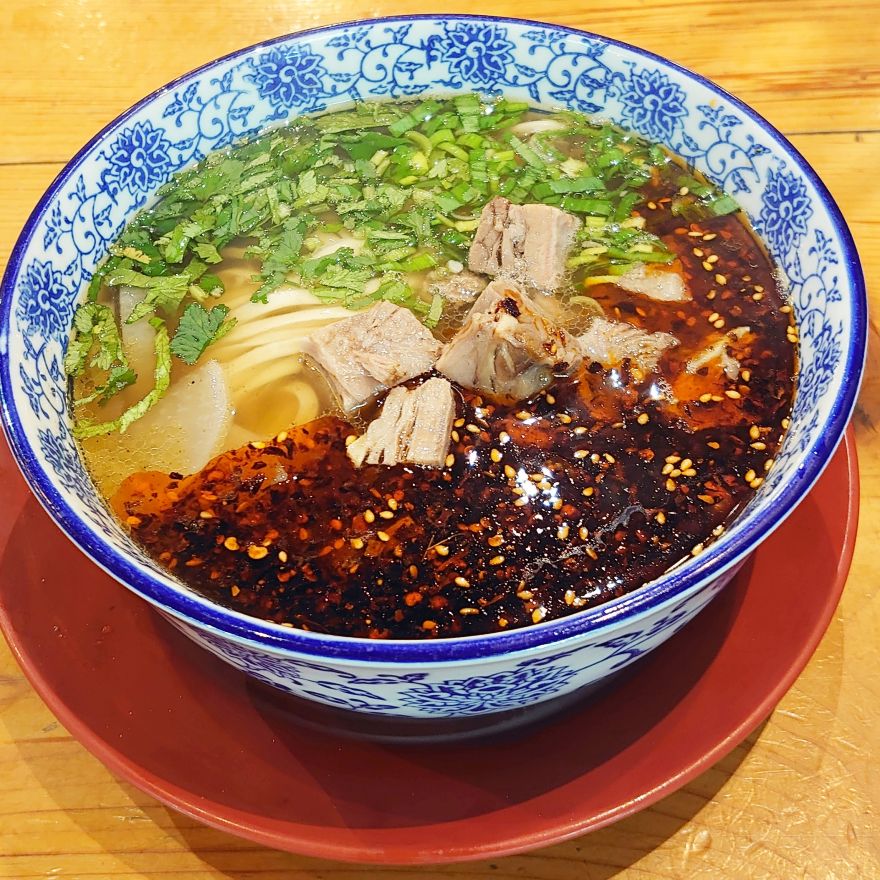
Yokohama is one of the most important places in the development of modern Japanese ramen.
After the port opened to international trade in 1859, Chinese merchants, workers, and cooks established communities in the city.
Restaurants serving Chinese food appeared around the foreign settlement that eventually developed into today’s Yokohama Chinatown.
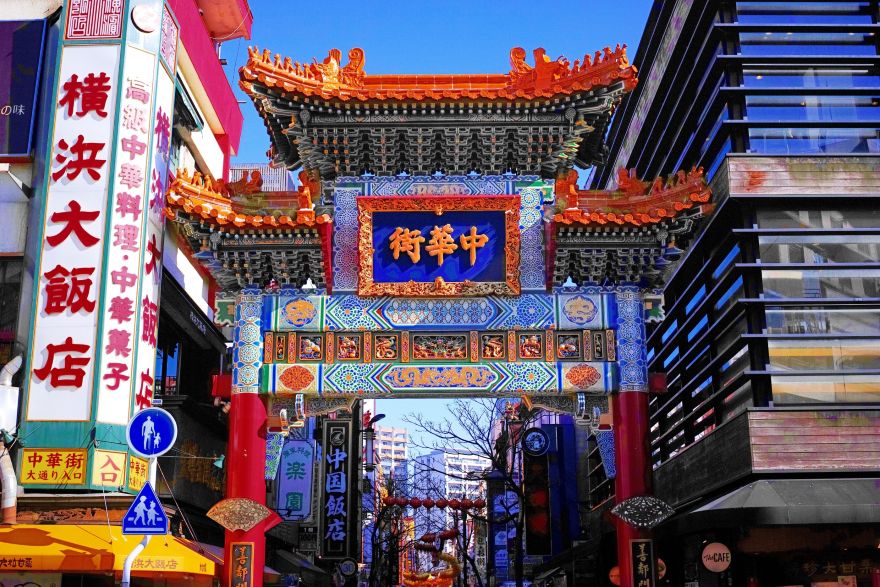
These restaurants introduced Chinese-style wheat noodle dishes to a growing number of people in Japan.
One historical name for these noodles was Nankin soba, meaning Chinese-style noodles.
As Chinese food spread beyond immigrant communities, noodle dishes became more familiar to Japanese customers. Restaurants and street vendors helped make them accessible outside formal dining establishments.
Yokohama was particularly influential because Chinese cooks working there later contributed to ramen businesses in Tokyo.
So while Yokohama cannot be declared the undisputed birthplace of all ramen, it was a major center in the development of the dish that eventually became Japanese ramen.
Hakodate, 1884: An Early Restaurant Advertisement
Another important location in ramen history is Hakodate, a port city on Japan’s northern island of Hokkaido.
In 1884, a restaurant called Yowaken advertised a dish named “Nankin soba” in the Hakodate Shimbun newspaper.
The advertised price was 15 sen, using Japan’s historical currency system.
This is one of the earliest known commercial advertisements for a Chinese-style noodle dish in Japan.
But there’s a historical question that is sometimes overlooked: Was the advertised Nankin soba actually a noodle soup resembling modern ramen?
The Shin-Yokohama Ramen Museum notes that this has not been established conclusively.
That means the advertisement is valuable evidence of an early commercial noodle dish, but it cannot definitively prove that Hakodate was the first place to sell modern ramen.
Today, Hakodate is particularly famous for shio ramen, a salt-seasoned style often featuring a clear broth.
Its modern ramen culture reflects the city’s long history of contact with Chinese food traditions, although the exact connection between today’s shio ramen and the 1884 restaurant dish remains uncertain.
Tokyo, 1910: How Rairaiken Popularized Ramen
If one restaurant deserves special recognition for helping establish Japanese ramen as an everyday food, it’s Rairaiken in Asakusa, Tokyo.
Rairaiken opened in 1910 under the ownership of Kanichi Ozaki, who had previously worked for Yokohama Customs.
Ozaki recruited Chinese cooks from Yokohama Chinatown and opened a restaurant serving Chinese food adapted to Japanese customers.
One of its most influential dishes was a soy sauce-seasoned noodle soup.
Rather than serving Chinese noodles only to immigrant communities, Rairaiken appealed to Japanese diners in Asakusa, one of Tokyo’s busiest entertainment districts.
Its noodle soup became associated with several features that are still familiar in traditional Tokyo-style ramen:
- Soy sauce seasoning: A savory broth shaped by shoyu, the Japanese word for soy sauce.
- Chashu: Slices of seasoned pork that became a familiar ramen topping.
- Menma: Seasoned bamboo shoots.
- Scallions: Chopped green onions that add freshness and aroma.
Rairaiken became extremely successful, with historical accounts describing thousands of customers on particularly busy days.
It was not necessarily the first establishment in Japan to serve Chinese noodle soup. Its importance lies in helping turn ramen into a popular restaurant dish designed for Japanese diners.
The original restaurant eventually closed, but its influence on Tokyo-style ramen remains significant.
How Ramen Became a Japanese Staple
Rairaiken helped establish an influential restaurant model, but ramen’s transformation into a widely enjoyed Japanese food continued over several decades.
Street Stalls, Postwar Japan, and Changing Tastes
During the early twentieth century, noodle vendors and small restaurants played an important role in spreading ramen.
Street stalls, known in Japanese as yatai, offered a relatively simple way to prepare and sell hot meals.
The Great Kanto Earthquake of 1923 disrupted businesses in Tokyo and Yokohama, and mobile food stalls became an important part of the changing restaurant landscape.
Ramen continued to develop through the prewar years, although World War II severely disrupted the restaurant industry.
After the war, noodle stalls appeared across Japan as people looked for affordable and satisfying meals during a period of food shortages and economic recovery.
Some Japanese people returning from China also brought experience and familiarity with Chinese-style noodle dishes.
As ramen spread to different cities, local cooks began developing distinctive combinations of soup, noodles, and toppings.
The result was not one standardized recipe, but a collection of regional ramen traditions.
Instant Ramen Arrives in 1958
Another major turning point came in 1958, when Momofuku Ando’s company, Nissin, launched Chicken Ramen.
It is widely recognized as the world’s first commercially successful instant ramen product.
Unlike restaurant ramen, instant ramen could be stored and prepared quickly by adding hot water.
This innovation introduced ramen to households on a much larger scale and contributed to its growing international recognition.
It also helped make the word “ramen” more familiar to consumers throughout Japan.
However, instant ramen was not the original form of ramen. By 1958, Chinese-style noodle soups had already been served in Japan for generations.
For more information, see Nissin’s account of Momofuku Ando and the invention of instant noodles.
Where Were Tonkotsu and Miso Ramen Invented?
Two of the most recognizable ramen styles today are tonkotsu and miso.
Both developed in Japan, but they have different origins.
Tonkotsu ramen is closely associated with Kyushu, particularly Kurume and Fukuoka. Miso ramen developed in Sapporo, Hokkaido.
Kurume: The Birthplace of Tonkotsu Ramen
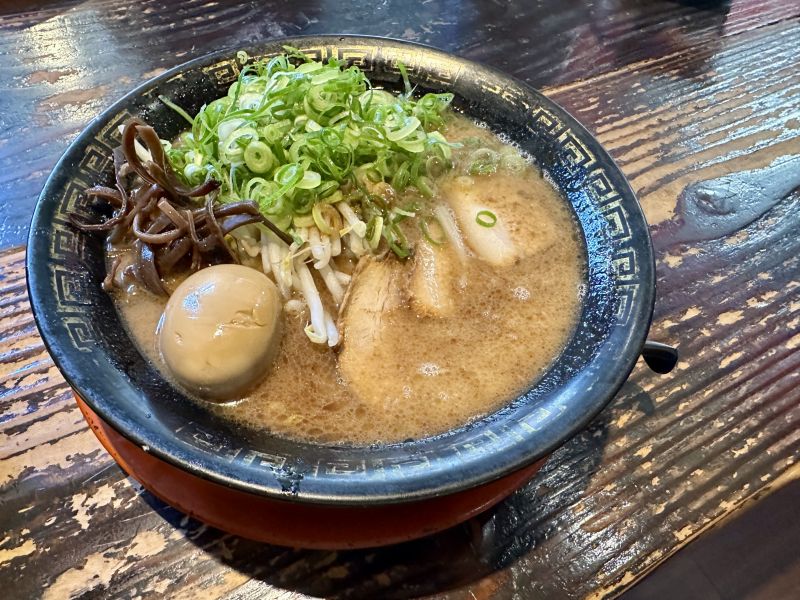
Many international ramen fans associate tonkotsu ramen with Hakata, the central district of Fukuoka City.
But its earlier history leads to Kurume, another city in Fukuoka Prefecture.
In 1937, a street stall called Nankin Senryo began serving Chinese-style noodles with a pork-bone-based broth in Kurume.
Unlike the thick, cloudy tonkotsu broth familiar today, this early version was relatively clear.
The next major development came in 1947 at a Kurume ramen stall called Sankyu.
According to the commonly told origin story, the broth was accidentally boiled too vigorously for an extended period.
Instead of remaining clear, it turned cloudy and developed a richer flavor.
Vigorous boiling can disperse fat and other components throughout pork-bone broth, helping create the opaque appearance associated with creamy tonkotsu ramen.
The Sankyu story is an important part of Kurume ramen history, although the precise details of the accident are best understood as a traditional account rather than an independently verified reconstruction of every event.
The resulting cloudy pork-bone style influenced ramen across Kyushu.
In Hakata, tonkotsu ramen became associated with thin noodles and kaedama, a system in which customers order an extra serving of noodles to add to their remaining broth.
Kumamoto developed its own pork-bone ramen traditions, including versions featuring garlic and aromatic oils.
These variations helped transform tonkotsu into one of Japan’s best-known ramen styles.
Kurume is generally recognized as the birthplace of tonkotsu ramen, while Hakata became one of its most internationally famous regional expressions.
Sapporo: The Birthplace of Miso Ramen
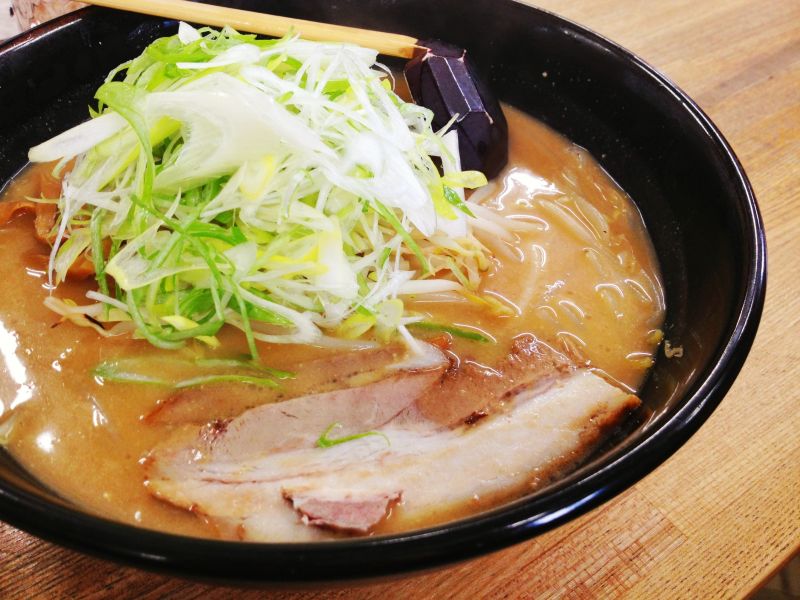
Miso ramen originated in Sapporo, the capital of Hokkaido.
Its development is closely associated with a restaurant called Aji no Sanpei and its founder, Morito Omiya.
In 1954, Omiya developed a ramen dish seasoned with miso, the fermented soybean paste widely used in Japanese cooking.
At a time when soy sauce and salt-seasoned ramen were more established, miso provided a new direction for the dish.
Omiya worked to develop a satisfying noodle meal using miso, vegetables, and other flavorful ingredients.
The resulting style became associated with rich seasoning, aromatic ingredients, and stir-fried vegetables.
Many modern Sapporo miso ramen bowls feature springy, curly noodles and hearty toppings, making them particularly satisfying in Hokkaido’s cold winters.
One popular story claims that miso ramen was invented after a customer asked for noodles to be added to tonjiru, a Japanese pork and miso soup.
However, Aji no Sanpei’s own historical account rejects that story as a myth.
The restaurant attributes the invention to Omiya’s deliberate experimentation with miso-based ramen.
Over time, Sapporo miso ramen became one of Japan’s most influential regional styles.
Who Came Up With the Name “Ramen”?
The origin of the word “ramen” is another subject with competing explanations.
Before ramen became the standard name, Chinese-style noodle soups in Japan were often called Nankin soba or Shina soba.
Later, the term chuka soba, meaning Chinese-style soba, became widely used and remains familiar on Japanese restaurant menus today.
The older term Shina soba reflects historical language associated with China, but the word Shina developed negative associations with Japanese imperialism. Chuka soba is generally a more neutral expression.
The word ramen itself is frequently connected to the Chinese pronunciation of lamian, although its precise historical path into Japanese is debated.
The Sapporo Naming Story and Other Theories
One famous explanation comes from Takeya Shokudo, a restaurant that began serving Chinese food in Sapporo in the early 1920s.
According to the traditional story, the restaurant employed a Chinese cook whose calls from the kitchen included a sound resembling “la.”
The owner’s wife, Tatsu Ohisa, supposedly combined that sound with the Japanese pronunciation of the character for noodles, producing the name “ramen.”
It’s a memorable story, but it should not be presented as the proven invention of the word.
Researchers have pointed to earlier uses of ramen-related pronunciations, including references associated with Yokohama and Tokyo.
That makes it difficult to credit one restaurant or one person with creating the term for the entire country.
A more reliable interpretation is that different Chinese noodle names and Japanese pronunciations gradually contributed to the widespread adoption of “ramen.”
The commercial success of products such as Nissin’s Chicken Ramen later helped establish the word in everyday use.
What Is the Oldest Ramen Shop Still Operating in Japan?
Rairaiken opened in 1910, but the original restaurant is no longer operating.
For ramen fans who want to visit a genuinely historic restaurant, one important name is Daikan Honten in Amagasaki, Hyogo Prefecture.
Daikan Honten: Serving Chinese-Style Noodles Since 1912
Daikan Honten traces its history to 1912, when its founder, Choji Chisaka, established a Chinese-style noodle business in Kobe.
The business later relocated to Amagasaki in 1952, where it continues operating.
Daikan Honten is frequently described as Japan’s oldest surviving ramen restaurant.
However, the restaurant itself states that it cannot independently confirm whether it is the country’s absolute oldest. It is therefore more accurate to describe it as one of Japan’s oldest continuously established Chinese-style noodle businesses.
The restaurant is particularly known for two traditional features.
- Foot-kneaded egg noodles: The shop continues a traditional noodle-making method involving a kneading process performed with the feet, an approach known as ashibumi.
- A continuously replenished soy sauce seasoning base: The restaurant says its signature sauce has been maintained and replenished since its founding in 1912.
The noodles are served with a rich soup made using pork and chicken bones, seasoned with the restaurant’s distinctive soy sauce mixture.
Another well-known specialty is yakimeshi, Japanese-style fried rice.
For visitors interested in the history of Japanese ramen, Daikan Honten offers an opportunity to experience a restaurant tradition that stretches back more than a century.
Its official website provides information about the restaurant and its history: Daikan Honten.
Because menus, hours, and operating conditions can change, check the restaurant’s current information before visiting.
Where to Explore Ramen History in Japan
Japan’s ramen history can still be experienced through its regional noodle traditions.
Rather than looking for one universally recognized birthplace, consider visiting places that represent different stages of the dish’s development.
Regional Styles Worth Trying
| Location | Historical Significance | What to Try |
|---|---|---|
| Yokohama, Kanagawa | An important center of Chinese noodle culture in nineteenth-century Japan | Chinese-style noodle dishes and local ramen |
| Asakusa, Tokyo | Home of the influential Rairaiken restaurant, founded in 1910 | Traditional Tokyo-style shoyu ramen |
| Hakodate, Hokkaido | Location of an early 1884 Nankin soba advertisement | Shio ramen with a clear, salt-seasoned broth |
| Kurume, Fukuoka | Widely recognized as the birthplace of tonkotsu ramen | Kurume-style pork-bone ramen |
| Sapporo, Hokkaido | Home of the influential miso ramen developed at Aji no Sanpei | Sapporo-style miso ramen |
| Amagasaki, Hyogo | Home of the historic Daikan Honten restaurant | Traditional chuka soba and yakimeshi |
For anyone wanting to explore ramen history in greater depth, the Shin-Yokohama Ramen Museum’s historical timeline is a useful reference.
The museum explains how Chinese noodle traditions developed into Japanese ramen and documents many of the restaurants and regional innovations involved in that process.
Kyoto also has a place in the historical story because of the 1488 keitaimen record, although that does not mean a modern restaurant there serves an unchanged version of the original dish.
Frequently Asked Questions
Is ramen the same as Chinese lamian?
No. Chinese lamian traditionally refers to hand-pulled noodles, while Japanese ramen generally uses cut alkaline wheat noodles. The names are historically related, but modern Japanese ramen is a distinct dish.
Why are ramen noodles often yellow?
Kansui, an alkaline ingredient commonly used in ramen dough, changes the characteristics of wheat flour and can produce a yellowish color. Some ramen noodles also contain eggs, but eggs are not required for all ramen noodles.
Is tonkotsu the same as tonkatsu?
No. Tonkotsu (豚骨) means pork bones and refers to a pork-bone-based ramen broth. Tonkatsu (豚カツ) is a breaded, deep-fried pork cutlet. Despite their similar names, they are different Japanese foods.
Does all ramen contain pork?
No. Although pork is common in ramen, many broths are made using chicken, seafood, vegetables, or combinations of ingredients. Some versions are vegetarian or vegan, but diners should check both the broth and toppings.
Is chuka soba different from ramen?
Chuka soba is a traditional Japanese name for Chinese-style noodle soup and is often used interchangeably with ramen. Some restaurants use it to describe a more traditional style, but there is no universal rule separating the two.
Was instant ramen invented before restaurant ramen?
No. Restaurant-style ramen was established in Japan decades before instant noodles appeared. Nissin launched Chicken Ramen in 1958, long after restaurants such as Rairaiken had helped popularize the dish.