Planning a takoyaki party at home? You’ll need a takoyaki pan, a thin savory batter, bite-size fillings, a little oil, and something to turn each ball as it cooks. The rest is about choosing the right equipment, prepping your toppings, and making enough for everyone.
In Japan, friends often gather around a tabletop takoyaki maker for a takopa (short for takoyaki party). Everyone helps cook and experiments with fillings. You can recreate that relaxed experience even if you’re shopping outside Japan.
What Do You Need for a Takoyaki Party?
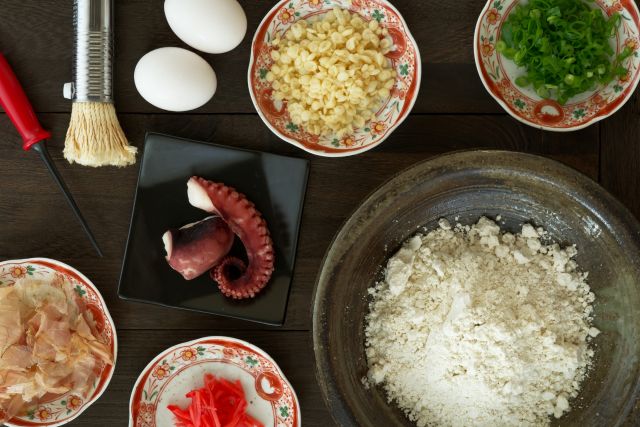
Essential Equipment Checklist
- Takoyaki pan or maker: A pan with round wells, either electric or compatible with your stovetop.
- Bamboo skewers or nonstick-safe takoyaki picks: For separating and turning the balls.
- Mixing bowl and whisk: For preparing a smooth batter.
- Measuring cup or kitchen scale: For following your batter mix or recipe accurately.
- Pitcher with a spout or ladle: For pouring batter into the hot pan.
- Heat-safe oil brush: To coat the wells and the flat surface between them.
- Small bowls, plates, and serving utensils: For organizing fillings, toppings, and finished takoyaki.
Keep paper towels, a trash container, a trivet or suitable heat-resistant surface, and clean utensils nearby. A specialized batter dispenser is convenient but not essential.
Essential Ingredients and Toppings
- Takoyaki flour mix plus the water and eggs specified on the package, or a homemade flour-and-dashi batter.
- Cooked octopus cut into small pieces, or another filling of your choice.
- Scallions (called spring onions in the UK).
- Tenkasu (agedama): Small crunchy pieces of fried tempura batter.
- Beni shoga: Finely chopped red pickled ginger.
- Neutral cooking oil: Such as canola or vegetable oil.
- Takoyaki sauce and Japanese mayonnaise for serving.
- Aonori and katsuobushi: Dried green seaweed flakes and dried bonito flakes.
If you’re new to takoyaki, start with one traditional filling and two alternatives. That gives guests variety without turning preparation into a complicated project.
Choosing the Best Takoyaki Pan
The pan affects both how easily you can turn the takoyaki and how evenly they brown. There isn’t one best option for everyone.
| Pan type | Best feature | Watch out for | Good for |
|---|---|---|---|
| Electric maker | Convenient tabletop cooking | Some models heat unevenly | Beginners and casual parties |
| Dedicated gas grill | Responsive, often powerful heat | Fuel compatibility, ventilation, and flame safety | Experienced cooks who want a crisp exterior |
| Stovetop cast iron pan | Strong heat retention | Weight, surface compatibility, and care | Small batches and cast iron enthusiasts |
Electric Takoyaki Makers
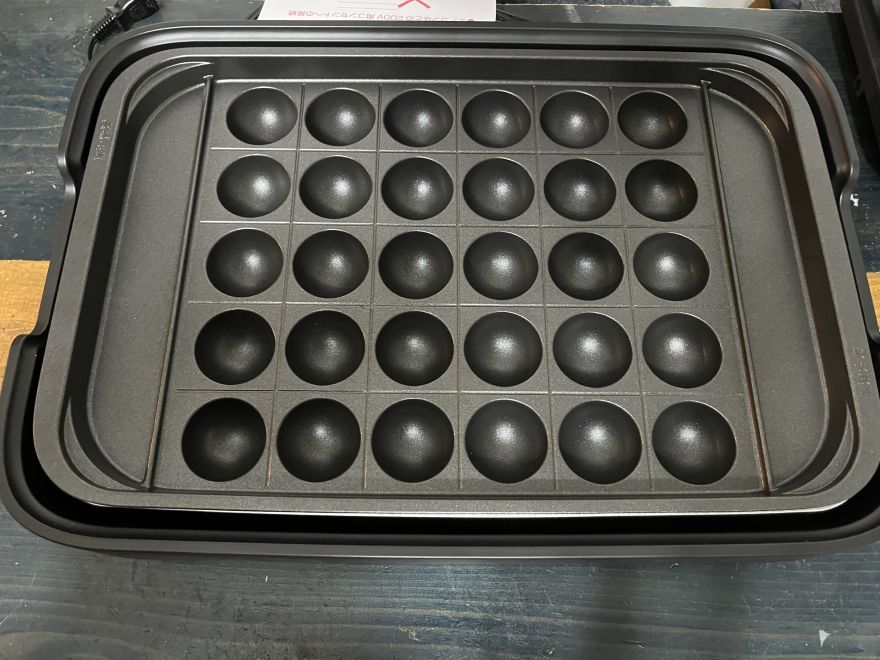
An electric takoyaki maker is a practical choice when several people want to cook at the table. Some multifunction appliances offer interchangeable flat-griddle and takoyaki plates, so the appliance can be used for other meals too.
On less powerful models, the outer wells may cook more slowly than the center. If you see uneven browning, move the nearly finished balls to hotter positions. Remember that the plate stays extremely hot even though there’s no visible flame.
Gas Takoyaki Grills
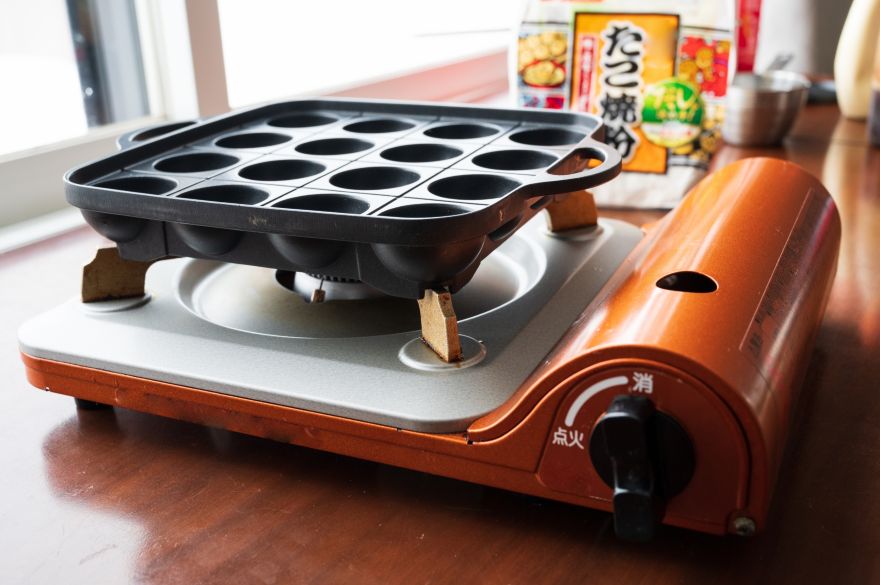
Gas-powered takoyaki grills, including some models made by Iwatani, can recover heat quickly after you pour in cool batter. That’s useful when you’re aiming for a browned shell and a soft, creamy center. Some purpose-built models also have grooves that help you divide the batter between wells.
Use only a gas appliance explicitly approved for your intended location and the correct fuel and cooking plate. A camping stove is not a substitute for an indoor-rated tabletop appliance. Follow the manufacturer’s ventilation and clearance rules, and never use an oversized pan that covers or overheats a fuel canister. The Japan Gas and Kerosene Appliances Association explains several common portable-stove hazards.
Cast Iron Takoyaki Pans
A cast iron takoyaki pan works well for cooks who enjoy stovetop cooking. It retains heat, but it’s heavier than many nonstick plates and can take practice to control. Check that the pan is compatible with your particular stove, including any induction or portable burner restrictions.
Some cast iron pans arrive preseasoned; others require preparation. Check the manufacturer’s instructions before first use rather than assuming every new pan needs the same seasoning process.
Affordable Takoyaki Tools and Substitutes
Japanese 100-yen stores are useful places to find inexpensive takoyaki accessories, but you don’t need to shop in Japan. Look in discount stores, Asian grocery stores, kitchenware shops, or online for simple equivalents.
Takoyaki Picks vs. Bamboo Skewers
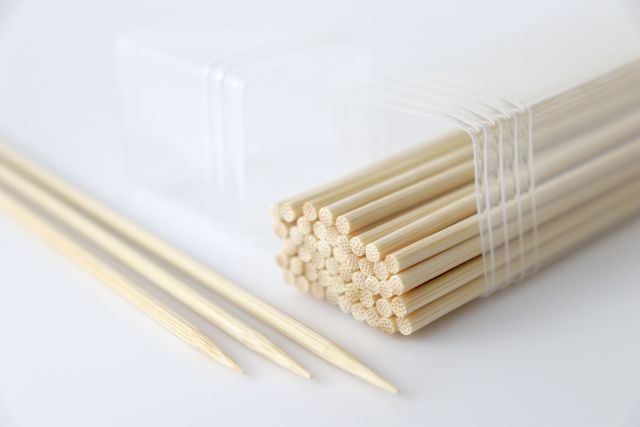
Traditional takoyaki picks make it easy to hook and rotate the batter, but metal tips can scratch nonstick coatings. For a coated plate, choose utensils approved by its manufacturer, such as bamboo skewers or suitable heat-resistant nonmetal picks.
I particularly like bamboo skewers for home parties: they’re inexpensive, easy to replace, and useful for gently lifting the edge of each ball. If the batter won’t turn yet, let it set for a little longer instead of forcing it. Don’t leave plastic or nylon utensils resting on the hot plate.
Oil Brushes and Batter Dispensers
A small heat-safe silicone brush spreads oil more evenly than pouring it into each well. A spouted measuring jug or pitcher also makes pouring much cleaner than scooping batter from a large bowl.
A professional-style batter dispenser, sometimes called a chakkiri in Japan, uses a lever to release batter from the bottom. It’s handy for frequent parties, but a jug with a good pouring lip is enough for most home cooks.
Preparing Your Cooking Area
- Put the appliance on a stable, level, heat-resistant surface with the clearances specified in its manual.
- Keep paper, plastic table covers, curtains, and other flammable materials away from heat and flames. Never block burner vents or place newspaper beneath a portable gas stove.
- Use a ventilation fan where appropriate and route power cords so nobody can pull or trip over them.
- Set out fillings before preheating the pan, and designate a place for used skewers and food scraps.
- Keep young children away from the hot plate, oil, and freshly cooked takoyaki.
How Much Takoyaki Do You Need per Person?
Planning Portions for a Party
As a rough planning guide, allow around 10–15 pieces per person for a snack or 15–25 pieces per person when takoyaki is the main meal. Some guests will want more, especially if you’re not serving substantial side dishes. These are party-planning estimates, not fixed serving sizes.
| Guests | As a snack | As the main meal |
|---|---|---|
| 2 | 20–30 pieces | 30–50 pieces |
| 4 | 40–60 pieces | 60–100 pieces |
| 6 | 60–90 pieces | 90–150 pieces |
Check the yield printed on your takoyaki mix. For example, if a 150 g (5.3 oz) package makes about 30 small balls, three packages would make roughly 90. Different mixes and pan sizes produce different yields, so follow the package rather than assuming every brand uses the same proportions.
Choosing Takoyaki Mix or Homemade Batter
Takoyaki flour mix is the easiest option for beginners. Japanese mixes often contain flour, seasonings, and dashi ingredients, though the formula varies by brand. Add the specified eggs and water according to the label. Don’t assume that every mix includes the same ingredients or has the same allergen profile.
If you’re making batter from scratch, look for a recipe based on all-purpose flour (plain flour in the UK), eggs, dashi, and a little seasoning. Some recipes also include baking powder. Dashi is a Japanese stock, commonly made with kombu and bonito, that gives the batter its savory depth.
The batter should be noticeably thinner than pancake batter. A thick mixture produces heavy, bready balls rather than the softer texture associated with Osaka-style takoyaki. Whisk until smooth, but don’t change a packaged mix’s water ratio without understanding its instructions.
Classic Takoyaki Ingredients and Toppings
Traditional Fillings
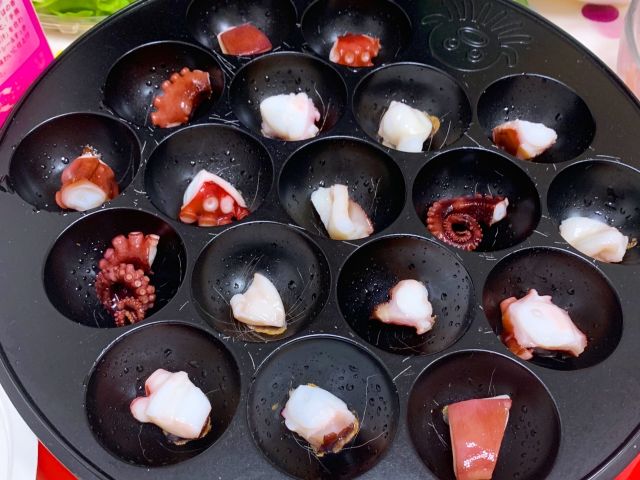
Takoyaki literally means “grilled octopus,” and the classic version contains a small piece of cooked octopus in each ball. Japanese cooks commonly use boiled octopus, cut into approximately 1/2-inch (1.3 cm) pieces. Smaller pieces work better for children or smaller pan wells.
Scallions, tenkasu, and beni shoga are more than decoration. Scallions add freshness, tempura bits add richness and a little texture, and pickled ginger provides a sharp contrast to the savory batter.
If you can’t find tenkasu, some cooks use a little panko as a convenient substitute, although the result is different. The most useful option is to look for tenkasu or agedama at a Japanese or Asian grocery store.
Sauces and Finishing Touches
Takoyaki is commonly finished with a sweet-savory takoyaki sauce, Japanese mayonnaise, aonori, and thin shavings of dried bonito. If takoyaki sauce is unavailable, tonkatsu sauce is a reasonable alternative, though the flavor won’t be identical.
There are lighter ways to serve it, too. Try a little ponzu (citrus-seasoned soy sauce), a pinch of salt, or a small amount of sesame oil. If you’ve used flavorful dashi, taste one piece without sauce before deciding what to add.
Creative Takoyaki Filling Ideas
Savory Filling Combinations
Trying unusual fillings is part of the fun of a Japanese takoyaki party. At my takoyaki parties, these combinations have been especially popular:
| Filling combination | What it tastes like | Preparation tip |
|---|---|---|
| Kimchi + cheese | Tangy, spicy, and creamy | Chop and drain the kimchi |
| Tuna + corn | Mild, savory, and sweet | Drain both; add mayonnaise after cooking if desired |
| Mentaiko + mochi | Salty and pleasantly chewy | Use a small piece of mochi and check for fish allergens |
| Fully cooked sausage + cheese | Rich and familiar | Cut into small pieces so the ball turns easily |
Mentaiko is seasoned pollock or cod roe, while mochi is a chewy Japanese rice cake. Both can be found in some Asian markets. Cut mochi very small, and avoid serving it to young children who could choke on its sticky texture.
Octopus Substitutes
No octopus available? Try cooked shrimp, chopped fish cake (such as chikuwa), imitation crab, fully cooked sausage, corn, or cheese. Shrimp offers a seafood flavor, while cheese or corn makes an easy meat-free filling.
For vegetarian guests, use a vegetarian dashi and check the batter, toppings, and sauces carefully. Traditional bonito flakes and some packaged takoyaki mixes contain fish. For allergies, use separate utensils and prep areas where necessary; swapping the filling alone does not prevent cross-contact.
Dessert Variations
Chocolate or marshmallow fillings can be fun at the end of the party. For a sweeter result, use a separate plain pancake-style batter rather than a dashi-seasoned savory mix. Make dessert balls after the savory batches, since melted sugar can stick to the plate. Let them cool slightly before serving because the fillings can be extremely hot.
How to Cook Takoyaki Without Common Mistakes
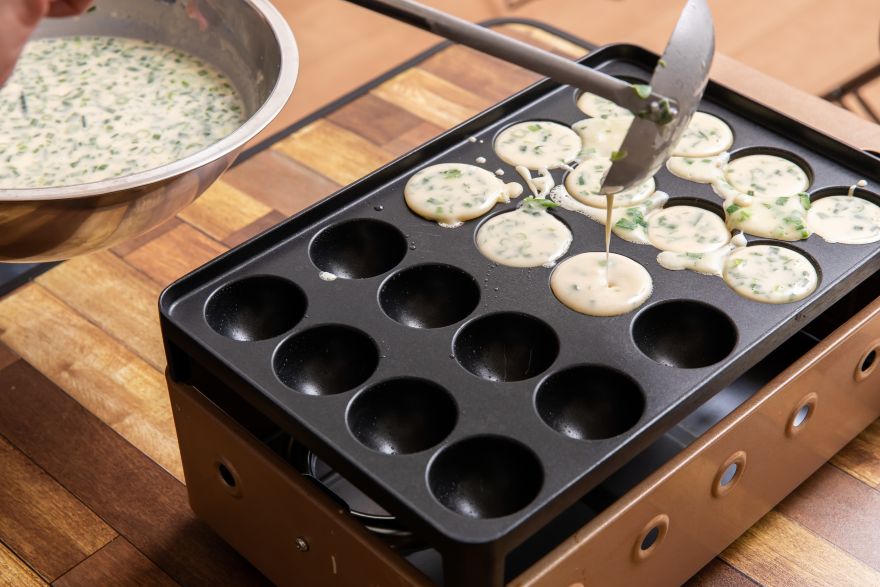
Step-by-Step Cooking Method
- Prepare everything first. Mix the batter, cut the fillings, and put toppings in small bowls.
- Preheat the pan. Follow your maker’s instructions, then brush oil across the wells and surrounding surface.
- Pour the batter. Fill the wells generously. It’s normal for a little batter to spread across the flat surface between them.
- Add the fillings. Put a piece of cooked octopus or another prepared filling into each well, then scatter scallions, tenkasu, and pickled ginger over the batter.
- Wait for the edges to set. Use a suitable pick or bamboo skewer to separate the batter along the lines between wells.
- Turn each ball a quarter turn. Tuck the extra batter inside as you rotate, then turn again as the outside firms up.
- Cook until browned and thoroughly heated through. Rotate the pieces for even browning, transfer them to plates, and add the toppings.
Getting the Texture Right
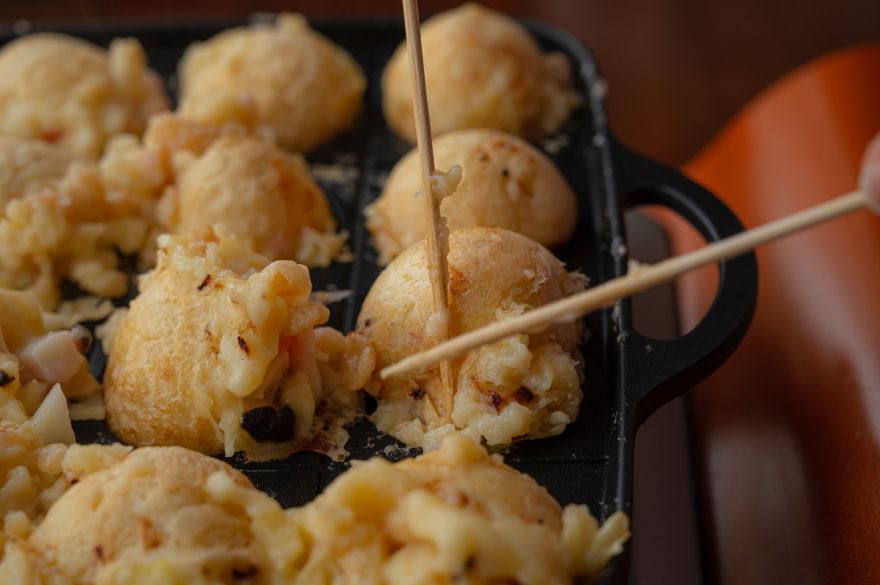
If the takoyaki sticks: Let the surface set a little longer, use enough oil, and avoid scraping a nonstick plate with metal. A new or poorly maintained cast iron pan may also need attention to its seasoning.
If the outside browns before the inside cooks: Reduce the heat and make smaller balls if necessary. A tender center should not be mistaken for raw batter.
If the balls are dense: Check the batter proportions. Takoyaki batter is normally quite fluid, not thick like a typical American pancake mix.
If some wells cook slowly: Move the nearly finished balls between hotter and cooler positions, especially on an electric maker with uneven heating.
Food and Appliance Safety
Use cooked octopus and other ready-to-eat fillings when practical. If adding raw seafood or meat, handle it separately and cook it to a safe temperature; pre-cooking the filling is simpler for a busy party. Egg-containing batter must also be fully cooked before eating. The FoodSafety.gov safe-temperature chart provides guidance for different foods.
Keep perishable fillings and unused egg-based batter refrigerated until needed. Refrigerate cooked leftovers within two hours, or within one hour if the surrounding temperature is above 90°F (32°C). Reheat leftovers to 165°F (74°C), as recommended in the USDA food safety guidance.
Never use an outdoor camping stove inside your home. Even when a gas tabletop appliance is approved for indoor use, follow its ventilation instructions and keep combustible items well away. All takoyaki plates, including electric ones, can cause burns.
What to Serve at a Takoyaki Party
Takoyaki is rich, hot, and filling. I like to balance it with crisp or refreshing side dishes rather than another heavy main course. You don’t need an elaborate menu.
- Chilled sliced tomatoes: Juicy and refreshing between batches.
- Cucumber pickles: Crunchy, tangy, and easy to prepare ahead.
- Hiyayakko: Chilled tofu with scallions and a light dressing.
- Daikon or green salad: Fresh vegetables to balance the savory sauce.
- Clear broth: A light option for a colder evening.
Set toppings and side dishes on a separate part of the table so guests can assemble their plates without reaching across the hot appliance.
Cleaning and Caring for Your Takoyaki Pan
Cast Iron Care
Let the pan cool to a safe handling temperature before cleaning. Remove food residue, wash according to the manufacturer’s instructions, and dry it thoroughly. A little mild dish soap is generally fine for modern seasoned cast iron; the old rule that soap always destroys the seasoning is outdated. Avoid prolonged soaking and the dishwasher. Apply a very thin layer of oil if the manufacturer recommends it. See Lodge’s cast iron care guide for a useful reference.
Nonstick Pan Care
Unplug electric makers and allow the cooking plate to cool. Use a soft sponge and mild dish soap if permitted by the manual, and never immerse electrical parts in water. Avoid metal scrubbers and sudden temperature changes that could damage the surface. When the plate is clean and dry, store it where the coating won’t be scratched by other cookware.
Frequently Asked Questions
Can I make takoyaki without a special pan?
You can cook a similar savory batter in a small skillet, but you won’t get the classic round shape. An aebleskiver pan with suitable rounded wells may also work if it’s compatible with your stovetop.
Can I use all-purpose flour instead of takoyaki mix?
Yes. Use a from-scratch takoyaki recipe with all-purpose flour, eggs, dashi, and seasonings. The batter should be thinner than pancake batter. In the UK, look for plain flour.
Can I make takoyaki without octopus?
Absolutely. Cooked shrimp, sausage, cheese, corn, or fish cake are easy alternatives. Choose fillings that are already cooked when possible.
What is the difference between tenkasu and panko?
Tenkasu consists of crunchy pieces of fried tempura batter, while panko is Japanese-style breadcrumbs. Panko can be a convenient stand-in, but it won’t give exactly the same flavor or texture.
Can I prepare takoyaki ingredients ahead of time?
Yes. Chop the cooked fillings and organize dry toppings ahead of time, keeping perishable items refrigerated. Mix the batter close to cooking time and follow any package storage instructions.