
If your homemade onigiri turns hard, dry, or crumbly after a night in the refrigerator, the problem is not necessarily your rice or your technique. Cooked rice naturally becomes firmer as it cools, and ordinary refrigerator conditions are especially rough on the texture of Japanese rice balls.
For onigiri you plan to eat the next day, the practical solution is to wrap it well, refrigerate it promptly, and gently reheat it before eating when the filling allows. If you are making onigiri farther in advance, freezing usually preserves the rice texture better than keeping it in the refrigerator for several days.
What you should not do is leave homemade onigiri at room temperature for hours simply to keep the rice soft. Texture and food safety are two different issues, and safe temperature control should come first.
Why Does Onigiri Get Hard in the Fridge?
Rice is mostly starch. When rice cooks with water, its starch granules absorb moisture and soften in a process called gelatinization. This is one reason freshly cooked Japanese short-grain rice feels tender, moist, and pleasantly sticky.
As the rice cools, some of those starch molecules begin reorganizing into a more ordered structure. This process is known as starch retrogradation. As it progresses, cooked rice becomes firmer and can seem dry or crumbly even when it has not actually lost all of its moisture.
Cold storage also exposes the rice to dry refrigerator air if it is not wrapped well. The combination of starch retrogradation and moisture loss explains why an onigiri that was soft at dinner can feel surprisingly hard the next morning.
Hard rice does not necessarily mean spoiled rice
Starch retrogradation is a physical change in the rice. It is not the same thing as bacterial spoilage.
However, this does not mean that any hard rice is automatically safe to eat. Food safety depends on how the onigiri was prepared, how long it remained at room temperature, its filling, and how it was stored. You cannot judge safety from texture or smell alone.
What Is the Best Way to Store Onigiri Overnight?
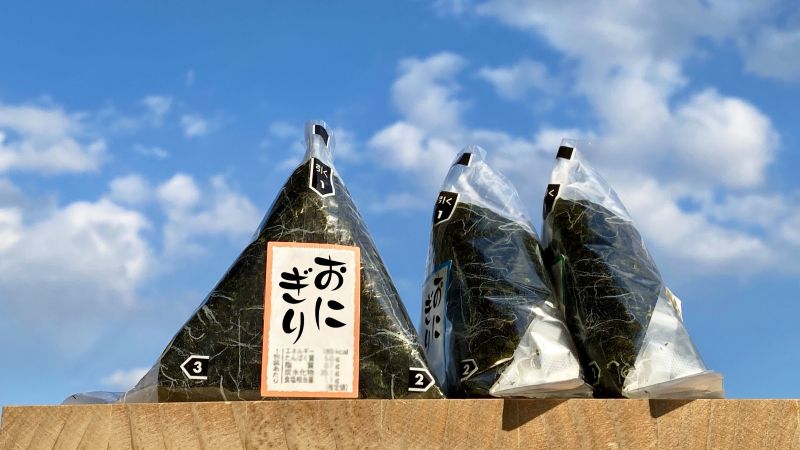
If you are making homemade onigiri the night before work or school, refrigeration is the straightforward option for food safety. The trade-off is that the rice will probably become firmer.
Refrigerating onigiri for the next day
- Shape the onigiri while the rice is still warm enough to hold together. Using plastic wrap to shape it helps minimize direct hand contact.
- Keep cooked fillings fully cooked and avoid contaminating them after cooking.
- Wrap each rice ball closely in plastic wrap so the surface is not exposed to refrigerator air.
- Place the wrapped onigiri in a covered container or resealable food-storage bag.
- Refrigerate promptly at 40°F (4°C) or below.
- If you want crisp nori, store the seaweed separately and add it immediately before eating.
If the filling can be heated, gently reheating the refrigerated rice ball usually improves the texture considerably.
Freezing onigiri for meal prep
If you are preparing several days of onigiri at once, freezing is often a better choice for texture.
Wrap each rice ball individually and freeze it promptly. A home freezer should be kept around 0°F (-18°C). Individual wrapping helps prevent freezer burn, odor transfer, and moisture loss.
For the best texture, reheat frozen onigiri rather than slowly thawing it in the refrigerator. Slow refrigerated thawing gives the rice more time in the temperature range where it tends to become firm.
Keep the nori separate
If you like crisp seaweed, do not wrap the nori around the rice before overnight storage. Moisture from the rice quickly softens it.
Commercial convenience-store onigiri often uses special packaging to keep the rice and nori apart until the package is opened. At home, the simplest version of the same idea is to keep your nori in a dry container or bag and wrap it around the onigiri just before eating.
Fridge vs. Freezer: Which Is Better for Onigiri?
| Storage Method | Rice Texture | Best Use | Important Note |
|---|---|---|---|
| Room temperature | Softest at first | Eating soon after preparation | Cooked rice and perishable fillings should not be left out for extended periods. |
| Refrigerator at 40°F (4°C) or below | Becomes firmer and drier | Next-day onigiri | Wrap tightly and reheat when appropriate. |
| Freezer at 0°F (-18°C) | Usually better after reheating | Meal prep and longer storage | Freeze individually and reheat thoroughly. |
There is no perfect storage temperature that gives homemade onigiri both fresh-made texture and unlimited food safety. For most home cooks, refrigeration is the practical short-term choice, while freezing is the better make-ahead option.
How to Keep Refrigerated Onigiri From Drying Out
Wrap the rice tightly
The most useful thing you can do is limit moisture loss.
Wrap each onigiri closely in food-safe plastic wrap and then place it in a sealed container or storage bag. This creates a better moisture barrier than leaving the rice exposed on a plate or loosely covering it.
Avoid squeezing the rice into a dense brick when shaping it. Traditional onigiri has enough pressure to hold together but still retains the texture of individual grains.
Should you use aluminum foil?
Aluminum foil is common in Japanese lunch packing, and it can be useful as an outer wrapper that protects the shape of an onigiri. However, it is not a magic solution for starch retrogradation.
If moisture retention is the main goal, close-fitting plastic wrap or an airtight container is more useful. If you like using foil, you can place it around an already wrapped onigiri as an additional protective layer.
Remove aluminum foil before microwaving the onigiri unless your microwave manufacturer and the specific packaging explicitly say it is safe. Food should not be completely wrapped in ordinary aluminum foil in a microwave.
Do oil or vinegar keep onigiri soft?
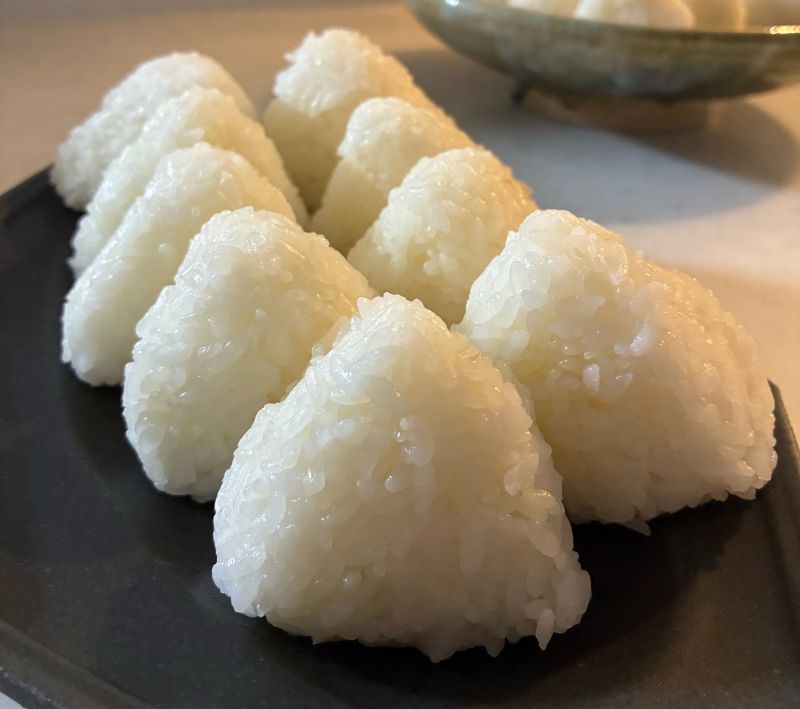
A small amount of sesame oil or another cooking oil is sometimes mixed into seasoned rice. It can change the mouthfeel and may make mixed-rice onigiri seem less dry after cooling, but it also changes the flavor. Think of it as a recipe variation rather than a substitute for proper wrapping and storage.
Vinegar also changes the properties and flavor of rice, which is why seasoned sushi rice behaves differently from plain rice. However, adding a casual splash of vinegar to homemade onigiri does not automatically make it safe to leave at room temperature.
Commercial acidified rice is made using controlled recipes and measured acidity. Unless you are following a validated food-safety process, treat homemade rice as a food that still needs normal time and temperature control.
How to Reheat Hard Onigiri
Heating can soften retrograded starch and restore some of the texture that was lost during refrigeration. The other key is adding or retaining a little moisture while the rice heats.
Microwave method
- Remove any aluminum foil and remove the nori if you want it to stay crisp.
- Place the onigiri on a microwave-safe plate.
- Sprinkle a few drops of water over the rice, or cover it with a slightly damp paper towel or microwave-safe cover.
- Microwave in short intervals rather than heating it for a long time all at once.
- Turn the onigiri if necessary so the center heats evenly.
- Continue until the rice is hot throughout, then add fresh nori before eating.
Microwave power and onigiri size vary considerably, so a fixed heating time is less useful than checking the center and adding short bursts as needed.
Overheating can drive off additional moisture and leave the outside tough, so stop once the rice has softened and heated through.
Reheating frozen onigiri
Frozen onigiri can usually be reheated directly from frozen. Transfer the rice ball to a microwave-safe plate, cover it to retain steam, and heat in intervals until the center is hot.
This generally produces a better texture than thawing the onigiri overnight in the refrigerator and eating it cold.
Keep in mind that not every filling is pleasant after microwaving. If you are preparing freezer onigiri specifically for reheating, choose fillings that also taste good warm.
Steaming and yaki onigiri
If you do not want to use a microwave, gentle steaming is another good way to add heat and moisture at the same time. Steam the onigiri until the center is fully heated and the rice has softened.
A rice ball that has already become slightly dry can also be turned into yaki onigiri. Grill or pan-sear the surface until lightly crisp, then brush it with a small amount of soy sauce and cook briefly again. The toasted exterior gives the leftover rice a completely different texture instead of trying to imitate freshly made onigiri.
Another Japanese option is to place a plain or savory onigiri in a bowl, break it apart slightly, and pour hot tea or dashi over it for a quick ochazuke-style meal.
Which Onigiri Fillings Store Best?
The rice is only part of the storage equation. Your filling also matters.
Cooked, relatively low-moisture fillings are generally easier to use for make-ahead onigiri. Traditional examples include cooked salted salmon, umeboshi (Japanese pickled plum), and kombu cooked in a soy-based seasoning.
Some fillings are less convenient for freezing or reheating:
- Tuna mayo: Popular and delicious, but the texture of mayonnaise-based fillings can change after freezing, and it is not always pleasant to microwave.
- Raw seafood: Not a good choice for casual homemade meal prep or prolonged transport without strict temperature control.
- Cucumber and lettuce: High-water vegetables tend to lose their crisp texture after freezing and thawing.
- Nori: Safe to freeze in many situations, but it will lose the crisp texture most people expect around fresh onigiri if it stays in contact with moist rice.
If you are making a batch specifically for the freezer, cooked salmon, seasoned kombu, plain salted rice, or other fillings that tolerate reheating are usually easier choices.
Food Safety Rules for Homemade Onigiri
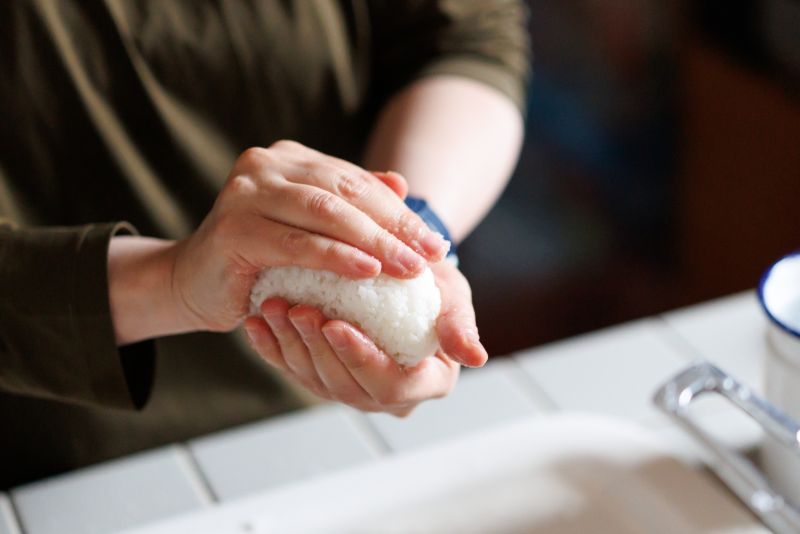
Japanese rice balls are simple food, but cooked rice still needs careful handling.
Do not solve the texture problem by leaving rice out
It can be tempting to avoid refrigeration because room-temperature rice stays softer. That is not a good general storage strategy.
As a practical U.S. food-safety rule, refrigerate or freeze prepared food within two hours. If the surrounding temperature is above 90°F (32°C), that window drops to one hour. Keep refrigerated food at 40°F (4°C) or below.
This matters for the rice itself as well as fillings such as fish, meat, eggs, or mayonnaise-based mixtures.
If you are packing onigiri for school, work, a picnic, or a trip and it will not be eaten soon after preparation, use an insulated lunch bag with adequate cold packs rather than relying on room temperature.
Handle onigiri with clean hands or plastic wrap
Onigiri is traditionally shaped by hand, but food-safety authorities in Japan specifically warn that hand-shaped foods can be contaminated by organisms such as Staphylococcus aureus.
Wash your hands carefully before cooking. For packed lunches and make-ahead onigiri, shaping the rice through clean plastic wrap or using food-preparation gloves reduces direct contact with the rice.
This is especially important if you have a cut or skin infection on your hands.
Vinegar is not a shortcut to room-temperature storage
You may see advice suggesting that adding vinegar makes rice safe to keep out longer. That oversimplifies how acidified rice works.
Restaurants that hold properly acidified sushi rice without refrigeration use controlled formulas and verify acidity. A spoonful of vinegar added at home for flavor is not the same thing.
Unless you are following a tested acidification process, continue to follow ordinary refrigeration and time limits.
Why Is Convenience Store Onigiri Softer?
If you have eaten onigiri from a konbini in Japan, you may wonder why commercial rice balls can remain pleasantly soft while your homemade version becomes hard in the refrigerator.
The important difference is that commercial onigiri is an engineered food product made within a controlled production and distribution system.
Manufacturers can select rice varieties and cooking methods for cold texture, precisely control moisture, use specialized packaging, manage production temperatures, and in some products use approved ingredients or processing aids that help maintain texture or quality.
Commercial products also come with product-specific storage instructions and expiration dates.
For that reason, you should not try to reproduce a convenience store’s storage conditions at home simply by keeping homemade onigiri warmer than normal refrigerator temperature. Follow the label for store-bought onigiri and standard food-safety practices for homemade rice balls.
Frequently Asked Questions
Can I store onigiri in the fridge overnight?
Yes. Wrap each onigiri closely, refrigerate it promptly at 40°F (4°C) or below, and keep the nori separate if you want it crisp. Expect the rice to become firmer; gentle reheating can improve the texture.
Can I leave homemade onigiri out overnight?
No. Do not use overnight room-temperature storage as a general method for homemade onigiri. Cooked rice and many common fillings require proper time and temperature control.
Is it better to refrigerate or freeze onigiri?
For next-day storage, refrigeration is convenient. For meal prep or longer storage, freezing generally preserves the rice texture better once the onigiri is reheated.
Can I make onigiri the night before school or work?
Yes. Refrigerate it promptly overnight. If it will spend several hours in a lunch bag before you eat it, keep it cold with adequate ice packs. Add nori at lunchtime if you prefer it crisp.
Can you freeze tuna mayo onigiri?
You can freeze it, but mayonnaise-based fillings may change texture after freezing and thawing, and reheating tuna mayo is not everyone’s preference. Cooked salmon, umeboshi, seasoned kombu, and plain or mixed rice are generally easier freezer options.
Why is convenience store onigiri softer than homemade onigiri?
Commercial onigiri is produced using carefully controlled rice, moisture, packaging, processing, and distribution methods. Some products also use ingredients designed to maintain quality. Those conditions are different from ordinary homemade storage, so always follow the package instructions rather than trying to copy commercial holding temperatures at home.
“`