
A typical Japanese convenience store onigiri weighs approximately 100–120 grams (3.5–4.2 oz), including the rice, filling, and seaweed. Homemade onigiri can be smaller or larger, depending on how much cooked rice you use.
As for calories, many standard onigiri contain roughly 160–260 calories each, although large varieties can contain considerably more. The exact amount depends on the rice portion, filling, and preparation method.
Whether you’re buying rice balls at a Japanese convenience store, preparing a bento lunch, or tracking your food portions, understanding onigiri weight makes it easier to choose the right size.
How Much Does One Onigiri Weigh?
Onigiri, also called omusubi, are Japanese rice balls typically shaped into triangles, rounds, or cylinders. They are made with cooked rice and often contain a savory filling wrapped in nori (dried seaweed).
In Japan, onigiri are popular for breakfast, lunch boxes, snacks, and quick meals. Their size varies depending on where they are purchased and how they are prepared.
Typical Onigiri Sizes at a Glance
For a standard convenience store onigiri, 100–120 grams (3.5–4.2 oz) is a useful general estimate. Homemade rice balls can be portioned according to individual preferences.
| Onigiri Type | Approximate Weight | Notes |
|---|---|---|
| Mini homemade onigiri | 50–80 g (1.8–2.8 oz) | Suggested cooked-rice portion for smaller rice balls |
| Standard convenience store onigiri | 100–120 g (3.5–4.2 oz) | Estimated total weight, including fillings |
| Standard homemade onigiri | 100–110 g (3.5–3.9 oz) | Suggested cooked-rice portion before adding fillings |
| Large homemade onigiri | 150–180 g (5.3–6.3 oz) | Suggested cooked-rice portion for a substantial rice ball |
These figures are practical guidelines rather than official weight standards. In particular, the homemade portions refer to cooked rice before adding fillings, while the convenience store estimate refers to the finished product.
Does the Weight Include the Filling and Seaweed?
When you weigh a finished onigiri, the total includes the cooked rice, filling, nori, and any additional seasonings or sauces.
For example, a 110-gram onigiri does not necessarily contain 110 grams of rice. Part of that weight comes from the filling and seaweed.
Simple fillings such as umeboshi (Japanese pickled plum), seasoned kombu (kelp), and okaka (bonito flakes) may contribute relatively little weight. Larger portions of tuna mayonnaise, chicken, fried foods, or other substantial fillings can increase the total.
This distinction matters when calculating calories or deciding how much rice to prepare at home.
How Big Are Onigiri at Japanese Convenience Stores?
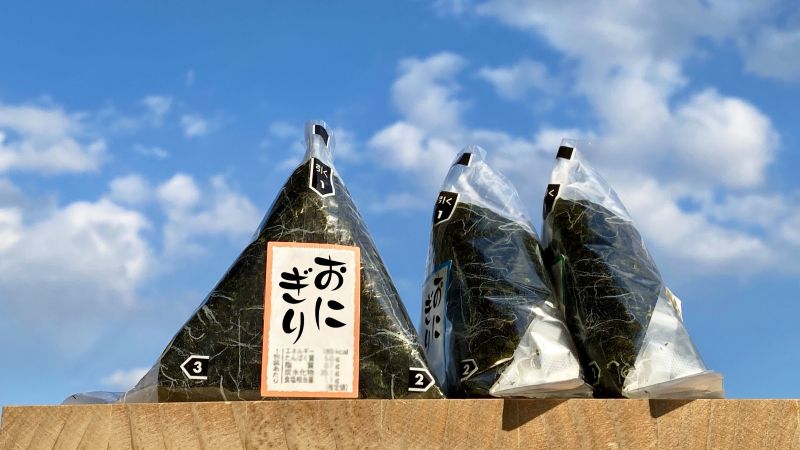
Japan’s major convenience store chains offer a wide variety of onigiri. The best-known chains include 7-Eleven, Lawson, and FamilyMart.
Standard triangular varieties are often similar in size, but the weight and nutritional content can differ depending on the rice, filling, product series, and region.
7-Eleven, Lawson, and FamilyMart
The following table compares practical weight estimates with examples of calorie information published by the retailers.
| Convenience Store | Typical Weight Estimate | Official Calorie Examples |
|---|---|---|
| 7-Eleven Japan | About 100–120 g | Umeboshi: 166 kcal; tuna mayonnaise: 258 kcal in a regional product listing |
| Lawson | About 100–120 g | Umeboshi: 167 kcal; tuna mayonnaise: 226 kcal |
| FamilyMart | About 100–120 g | Umeboshi: 179 kcal; tuna mayonnaise: 219 kcal |
The weight figures are general estimates, not verified company-wide averages. The calorie figures are examples from official product information checked in November 2026. Recipes, availability, and nutritional values may change by region or over time.
You can check individual products through the official websites of 7-Eleven Japan, Lawson, and FamilyMart.
7-Eleven Japan: Its selection includes traditional hand-wrapped onigiri with fillings such as salmon, pickled plum, and tuna mayonnaise. Even products with similar appearances can have different calorie counts.
Lawson: Lawson sells standard onigiri alongside premium and oversized varieties. For example, its listed large tuna mayonnaise onigiri contains substantially more calories than the standard hand-wrapped version.
FamilyMart: FamilyMart also offers oversized rice balls. Some products in its Okii Omusubi (large rice ball) series are advertised as approximately 1.5 times the specified weight of its standard hand-wrapped products.
However, this does not mean every FamilyMart onigiri weighs the same amount. Different product lines have different sizes.
If you need an exact weight, use a kitchen scale after purchasing the product. Calorie labels do not always tell you the total weight in grams.
Origin Bento and Larger Onigiri
Another option in Japan is Origin Bento, a prepared-food chain known for bento meals, side dishes, and rice balls.
Unlike a typical packaged convenience store onigiri, some Origin Bento rice balls are prepared in-store and contain relatively generous portions of rice.
In September 2024, Origin Toshu announced that the cooked-rice portion for selected rice ball products at certain stores would change to mainly 150 grams (5.3 oz), effective October 1, 2024.
Importantly, 150 grams referred to the rice portion, not necessarily the total weight of the finished onigiri. The change applied to specified stores and products, not every Origin Bento location nationwide.
This historical announcement is a useful example of how large some Japanese rice balls can be, but it should not be treated as a guarantee of current portion sizes.
For more details, see the September 2024 report on Origin’s rice portion changes.
When comparing large onigiri with ordinary convenience store products, remember to distinguish between the weight of cooked rice and the weight of the entire rice ball.
How Many Calories Are in One Onigiri?
Calories depend mainly on the amount of rice and the type and quantity of filling.
In Japan, cooked short-grain white rice contains approximately 156 calories per 100 grams according to the Japanese Standard Tables of Food Composition.
The same food composition database lists a general onigiri entry at approximately 170 calories per 100 grams. The values differ because the entries describe different prepared foods.
These figures provide a useful starting point, but fillings such as mayonnaise, fried chicken, and rich sauces can increase the total calories.
Calories by Filling
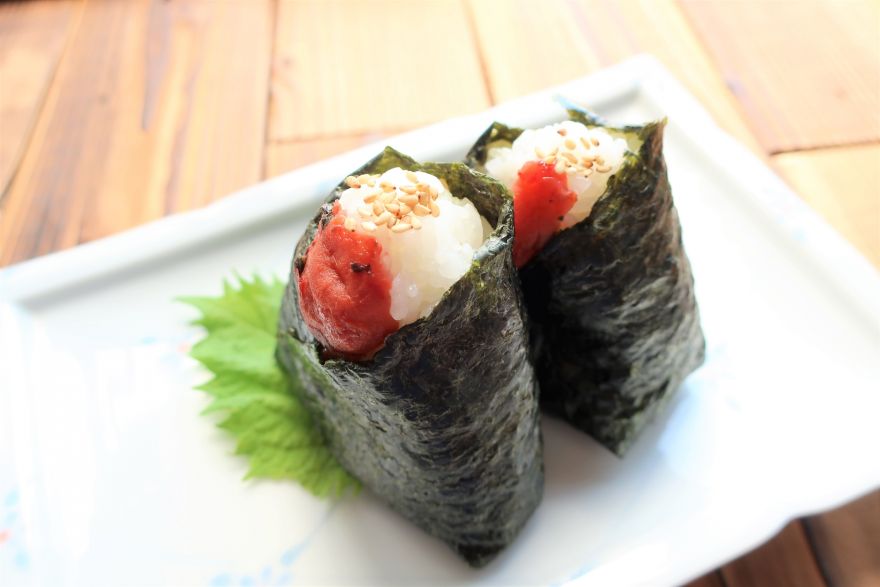
The following figures show examples from Japanese convenience store product listings, rather than fixed calorie values for every onigiri with that filling.
| Onigiri Filling | Example Calories per Piece | Characteristics |
|---|---|---|
| Plain salted rice | 173–186 kcal | Mostly rice, with few additional ingredients |
| Umeboshi (pickled plum) | 166–179 kcal | Tangy filling, generally low in added fat |
| Salmon | 170–174 kcal | Provides some protein from fish |
| Kombu (seasoned kelp) | 173–183 kcal | Savory seaweed filling, sometimes seasoned with sugar or soy sauce |
| Tuna mayonnaise | 219–258 kcal | Mayonnaise adds fat and calories |
| Oversized or richly filled onigiri | About 298–366 kcal in selected examples | Larger rice portions and substantial fillings |
These ranges reflect selected products listed by 7-Eleven Japan, Lawson, and FamilyMart around November 2026. They are not universal nutritional ranges. The weight, recipe, and regional product specification may differ.
For example, tuna mayonnaise is not automatically the highest-calorie choice. An oversized salmon onigiri could contain more calories than a smaller tuna mayonnaise version simply because it contains more rice.
The most reliable approach is to compare the nutritional information for the specific product you intend to eat.
How to Estimate Calories From the Rice Weight
When making onigiri at home, you can estimate the calories by calculating the cooked rice portion first and then adding the ingredients.
Using the Japanese food composition value of approximately 156 calories per 100 grams of cooked white rice:
| Cooked Rice Weight | Approximate Rice Calories |
|---|---|
| 50 g (1.8 oz) | 78 kcal |
| 80 g (2.8 oz) | 125 kcal |
| 100 g (3.5 oz) | 156 kcal |
| 110 g (3.9 oz) | 172 kcal |
| 150 g (5.3 oz) | 234 kcal |
| 180 g (6.3 oz) | 281 kcal |
These numbers represent cooked rice alone. Add the calories from your filling, mayonnaise, oil, sauces, and other ingredients separately.
For example, an onigiri made from 100 grams of cooked rice already contains approximately 156 calories before the filling is added.
You can check the reference values in Japan’s official cooked white rice food composition entry and onigiri food composition entry.
How Much Rice Do You Need to Make Onigiri?
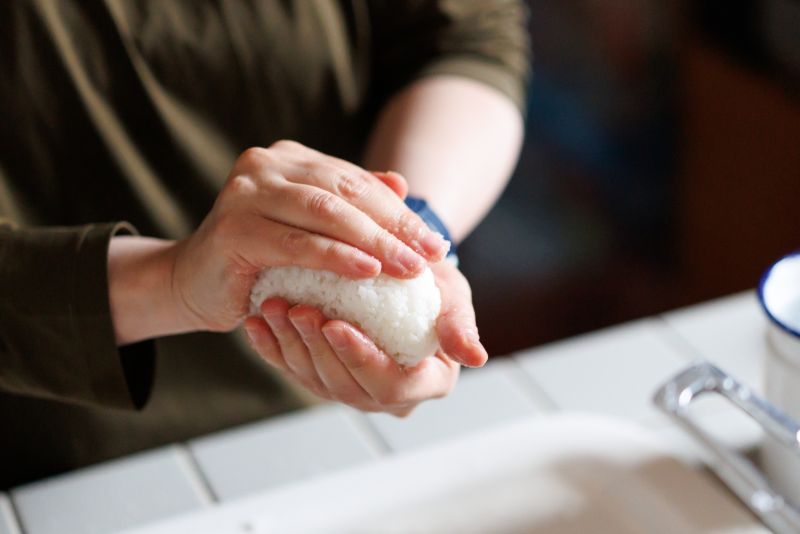
If you’re preparing homemade Japanese rice balls, a kitchen scale is the easiest way to make consistent portions.
Start with approximately 100–110 grams (3.5–3.9 oz) of cooked rice per standard-sized onigiri. You can use a smaller portion for snacks or a larger amount for a more substantial meal.
How Many Onigiri Can You Make From One Japanese Rice Cup?
Japanese rice cookers commonly use a measuring unit called a go (合).
One go is 180 milliliters of uncooked rice by volume, equivalent to approximately three-quarters of a US measuring cup. It is not the same as a full US cup.
One go of uncooked Japanese rice weighs approximately 150 grams (5.3 oz). After cooking, it generally yields about 330–350 grams (11.6–12.3 oz) of cooked rice, depending on the rice and water used.
Using approximately 110 grams of cooked rice for each onigiri, the yield is:
| Uncooked Rice | Approximate Cooked Yield | Standard Onigiri |
|---|---|---|
| 1 go (180 ml) | 330–350 g | About 3 |
| 2 go (360 ml) | 660–700 g | About 6 |
| 3 go (540 ml) | 990–1,050 g | About 9 |
These estimates refer to the rice used, before adding fillings. The actual number depends on your portion size and how much cooked rice remains after serving.
For larger rice balls using 150 grams of cooked rice each, one go will make approximately two onigiri, with a small amount of rice left over.
Homemade Onigiri Sizes for Adults and Children
One advantage of making onigiri at home is that you can adjust the size to suit different appetites.
For young children, smaller portions of approximately 50–80 grams of cooked rice may be easier to hold and eat. These are practical preparation sizes, not nutritional requirements for a particular age.
For example, instead of preparing one large rice ball, you could divide the rice into two or three smaller pieces.
For adults, 100–120 grams of cooked rice is a convenient starting point. Larger portions of 150–180 grams may suit people who prefer a more substantial rice ball.
Individual needs vary with age, appetite, activity level, and the rest of the meal. For children, consider age-appropriate textures, filling sizes, and known food allergies.
How to Portion Rice for Homemade Onigiri
You don’t need a special mold to make evenly sized rice balls. A digital kitchen scale and clean hands are enough.
- Cook Japanese short-grain rice according to the package or rice cooker instructions.
- Place a bowl or clean plate on a kitchen scale and reset the display to zero.
- Measure approximately 100–110 grams of cooked rice for a standard-sized onigiri.
- Divide the rice slightly and add a small amount of your preferred filling.
- Gently shape the rice into a triangle or round ball using clean, slightly damp hands or food-safe plastic wrap.
- Add a strip of nori, either immediately or just before eating if you prefer a crisp texture.
Japanese short-grain rice is particularly useful because its cooked texture helps the grains hold together. Long-grain varieties tend to be less cohesive and can make shaping more difficult.
If you’re preparing several onigiri, weigh the rice portions before adding fillings. This makes it easier to produce consistent sizes and estimate nutritional values.
How to Choose Onigiri for a Balanced Meal
Onigiri can fit into many eating patterns. The important considerations are portion size, filling ingredients, and what you eat alongside the rice ball.
Because rice provides most of the carbohydrates, choosing an appropriate rice portion is generally more useful than avoiding onigiri altogether.
Choosing Fillings and Rice Varieties
If you want a lighter onigiri, start by comparing the size and nutritional label rather than choosing based only on the filling name.
Traditional fillings such as umeboshi, kombu, and salmon are worth considering. They often contain less added fat than mayonnaise-based or fried fillings, although sodium content can still be significant.
Tuna mayonnaise, fried chicken, and other rich fillings can also be enjoyed, but the exact amounts of mayonnaise, oil, and sauce affect the final calorie count.
Some Japanese stores also sell rice balls made with brown rice, mixed grains, or barley. These products may provide more dietary fiber than certain white-rice versions, depending on the ingredients.
However, whole grains do not automatically make an onigiri low in calories. Compare nutrition labels when that information matters to you.
For a more complete meal, consider pairing onigiri with a source of protein and vegetables, such as eggs, tofu, grilled fish, chicken, or vegetable-rich miso soup.
There is no universal rule that everyone should eat exactly one or two onigiri at a meal. The appropriate amount depends on the size of each rice ball and your overall nutritional needs.
Does Cold Rice Make Onigiri Healthier?
You may have heard that cooled rice contains more resistant starch.
Resistant starch is a type of starch that is less readily digested in the small intestine. Some of it can form when cooked rice cools and its starch structure changes.
Research suggests that cooling conditions and rice varieties can affect starch digestibility. However, this does not mean refrigerated onigiri become calorie-free, or that eating cold rice automatically leads to weight loss.
For everyday eating, portion size, ingredients, overall dietary balance, and safe food handling remain more practical considerations.
For background, see this study on rice varieties, resistant starch, and glucose responses.
How to Store Homemade Onigiri Safely
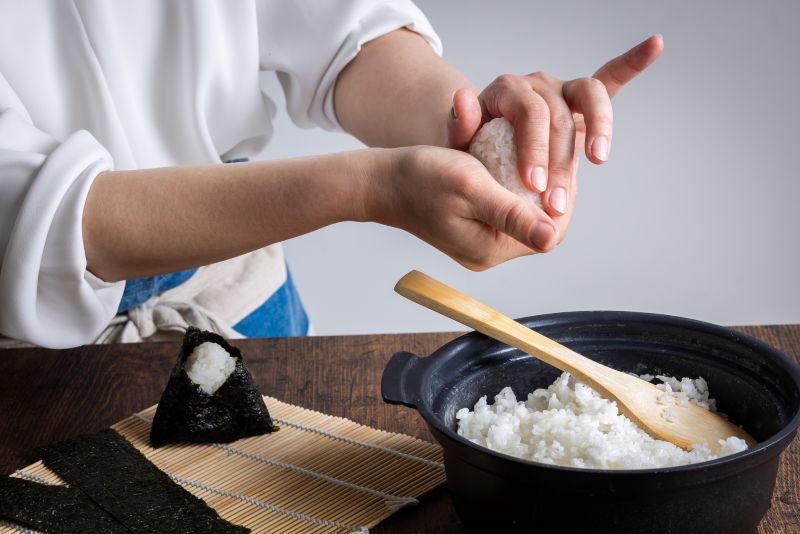
Homemade onigiri are convenient for lunch boxes and meal preparation, but cooked rice requires careful handling.
Cooked rice and prepared fillings can become unsafe when left at room temperature for too long. In particular, Bacillus cereus is a foodborne bacterium associated with improperly stored rice.
When preparing onigiri ahead of time:
- Use clean hands, utensils, and food preparation surfaces.
- Cool cooked rice promptly when it will not be eaten immediately.
- Refrigerate perishable onigiri within two hours of preparation, or within one hour when temperatures exceed 90°F (32°C).
- Keep refrigerated food at 40°F (4°C) or below.
- Follow the package storage instructions for commercially prepared onigiri.
- Keep tuna, egg, fish, and other perishable fillings properly refrigerated.
Refrigerated rice may become firmer as it cools. For some homemade varieties, freezing individual portions and reheating them thoroughly can help preserve a softer texture. Not all fillings freeze equally well.
Do not leave rice balls at room temperature simply to maintain their texture, and do not assume that salt or nori makes them safe for extended storage.
For food safety guidance, refer to FoodSafety.gov’s information on Bacillus cereus and the FDA’s safe food handling recommendations.
Frequently Asked Questions
Is onigiri the same as sushi?
No. Onigiri is usually made with plain cooked rice, sometimes lightly salted, while sushi typically uses rice seasoned with vinegar. Both can contain fish, but they are different Japanese foods.
Why do two similar-sized onigiri have different calories?
The filling, rice quantity, mayonnaise, oil, and sauces can all change the calorie count. Two rice balls of similar weight may have different amounts of fat and carbohydrates.
Can I make onigiri with regular long-grain rice?
You can try, but Japanese short-grain rice is generally easier to shape because the cooked grains stick together more readily. Long-grain rice may crumble when formed into a triangle.
Does the nori wrapper count toward an onigiri’s weight?
Yes. If you weigh the finished rice ball, the nori is part of the total weight. However, the rice normally accounts for the largest portion.
Can you freeze homemade onigiri?
Yes. Onigiri made with suitable cooked fillings can be wrapped individually and frozen promptly. Reheat thoroughly before eating, and add fresh nori afterward if you prefer it crisp. Mayonnaise-based fillings may not freeze well.
How many onigiri should I eat for lunch?
It depends on their size, filling, and your individual needs. One large onigiri can contain more rice and calories than two small ones. For a balanced lunch, consider including protein and vegetables rather than relying on rice balls alone.