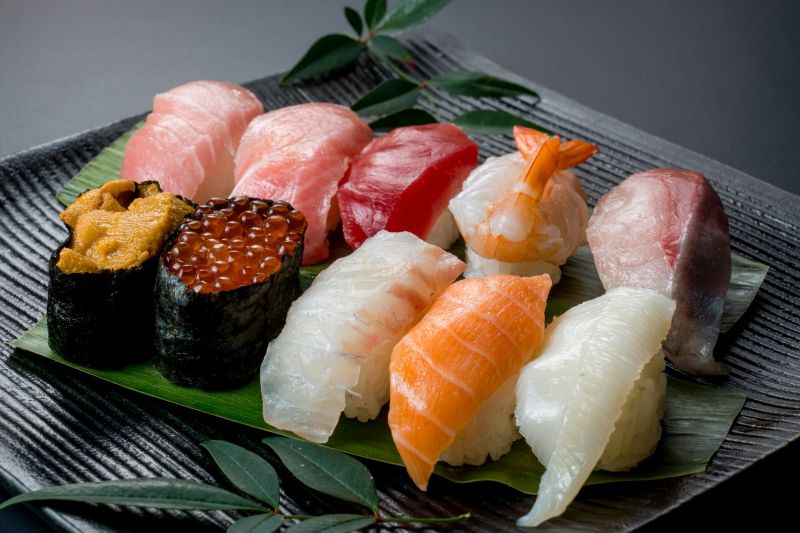
Salmon came first, lean tuna second, and shrimp third in a 2026 survey of 3,000 regular conveyor belt sushi diners in Japan. Nearly half of them (47.7%) named salmon as a topping they often eat. Tuna fans will find plenty to recognize, too. Lean tuna, medium-fatty tuna, marinated tuna, and fatty tuna belly each earned a place in the top 10.
The 10 most popular conveyor belt sushi toppings in Japan
Umios surveyed diners across Japan from February 17 to 20, 2026. Participants were 15 to 59 years old and ate at conveyor belt sushi restaurants, called kaiten sushi in Japanese, at least once a month. They could select several toppings they often ate. Read each percentage as a share of those diners. For example, 47.7% chose salmon, and some of those same people also chose shrimp.
| Rank | Topping | Japanese menu name | Diners who chose it | What to expect |
|---|---|---|---|---|
| 1 | Salmon | サーモン (salmon) | 47.7% | Soft, rich flesh with a mild flavor. |
| 2 | Lean tuna | 赤身 (akami) | 36.4% | Deep-red tuna with a clean, savory finish. |
| 3 | Shrimp | えび (ebi) | 27.8% | Sweet and springy when cooked. The menu may also list raw varieties. |
| 4 | Medium-fatty tuna | 中トロ (chutoro) | 27.4% | Marbling gives each bite richness while the flavor of the tuna still comes through. |
| 5 | Japanese yellowtail | はまち / ぶり (hamachi / buri) | 27.2% | Firm flesh with a rich flavor. The survey groups these two menu names together. |
| 6 | Squid | いか (ika) | 23.4% | A gentle sweetness that develops as you chew. |
| 7 | Minced tuna | ねぎとろ (negitoro) | 22.9% | Soft tuna, often served in a small nori-wrapped cup of rice. |
| 8 | Flatfish fin muscle | えんがわ (engawa) | 19.9% | A narrow cut from along the fins, prized for its firm bite and rich finish. |
| 9 | Marinated tuna | 漬けまぐろ (zuke maguro) | 17.8% | A soy-based marinade seasons the fish before it reaches your plate. |
| 10 | Fatty tuna belly | 大トロ (otoro) | 17.4% | Generously marbled tuna with a soft, buttery texture. |
Salmon has led this question for 15 consecutive years. When asked why they ate it most often, some diners mentioned its price and the variety of salmon dishes on offer. Lean tuna fans mentioned its savory flavor and how reliably good it tastes across seasons. Read the 2026 Umios conveyor belt sushi survey (Japanese PDF).
What changes when diners can pick only one?
The topping people eat most often
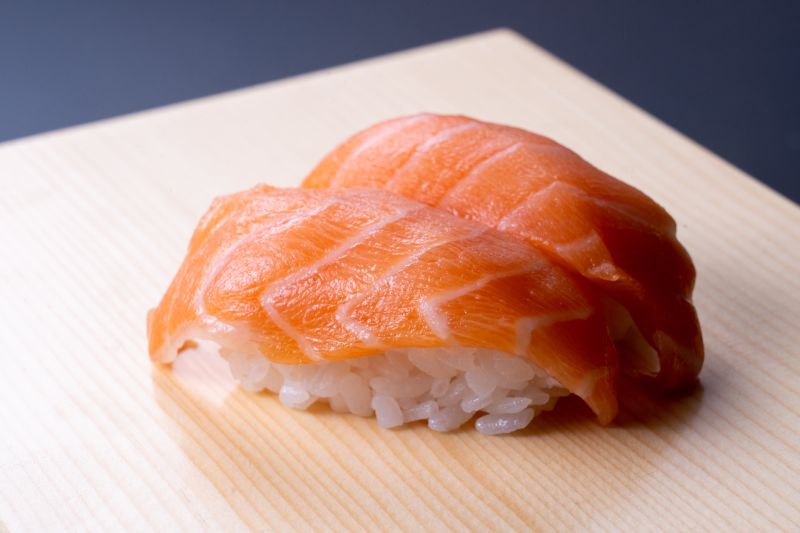
Imagine someone who regularly orders salmon, shrimp, and squid but eats salmon on almost every visit. All three count in the table above. Only salmon counts when that diner has to name the one topping they eat most often.
Umios put that second question to the 2,951 respondents who had identified at least one topping they often ate. Salmon still came first (22.0%), followed by lean tuna (11.8%) and shrimp (6.3%). Yellowtail (5.9%) edged ahead of medium-fatty tuna (5.8%), reversing their order in the top 10. The two salmon figures answer different questions about the same dining habit.
The topping people like best
Your favorite might be the plate you save for a birthday. A separate 2026 poll by Japanese cooking site Kurashiru asked 200 people to name their favorite conveyor belt sushi topping. Salmon received 54 votes, tuna 52, and engawa 21. Just two votes separated salmon and tuna. Kurashiru reported tuna as one category, while Umios listed several cuts and preparations separately.
What to order at a conveyor belt sushi restaurant
Pick three plates you can compare
For a first visit, try salmon, lean tuna, and steamed shrimp. The shift from soft salmon to lean, savory tuna to springy shrimp makes it easy to tell what you enjoy. If texture interests you more than flavor, try squid alongside engawa. Both look pale on the plate, but squid has an even chew, while engawa has a firmer bite along the grain.
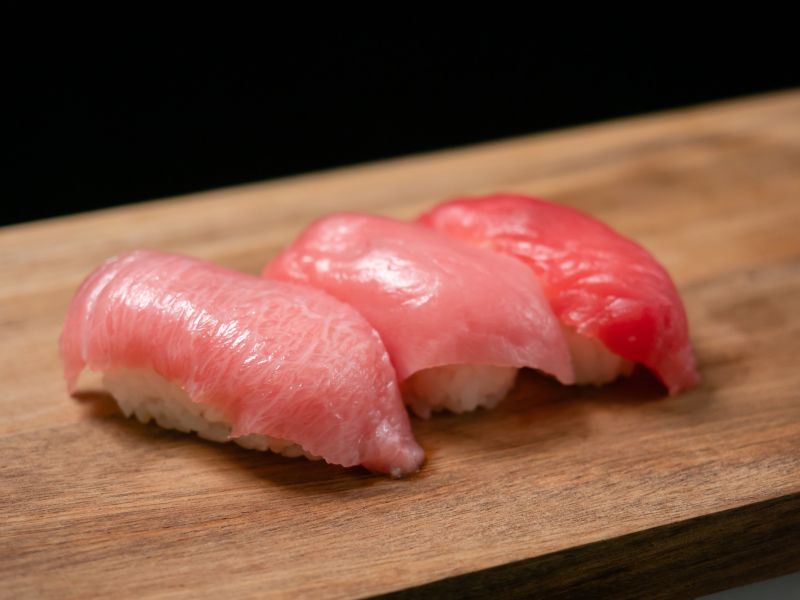
For a tuna tasting, look for akami, chutoro, and otoro on the same menu. Start with the lean red slice and work toward the most marbled one. If you prefer the akami, try zuke maguro next. Taste it before adding soy sauce so you can judge the marinade. For photos and descriptions of other menu items, see the guide to Japanese sushi toppings.
Choose a first plate, a last bite, or a splurge
Salmon was the most common first plate in the Umios survey (19.4%), followed by lean tuna (13.3%) and medium-fatty tuna (6.9%). Salmon also led as a last plate (9.7%). One detail worth borrowing for your own order is the tie for third place at the end of the meal. Minced tuna and tamago, a Japanese omelet, each drew 3.9%. Tamago makes a gently sweet last bite.
If you want one special plate, check the displayed price and piece count before ordering. Fatty tuna belly, sea urchin, and salmon roe topped the survey’s list of items diners often held back from ordering. A seasonal special can be another way to spend that part of your budget, especially if it features a local fish you rarely see at home.
Frequently asked questions
What does neta mean on a sushi menu?
Neta is the ingredient used as a sushi topping, such as salmon, squid, or omelet. Nigiri describes the style of sushi: a small portion of hand-formed vinegared rice with a topping.
Can you add up the tuna percentages?
A diner could select akami, chutoro, and otoro in the same response. Adding those percentages would count that person three times. To compare all tuna with salmon, you would need the number of individual diners who selected at least one tuna option.
Which of the top 10 can I order cooked?
Look for mushi ebi (蒸しえび), or steamed shrimp. The broader label ebi means shrimp and can cover several preparations. If you want a cooked option beyond the top 10, try tamago, the omelet topping.
Does the ranking include children’s favorites?
The youngest participants in the Umios survey were 15. The table includes teenagers’ responses alongside adults’ and gives no separate ranking for younger children.