
Is it rude to slurp udon in Japan? No. Slurping udon is generally acceptable in Japanese noodle restaurants, just as it is with soba and ramen. Making some noise while eating noodles is a familiar part of Japanese food culture, and it is not automatically considered bad manners.
However, this does not mean you have to slurp loudly. The volume, the restaurant setting, and the comfort of people around you all matter. Whether you are visiting Japan or eating at a Japanese restaurant abroad, understanding these differences can help you enjoy your udon without worrying about breaking an unfamiliar etiquette rule.
Is It Rude to Slurp Udon in Japan?
In Japan, slurping udon is generally considered a normal way to eat noodles rather than a sign of poor table manners.
This is not just an informal custom. The Japan National Tourism Organization explains that slurping noodles such as udon, soba, and ramen is generally accepted in Japanese noodle shops. It also makes clear that visitors are not required to slurp.
If you walk into a casual udon restaurant in Japan, you may hear customers drawing noodles into their mouths with a noticeable slurping sound. Most people will simply continue enjoying their meals.
Still, there is a difference between making a natural slurping sound and deliberately eating as loudly as possible.
Is Loud Slurping Expected?

No. Japanese diners are not required to make loud noises to demonstrate that they enjoy their food.
Some people slurp enthusiastically, while others eat more quietly. Both approaches can be perfectly acceptable.
Slurping is sometimes associated with enjoying the noodles and their flavor, but it should not be interpreted as an obligation or a formal expression of appreciation.
If you find slurping uncomfortable or difficult, there is no need to imitate the person sitting next to you.
Does the Setting Matter?
Although slurping udon is widely accepted, the atmosphere of the restaurant can influence how much noise feels appropriate.
| Dining situation | Practical etiquette advice |
|---|---|
| Casual udon or soba restaurant in Japan | Natural slurping is generally accepted. |
| Busy noodle counter or self-service restaurant | Slurping is common, but avoid splashing broth or disturbing others. |
| Quiet or formal restaurant | Eat at a comfortable pace and consider keeping the noise more subdued. |
| Meal with international guests | Be considerate of different dining customs without assuming that everyone shares the same preferences. |
| Japanese restaurant outside Japan | Consider the restaurant’s atmosphere and local dining expectations. |
These are practical guidelines rather than strict rules. A quiet restaurant does not automatically prohibit slurping, and a busy noodle shop does not require anyone to make noise.
Udon vs. Soba: Are the Etiquette Rules Different?
One common question is whether slurping soba is acceptable while slurping udon is considered rude.
There is no general Japanese etiquette rule that permits slurping soba but forbids slurping udon. Both types of noodles are commonly eaten with slurping sounds.
The confusion may come from the different culinary qualities traditionally associated with soba and udon.
The Difference Between Udon and Soba
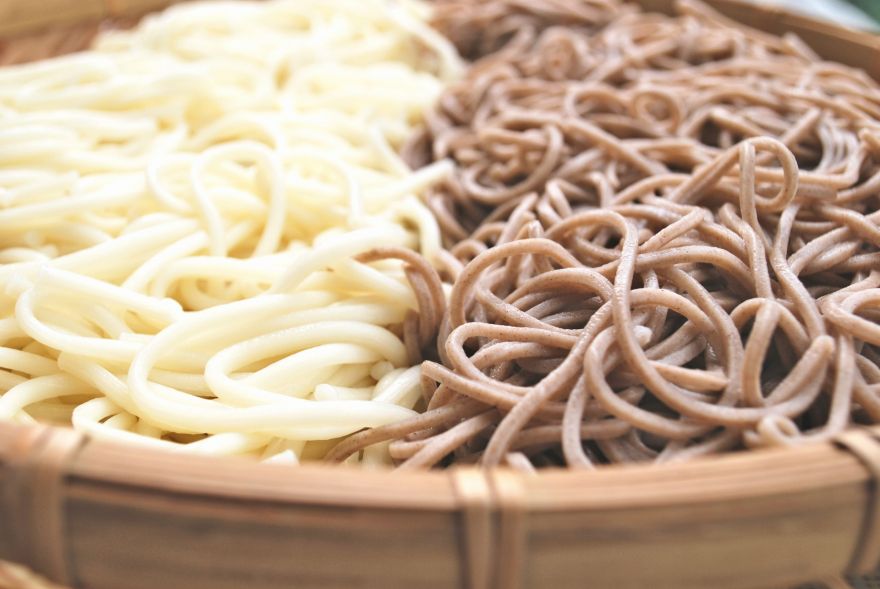
Udon and soba are two traditional Japanese noodle dishes, but their ingredients, textures, and flavors differ.
| Feature | Udon | Soba |
|---|---|---|
| Main ingredient | Wheat flour | Primarily buckwheat flour, sometimes mixed with wheat flour |
| Typical appearance | Thick, pale noodles | Usually thinner, grayish-brown noodles |
| Characteristic qualities | Smoothness, chewiness, and springy texture | Distinctive buckwheat flavor and aroma |
| Common serving styles | Hot broth or chilled with dipping sauce | Hot broth or chilled with dipping sauce |
| Slurping etiquette in Japan | Generally accepted | Generally accepted |
Soba is often appreciated for its distinctive aroma. Some soba enthusiasts believe that slurping helps them experience that aroma more fully.
Udon, meanwhile, is especially valued for its texture. Japanese diners sometimes describe this quality using the word koshi, referring to the firmness and resilience of the noodles.
However, udon also has flavor beyond the noodles themselves. Its accompanying dashi broth may contain kombu (kelp), katsuobushi (dried bonito flakes), or dried sardines, depending on the recipe and region.
Slurping can be part of enjoying both the noodles and the broth. The different characteristics of udon and soba do not create separate etiquette rules.
Sanuki Udon and Regional Noodle Culture
Regional food traditions help explain why udon slurping is a normal part of Japanese dining.
Kagawa Prefecture, on Japan’s Shikoku island, is particularly famous for Sanuki udon, a style of udon known for its firm, chewy noodles.
Udon is deeply connected to everyday life in Kagawa. Many restaurants specialize in freshly prepared noodles, and casual self-service shops are particularly familiar to visitors.
Kagawa University’s guide to Sanuki udon describes making noise while eating udon as normal in the region.
For diners who grow up with this food culture, the sound of noodles being slurped may feel as ordinary as the clinking of dishes in a restaurant.
This illustrates an important point: Japanese food etiquette is influenced by regional traditions, dining environments, and personal habits, not just a single nationwide expectation.
Why Do Japanese People Slurp Noodles?
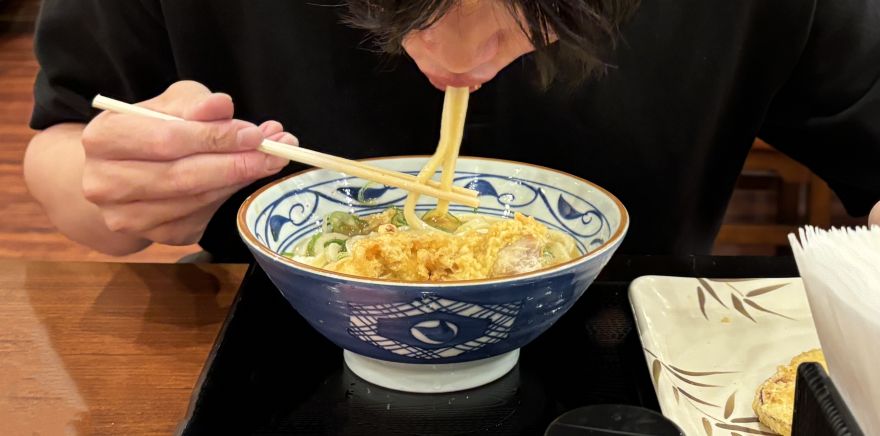
Japanese noodle slurping is often explained through a combination of practical benefits, flavor preferences, and culinary history.
There is no single proven explanation for why the custom developed, but several factors help explain why it remains familiar today.
Cooling Hot Noodles
Udon, soba, and ramen are frequently served in hot broth.
Slurping draws some air into the mouth along with the noodles. This is often described as a way to make hot noodles easier to eat.
However, slurping does not guarantee that food is cool enough to eat safely. If the noodles or broth are too hot, allowing them to cool before eating is the better option.
The practical advantage is that diners can lift a manageable portion of noodles with chopsticks and bring it toward their mouths without using a fork to wind the noodles.
Enjoying the Aroma of Noodles and Dashi
Another common explanation involves aroma.
Much of what we experience as flavor comes from aromas released while eating. This includes aromas that travel from the mouth toward the nose.
Some noodle enthusiasts believe that drawing in air while slurping makes the aroma of soba or dashi more noticeable.
This idea is especially associated with soba, whose buckwheat fragrance is an important part of its appeal.
With udon, the experience may involve both the texture of the wheat noodles and the aroma of the accompanying broth.
For example, a bowl of Sanuki udon made with an iriko-based dashi, using dried sardines, has a different flavor profile from udon served with kombu and bonito broth.
Slurping is one way some diners enjoy these characteristics, but it is not necessary to appreciate the taste or aroma of Japanese noodles.
Edo-Period Soba Culture
The history of noodle slurping is closely associated with soba culture in Edo, the former name of Tokyo.
During the Edo period (1603–1868), soba became a familiar food among ordinary townspeople. Street stalls provided a convenient place to enjoy a quick meal.
Unlike formal dining occasions, busy noodle stalls offered a more relaxed environment where customers could eat quickly.
One historical explanation suggests that slurping became established in these casual settings before influencing the way other Japanese noodles were eaten.
The food-culture publication Nippon.com discusses this explanation in its history of Japanese noodle slurping, drawing on the perspective of a long-established Tokyo soba restaurant.
Slurping is also a familiar feature of traditional Japanese storytelling.
In the classic rakugo story Toki Soba, a performer acts out eating soba at a street stall. The sound and movements of eating noodles become part of the performance.
This illustrates how recognizable noodle-eating sounds became within Japanese popular culture. It does not, however, establish that rakugo itself created the custom.
When Can Slurping Udon Be Considered Rude?
Even in Japan, not everyone enjoys loud eating sounds.
Some people associate slurping with a satisfying meal, while others find repetitive or unusually loud noises unpleasant.
These reactions can be influenced by personal preferences, family habits, and the dining environment.
The important distinction is between an accepted way of eating noodles and behavior that unnecessarily disturbs people nearby.
Slurping vs. Loud Chewing
Slurping noodles and chewing with your mouth open are not the same thing.
- Slurping: A sound produced when noodles are drawn into the mouth, sometimes together with air or broth.
- Loud chewing: Smacking or other chewing sounds, particularly when someone repeatedly chews with their mouth open.
In Japanese noodle culture, slurping is commonly accepted. Deliberately smacking your lips or chewing noisily with your mouth open is generally not treated as the same cultural practice.
Someone may comfortably slurp udon and then chew quietly with their mouth closed.
For this reason, it is misleading to describe every eating sound as equally acceptable or equally rude.
Excessive Noise and Splashing Broth
The manner of eating can matter as much as the sound itself.
For example, forcefully pulling a large bundle of udon into your mouth may cause hot broth to splash onto the table, your clothing, or nearby diners.
Letting long noodles swing around or repeatedly dropping them back into the bowl can also make the meal messier than necessary.
At a busy noodle counter, moderate slurping is unlikely to attract attention. In a quiet dining room, an unusually loud sound may be more noticeable.
There is no official volume limit for acceptable slurping. The practical goal is to enjoy your meal without creating unnecessary noise or mess.
Does Etiquette Depend on Gender?
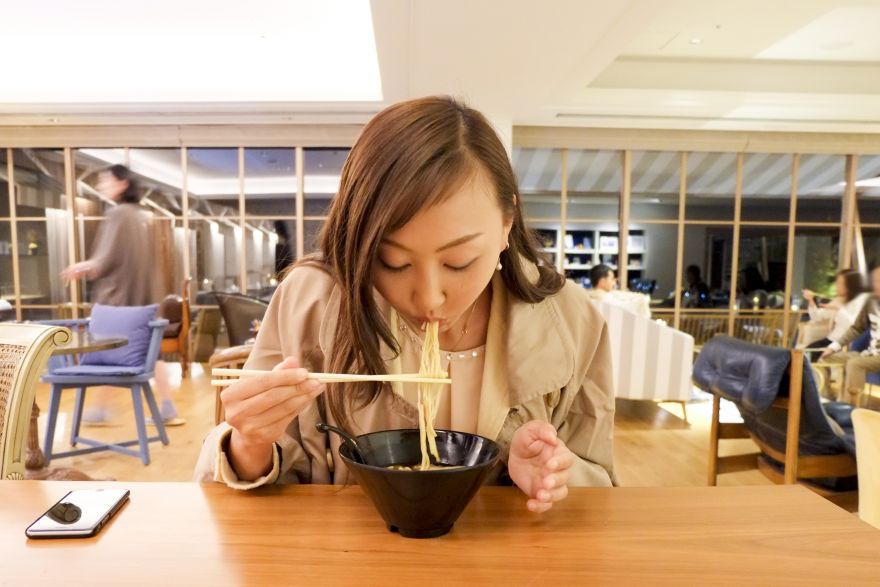
Some discussions about noodle etiquette focus on whether women should eat more quietly than men.
However, there is no general Japanese noodle etiquette rule that makes slurping acceptable for men but inappropriate for women.
Individual diners may have different expectations about what looks elegant or attractive, and traditional gender stereotypes can influence those opinions.
Those personal preferences should not be confused with a universal rule of Japanese dining.
Regardless of gender, a person can eat udon naturally while being considerate of others at the table.
How to Eat Udon Politely Without Making Too Much Noise
If you are visiting Japan and feel unsure about slurping, you can enjoy udon without making a particularly loud sound.
You do not need special training or elaborate dining techniques.
A Simple Step-by-Step Method
- Pick up a small portion of noodles. Use your chopsticks to lift only as many strands as you can comfortably manage.
- Keep the noodles near the bowl. Avoid lifting them unnecessarily high or swinging them over the table.
- Let excess broth drip back into the bowl. This reduces the chance of splashing while you eat.
- Bring the noodles toward your mouth at a comfortable pace. You may slurp gently, or guide them into your mouth more quietly.
- Chew normally. Once the noodles are in your mouth, chew comfortably with your mouth closed.
If a spoon is provided, you can also use it to support a small portion of noodles or to drink some broth. Not every udon restaurant provides a spoon, so this is optional.
If the noodles are too hot, let them cool. There is no need to slurp forcefully just to match other customers.
What About Cold Udon?
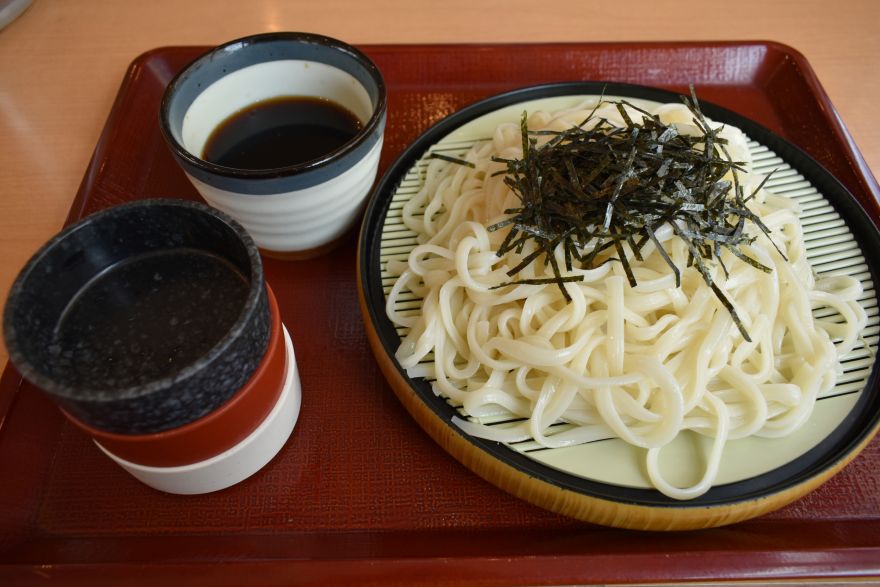
Udon is not always served in hot soup.
Cold udon is also popular in Japan, particularly during warmer months. One familiar example is zaru udon, chilled noodles served separately from a dipping sauce.
To eat zaru udon, pick up a small amount of noodles with your chopsticks, dip them into the sauce, and bring them to your mouth.
You can slurp cold udon if you wish, but eating it quietly is also acceptable.
Since the noodles are already cold, cooling them is not the main consideration. Instead, the experience centers on the noodles’ texture and the flavor of the dipping sauce.
What Is Noodle Harassment in Japan?
You may come across the term nu-hara when reading about Japanese noodle etiquette.
This expression is short for “noodle harassment,” a term used in Japanese media and online discussions to describe discomfort or complaints related to loud noodle slurping.
The expression attracted attention around 2016, when people debated whether the Japanese custom might make some international visitors uncomfortable.
However, the debate should not be interpreted as proof that all foreign visitors dislike slurping or that all Japanese people approve of it.
Some international visitors find slurping surprising at first but come to appreciate the custom. Others prefer to eat quietly. Japanese diners themselves also have different personal preferences.
The term does not establish a formal rule that noodle slurping is prohibited or inherently offensive.
A useful approach is to respect the local food culture while recognizing that people have different levels of comfort with eating sounds.
If you are visiting Japan, you do not need to criticize someone for slurping udon at a traditional noodle restaurant. Equally, you do not need to force yourself to slurp to demonstrate respect for Japanese culture.
Frequently Asked Questions
Can you eat udon without slurping in Japan?
Yes. Slurping udon is generally accepted, but it is not required. Eating quietly is perfectly fine, even in a traditional Japanese noodle shop.
Are tourists expected to slurp noodles in Japan?
No. Japanese dining etiquette does not require foreign visitors to imitate local slurping habits. You can enjoy your noodles in whichever comfortable and considerate way works for you.
Is slurping udon acceptable in the United States or United Kingdom?
It depends on the restaurant and the people around you. Slurping may be normal in a casual Japanese noodle shop, while quieter eating may be expected in other dining environments. The fact that a dish is Japanese does not automatically determine the etiquette of every restaurant abroad.
Is it okay to bite udon noodles instead of slurping the entire strand?
Yes. You can eat udon in manageable portions rather than trying to pull an entire long strand into your mouth at once. Be careful to avoid dropping noodles or splashing broth when you do so.
Can you use a fork to eat udon in Japan?
You can ask restaurant staff whether a fork is available if chopsticks are difficult for you. Some restaurants can provide one, but it is not guaranteed, especially at small traditional noodle shops.
Does Japanese noodle-slurping etiquette apply to pasta?
Not automatically. The acceptance of slurping is associated with Japanese noodle dishes such as udon, soba, and ramen. Italian-style pasta is generally eaten according to different dining customs, even when served in Japan.