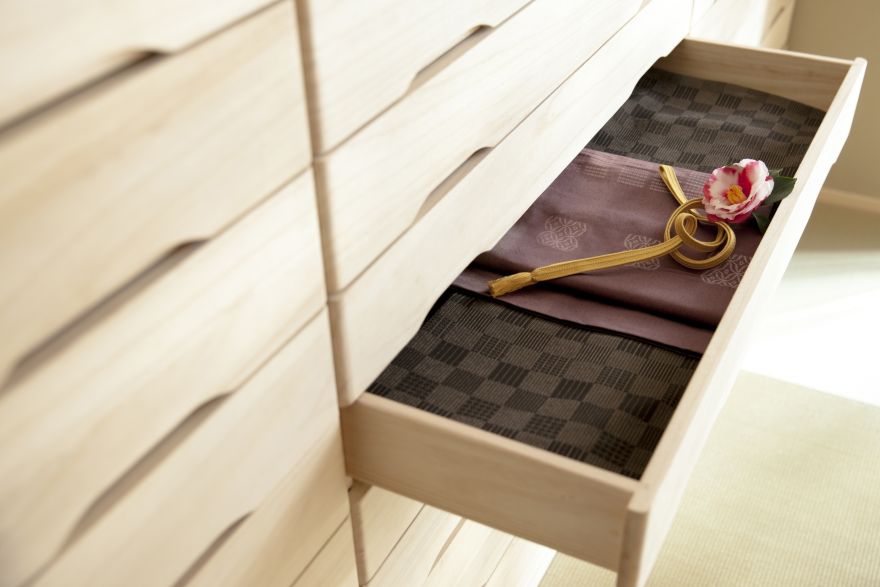
You do not need a traditional Japanese tansu chest to store a kimono safely. A clean, dry kimono can be folded, wrapped in tatoushi paper, and kept flat in a suitably sized storage box or drawer. The important things are protecting the fabric from light and dust, avoiding tight compression, and keeping the storage area free from persistent dampness and pests.
If you live in an apartment or have only a small closet, a paulownia wood box, a carefully managed plastic bin, or an archival storage box can all be practical options. The best choice depends on the kimono’s material, condition, value, and how often you wear it.
What Is the Best Way to Store a Kimono at Home?
For an everyday kimono, start with a flat container that fits the folded garment without forcing extra creases. For a fragile antique or an irreplaceable silk kimono, conservation-quality materials and professional advice are more important than the traditional appearance of the box.
| Storage option | Best suited to | What to watch for |
|---|---|---|
| Paulownia wood box or chest (kiri) | Traditional folded kimono storage | Check interior size, finish, cleanliness, and room humidity; wood is not a guarantee against mold or insects. |
| Polypropylene or polyethylene storage bin | Affordable storage in a small closet | Store only clean, thoroughly dry garments; avoid condensation and monitor the bin regularly. |
| Archival-quality, acid-free flat box | Delicate vintage or heirloom pieces | Use appropriate unbuffered tissue for silk and provide enough space to support the folds. |
| Nonwoven fabric organizer | Frequently used cotton yukata and accessories | Choose a clean, non-shedding material; it does not control humidity or protect against every pest. |
The Canadian Conservation Institute recommends flat support, clean storage, stable environmental conditions, and appropriate protective materials for textiles. Those principles apply whether your storage furniture is expensive or inexpensive.
How to Store a Kimono Without a Tansu
Measure the folded kimono and tatoushi first
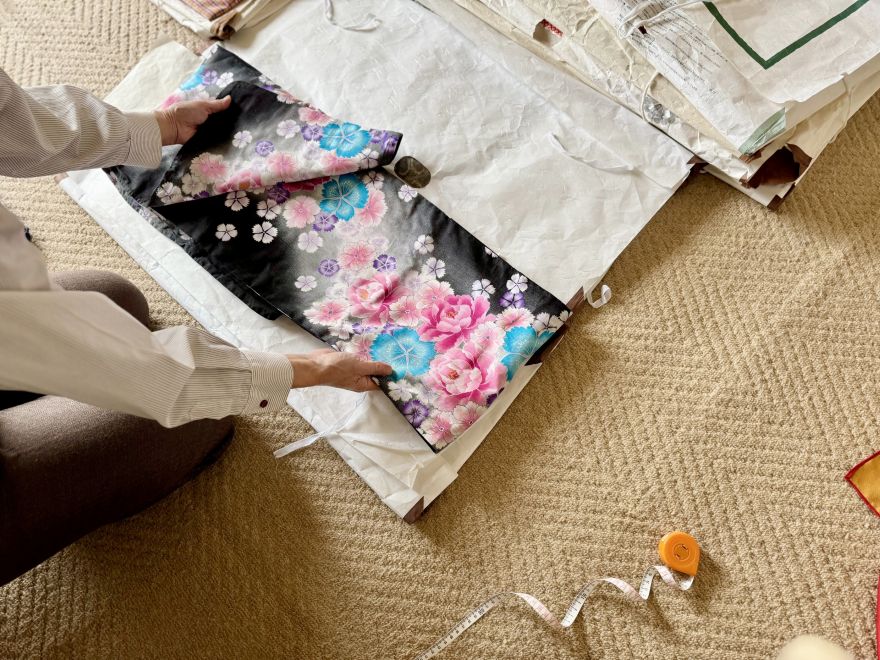
In Japan, a kimono is traditionally folded along its construction lines and placed inside a paper wrapper called tatoushi (also written tatōshi or tatoshi). Many long kimono wrappers measure about 87 cm (34.3 inches), although sizes vary. Smaller versions are commonly used for obi and other garments.
Measure the wrapper you actually own, then check the internal length and width of the drawer or storage box. Exterior measurements can be misleading. For example, a paulownia box listed by the Japanese retailer CAINZ measures approximately 91 cm (35.8 inches) across the outside but only 88 cm (34.6 inches) inside. That may fit an 87 cm wrapper, but only with limited clearance.
Do not bend the paper wrapper or force the kimono into a box that is too narrow. Allow a little extra room for easy handling, and check the depth so heavy stacks do not crush collars, embroidery, or decorative threads.
Paulownia boxes: the traditional Japanese option
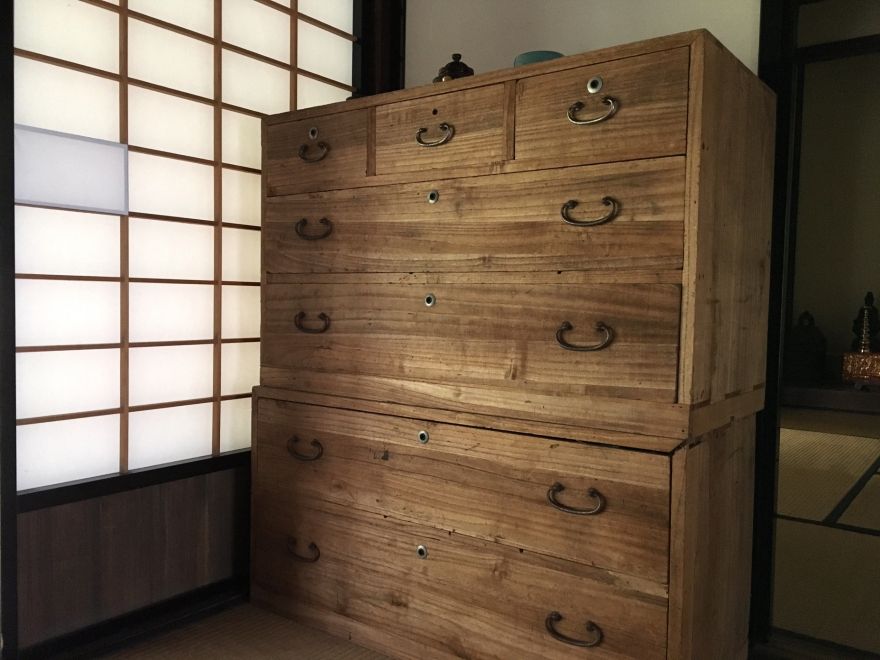
Paulownia wood, called kiri in Japanese, has long been used for kimono chests. It is relatively lightweight, and wood can absorb and release some moisture as surrounding conditions change. Japanese retailers such as Nitori and CAINZ sell various paulownia storage products, including closet-sized boxes and drawer units. These are examples of Japanese storage culture, not products you must buy to care for a kimono abroad.
A compact box is easier to fit inside a modern closet than a full-size kiri tansu. If choosing one, inspect its interior dimensions, surfaces, joinery, and finishes. Keep the box in a dry, stable room and consider a suitable protective layer between delicate textiles and the wood. Paulownia is not mold-proof, insect-proof, or automatically conservation-grade. For museum-quality storage of a valuable antique, an archival box may be more appropriate.
Can you use a plastic storage bin?
Yes, with care. A rigid bin made from suitable polypropylene (PP) or polyethylene (PE) can be useful for a regularly worn kimono. Plastic is lightweight, stackable, relatively affordable, and available in many countries. Unlike a traditional wood chest, however, a closed bin does not provide much air exchange; if you put away a damp garment or leave it near a cold wall, moisture problems can develop.
- Choose a wide, shallow bin that supports the folded kimono without squeezing it.
- Make sure both the garment and the container are completely dry before closing the lid.
- Use an appropriate clean fabric liner or archival tissue as a barrier where needed.
- Keep the bin away from direct sunlight, heaters, damp floors, and cold exterior walls.
- Inspect the inside regularly for condensation, odor, staining, or insect activity.
Do not confuse a rigid, stable storage bin with a thin dry-cleaning bag. Thin garment bags are a poor long-term choice because they can trap moisture and may use unsuitable plastics. Avoid vacuum-compressing a silk kimono: pressure can create hard folds and flatten delicate details.
Budget alternatives available outside Japan
If you cannot find a paulownia box, look for a wide archival textile box, a clean shallow drawer, or a suitable PP or PE bin at a home-improvement or household goods store. Nonwoven fabric organizers may help keep regularly used cotton yukata and accessories separate, but do not assume every inexpensive fabric bag is safe for long-term silk storage. Avoid scented materials, rough seams, and direct contact with unknown dyes or finishes.
In Japan, 100-yen stores such as Daiso and Seria provide inexpensive organizers. Elsewhere, dollar stores, discount homeware shops, and sewing-supply stores can serve a similar organizing role. The goal is to find materials and dimensions that work for your garment, not to reproduce a specific Japanese shopping list.
How to Fold and Wrap a Kimono for Storage
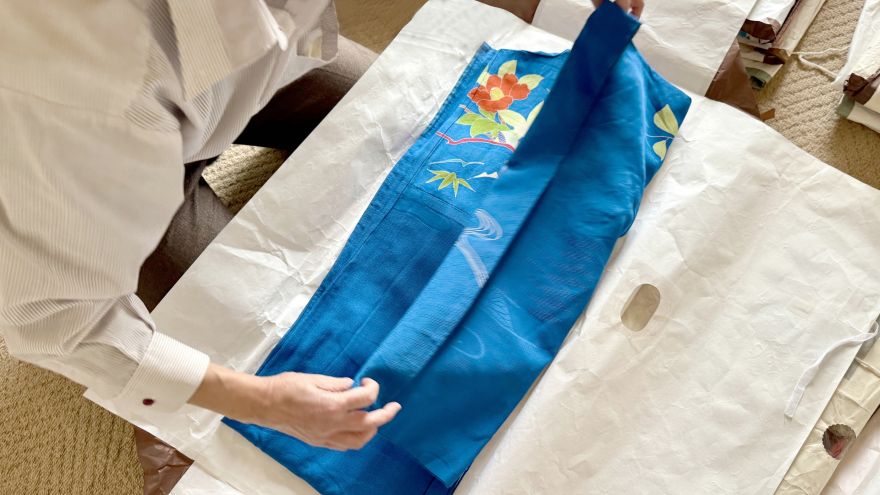
Most kimono are designed to fold along their seams. This traditional method, commonly called hondatami, helps keep the garment flat and makes it easier to place inside a paper wrapper. If the kimono is extremely fragile, heavily embellished, or already damaged, ask a textile specialist how best to support it before refolding.
- Inspect the collar, cuffs, underarms, hem, and lining for stains, moisture, or damage.
- Spread the kimono on a clean, smooth surface and fold along its existing seam lines, without pulling the fabric.
- Keep the final folded shape broad and flat. Do not press decorative areas or force new creases.
- Place it inside a clean, appropriately sized tatoushi wrapper or an archival alternative suitable for the fabric.
- Lay it flat in a box or drawer. Avoid putting a heavy stack of clothing on top.
Tatoushi helps protect a folded kimono from dust and handling. It is a traditional wrapper, not a substitute for controlling the room environment. Check it for yellowing, spots, tears, or musty odor, and replace it when its condition warrants it rather than assuming every wrapper must be replaced on an exact annual schedule.
For long-term preservation of silk, conservators often recommend unbuffered acid-free tissue and clean supporting materials. These can cushion vulnerable folds and prevent direct contact with unsuitable surfaces. If your kimono contains metallic decoration, unusual dyes, or fragile historic fabric, ask a conservator before repackaging it.
How to Prevent Moisture, Mold, and Odors
Pay attention to the room, not just the box
A storage box cannot compensate for a consistently damp closet. Aim for a cool, dark location with reasonably stable temperature and relative humidity. As a preservation reference, the George Washington University Museum and The Textile Museum describes roughly 40–50% relative humidity as ideal for textiles; an ordinary home may not maintain that range year-round. The practical priority is to avoid sustained high humidity and large fluctuations.
A small digital hygrometer can tell you much more than guessing how damp a closet feels. If the readings remain high, improve the room’s ventilation or use a household dehumidifier rather than depending on a few packets inside the box.
Keep storage away from cold walls and damp floors
Closets against exterior walls can develop cold spots where condensation becomes more likely. Leave a gap around storage containers, especially near walls, and avoid placing valuable textiles directly on potentially damp flooring. A low shelf or a sturdy slatted platform (sunoko in Japanese) may help maintain clearance and access, but it does not eliminate condensation or replace humidity control.
Do not assume all damp air sinks to the bottom of a closet. Temperature differences, air circulation, and moisture sources matter more than a simple top-shelf-versus-bottom-shelf rule. Choose the driest, most stable location that can safely support the weight of the storage box.
Use desiccants carefully
Some kimono owners use silica-gel sheets or other desiccants to help manage moisture in storage. Choose a product specifically intended for clothing or textile storage, keep it from direct contact with the kimono, and follow its instructions for placement, regeneration, or replacement. The amount required depends on the container and conditions; there is no reliable universal rule such as two sheets for every storage box.
Avoid placing an open or spillable liquid-collecting dehumidifier inside a kimono box. A leak could stain the fabric. More importantly, no desiccant will solve an ongoing leak, moldy wall, or poorly controlled room environment.
Inspect stored kimono regularly
In damp seasons, check closed storage more frequently. Look for a musty smell, new spots, damp wrappers, insect debris, and any unusual change in the fabric. Open and inspect a bin only when the surrounding room is reasonably dry; bringing humid air into a cool container can make the situation worse.
Japan has a custom called mushiboshi, in which stored garments are taken out and inspected or aired during suitable dry weather. The useful habit is periodic inspection under good conditions, not following Japanese calendar dates regardless of your local climate.
How to Protect Kimono From Clothes Moths and Other Pests
Good pest prevention starts with cleanliness. Before storing a worn kimono, check for perspiration, food stains, and other residues that can attract pests or lead to discoloration. Clean the storage area, inspect newly acquired vintage clothing before adding it to your collection, and keep an eye out for larvae, webbing, shed skins, and damage to natural-fiber garments.
Do not scatter mothballs in an open closet or mix different mothball ingredients. In the United States, common mothball products containing naphthalene or paradichlorobenzene are pesticides, and their labels generally require use only in tightly closed treatment containers. The Oregon State University Extension Service specifically warns against mixing these active ingredients. Their use also presents exposure risks for people and pets.
For valuable textiles, preventive cleaning, inspection, and appropriate storage are preferable to routine chemical treatment. Never place a pesticide or fragranced repellent directly on silk, and do not assume cedar or paulownia alone prevents an infestation. If you suspect active moth damage or mold on an heirloom kimono, isolate the affected item and seek advice from a professional familiar with textile conservation.
What to Do After Wearing a Kimono
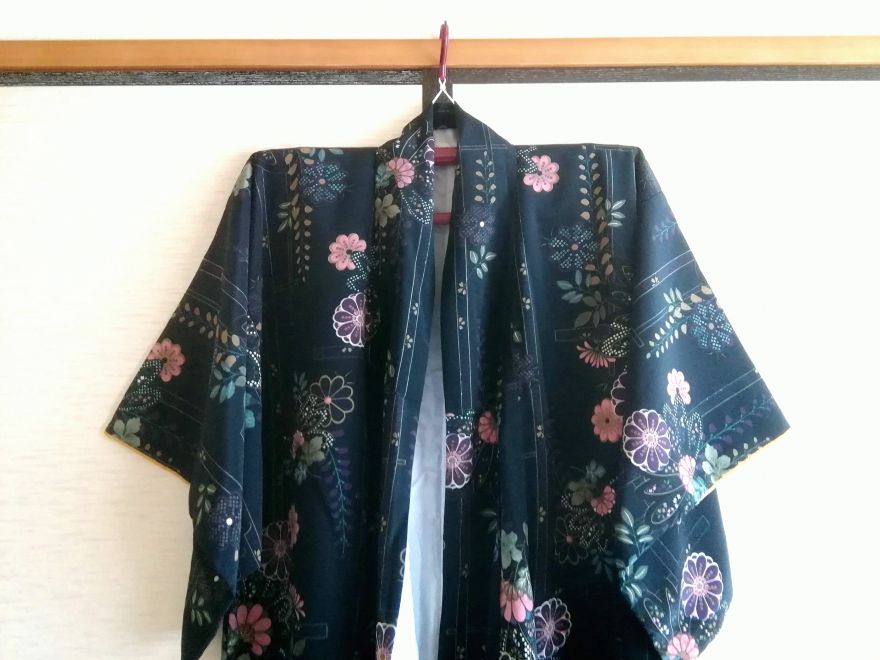
Do not immediately fold a kimono that feels damp from perspiration or weather. Check it carefully, then allow a sound garment to air briefly on a proper kimono hanger in a shaded, clean, well-ventilated space. A long horizontal hanger helps support the sleeves while the garment is being aired.
A hanger is mainly a temporary care tool for a traditional folded kimono, not an automatic long-term storage solution. Leaving a heavy or fragile kimono hanging for extended periods can strain its fabric and seams. Once it is dry and any stains have been assessed, fold it and return it to its wrapper and storage box. Avoid direct sunshine, high heat, and home ironing experiments on delicate silk.
If a silk kimono is stained or has an unfamiliar lining or finish, do not assume it can be machine-washed. A cleaner experienced with Japanese garments or a textile conservator can advise on safe treatment. For a related guide to identifying materials, see How to Tell If a Kimono Is Silk or Polyester.
Storage Ideas for Obi and Kimono Accessories
Store obi flat and avoid crushing the weave
An obi is the sash worn with a kimono, and some formal obi contain stiff layers or metallic threads. Store it according to its construction, usually folded loosely along appropriate lines and supported flat. Avoid placing a heavy kimono stack on top of a delicate obi or forcing an ornate sash into a small upright organizer.
Separate boxes or shallow drawers can help distinguish everyday obi, formal obi, and other accessories. Clean cotton or suitable archival materials can provide protection where direct contact with a rough surface would be a concern.
Organize obijime, obiage, and smaller items
Obijime are decorative cords used to secure an obi, while obiage are scarves used in the obi arrangement. Small compartments and labeled pouches make them easier to find without disturbing the entire kimono collection. Keep cords supported without tightly bending their tassels, and fold scarves gently rather than squeezing them into crowded bins.
Closet hooks, wire grids, or nonslip hangers may be useful for accessories you handle often, but uncovered display can expose fabrics to light and dust. Keep special-occasion pieces inside clean, protective storage. For zori sandals and bags, use a separate box and gentle, appropriate internal support to help preserve shape.
Frequently Asked Questions
Can I vacuum-seal a silk kimono to save space?
It is not recommended. Vacuum compression can set hard creases, crush decoration, and conceal moisture problems. Use a wide, shallow box instead.
Do I need to buy a traditional kiri tansu?
No. A clean, dry kimono can be stored flat in a suitable drawer, rigid storage bin, or archival box, provided the environment is stable and the garment is checked regularly.
How often should I replace tatoushi paper?
There is no single replacement interval for every wrapper. Inspect it periodically and replace paper that is damp, stained, torn, musty, or otherwise deteriorating.
Can I use cedar blocks or scented sachets instead of mothballs?
Do not rely on scented products as your main pest-control method. Their effectiveness is limited, and fragrance or oils can transfer to fabrics. Clean storage and regular inspection are safer starting points.
What if my kimono already smells musty?
Move it away from other textiles and check the storage environment for moisture. Do not spray perfume, bleach, or household mold cleaner onto silk. If you see spots or suspect mold, consult a qualified textile professional before handling or cleaning it further.