Have you ever visited a Japanese shrine and noticed a massive tree wrapped in a thick rope? Or perhaps you’ve seen an enormous rock carefully protected within the shrine grounds. Why are ordinary-looking parts of nature treated as sacred in Japan?
The answer lies in Shinto beliefs, respect for the natural world, and centuries of local traditions. Certain trees, rocks, and mountains are revered as manifestations of kami, while others are regarded as places where divine spirits may dwell or be welcomed during rituals.
But there is an important distinction: not every tree or rock is considered a god. Its sacred status often depends on the history of a particular shrine, the traditions of a community, and the relationship people have developed with that place.
Understanding these differences reveals something fascinating about Japanese religious culture. A sacred tree is more than an unusually old plant, and a sacred rock is more than an impressive geological formation. Both can connect the natural landscape with generations of human prayer.
Why Are Trees and Rocks Sacred in Japan?
To understand why some trees and rocks are sacred in Japan, it helps to consider how people historically experienced nature.
Long before modern technology made everyday life more predictable, the natural environment directly influenced whether communities could obtain food, build homes, or survive dangerous conditions.
Nature as a Source of Life and Awe
Mountains and forests provided timber, plants, and animals. Rivers supplied water for agriculture, while seasonal rainfall helped crops grow.
Yet these same natural forces could be destructive. Heavy rain caused flooding and landslides, storms threatened villages, and earthquakes transformed familiar landscapes.
Nature was therefore both a source of blessings and something beyond human control.
This combination of gratitude and awe is an important part of understanding Japanese nature-related religious traditions. People did not necessarily view the natural world simply as a collection of resources to be used.
Some places and natural objects inspired a deeper sense of respect because they seemed to express powers far greater than those of human beings.
Within Shinto, the term kami refers to a wide variety of divine beings and sacred presences. Kami may be associated with natural phenomena, particular locations, ancestral traditions, or the protection of communities.
The expression yaoyorozu no kami, often translated as “eight million kami,” conveys the idea of countless divine presences rather than a literal numerical count.
However, this does not mean that Shinto teaches that every individual object in nature must be worshipped.
Why Trees Hold Special Meaning
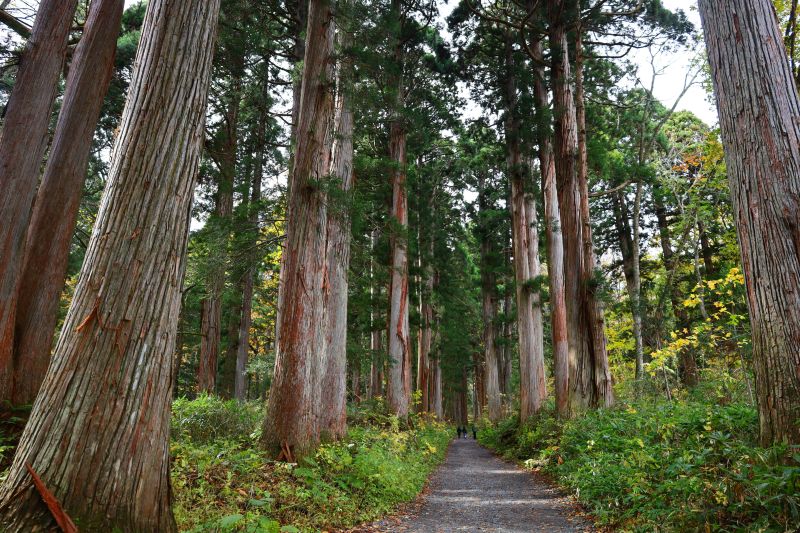
Trees are closely associated with life, growth, and continuity.
A small seedling can eventually become a towering tree. Deciduous trees lose their leaves and grow new ones as the seasons change, while fruit and seeds help create the next generation of plants.
An ancient tree can also survive for centuries, outliving many generations of people.
Imagine a tree that was already standing before your great-grandparents were born. It may have witnessed the growth of a village, changes in the surrounding landscape, and countless community celebrations.
Such longevity can make a tree an especially meaningful landmark.
Japanese folklore also includes the concept of kodama, spiritual beings associated with trees. In some traditions, damaging or cutting down particular trees was avoided because of their perceived spiritual significance.
These beliefs vary by region and should not be treated as a single rule followed by everyone in Japan.
Nevertheless, they help explain why certain ancient trees are approached with respect rather than regarded merely as timber or landscaping.
Why Rocks and Boulders Are Considered Sacred
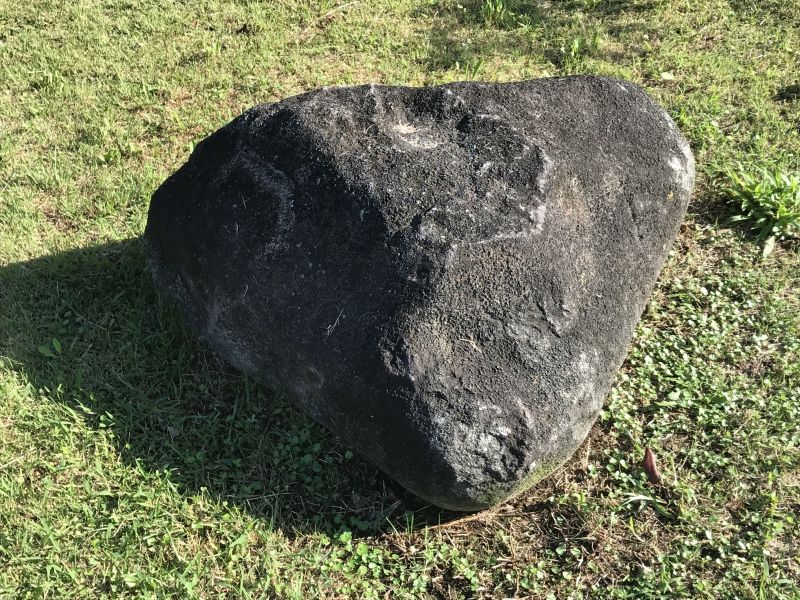
Rocks suggest a different relationship with time.
While trees visibly grow and change, a massive boulder may appear almost unchanged throughout many human lifetimes.
A striking rock formation on a mountain, an enormous cliff overlooking the sea, or an unusually shaped stone deep in a forest can inspire a sense of wonder.
In Japanese religious traditions, some natural rocks have become places where kami are believed to reside, descend, or receive worship.
Rocks have also served as lasting landmarks, boundary markers, and focal points for communal ceremonies.
Where trees can symbolize the continuity and renewal of life, rocks may suggest permanence and endurance. These are helpful ways to understand their appeal, although they are not universal rules of Shinto doctrine.
Not Every Tree or Rock Is Sacred
One common misunderstanding is that Japanese people believe all trees and stones contain gods.
Shinto traditions are more varied than that.
A tree may be considered sacred because it is associated with a particular kami, appears in a shrine’s founding story, or has been protected through generations of religious practice.
Likewise, a rock does not become sacred simply because it is unusually large.
A smaller stone with an established ritual history may have greater religious significance than an enormous boulder without any known connection to worship.
The meaning of a sacred natural object comes not only from its physical characteristics, but also from the beliefs, rituals, and memories associated with it.
How Shinto Understands Sacred Trees and Stones
Several Japanese religious terms help explain the different roles trees, rocks, and other natural objects can play.
Although these concepts sometimes overlap, they should not all be translated simply as “nature gods.”
Kami, Yorishiro, and Shintai
Two particularly useful concepts are yorishiro and shintai.
A yorishiro (依代) is an object or place that can receive or attract the presence of a kami, especially during religious ceremonies.
A yorishiro might be a tree, a rock, a branch, or an object prepared for a ritual.
The idea is that a divine presence can be welcomed at a particular location even when the kami cannot be seen in human form.
A shintai (神体), often translated as a “divine object” or “sacred embodiment,” is a physical object associated with the kami enshrined and worshipped at a shrine.
Examples include mirrors and swords, but natural features such as mountains and rocks can also serve this role.
The terms overlap in some religious contexts. A natural object associated with a kami may be described differently depending on the shrine’s traditions and the role it plays in worship.
A useful distinction is that yorishiro emphasizes receiving a divine presence, while shintai emphasizes the object through which an enshrined kami is represented or revered.
For a more detailed explanation, see Kokugakuin University’s Encyclopedia of Shinto.
Goshinboku: Sacred Trees at Japanese Shrines
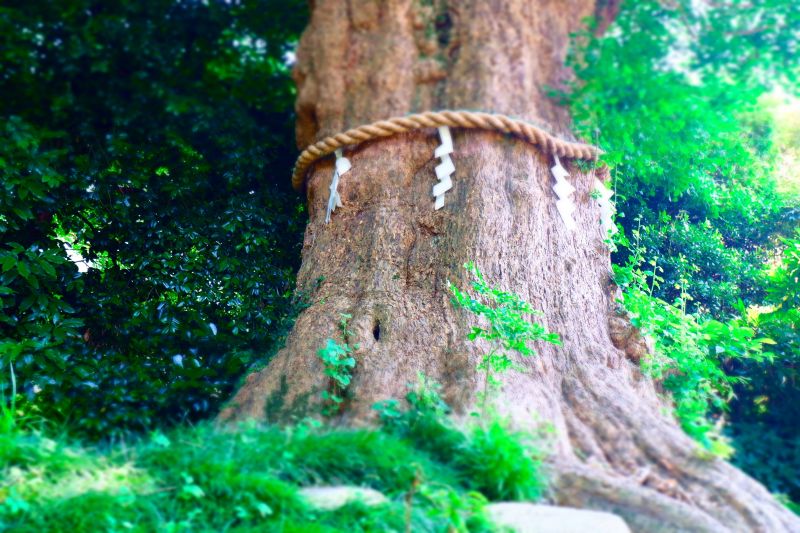
A sacred tree at a Japanese shrine is often called goshinboku (御神木), or simply shinboku (神木).
Large Japanese cedar trees and camphor trees are well-known examples, but a sacred tree does not have to be exceptionally old or enormous.
Its status may come from the history of the shrine or its relationship with a particular kami.
Some sacred trees are marked with a thick rope called shimenawa (注連縄 or しめ縄).
A shimenawa marks a sacred place or object and helps distinguish it from ordinary surroundings.
You may also see zigzag-shaped white paper streamers hanging from the rope. These are called shide (紙垂).
Shide are used in several Shinto ritual settings, not only around trees.
When you encounter a tree wrapped in shimenawa, you are seeing a visible sign that the tree has special religious significance.
However, the rope does not tell you the tree’s complete history. To understand why that particular tree is sacred, look for an explanation provided by the shrine.
Iwakura and Iwasaka: Sacred Rocks and Ritual Spaces
The word iwakura (磐座) is commonly used for a sacred rock or rock formation associated with the presence of a kami.
An iwakura may be understood as a place where a deity rests, descends, or is invited to receive worship.
Some iwakura are large natural boulders, while others are distinctive rock formations in forests or mountain landscapes.
Another term, iwasaka (磐境), is associated with sacred ritual spaces marked or enclosed by stones.
These concepts illustrate two related possibilities: a rock itself may be sacred, or stones may help define an area used for worship.
However, scholars do not always agree on the precise historical definitions or how these terms should be applied to archaeological sites.
It would therefore be misleading to identify every ancient stone arrangement as an iwakura or iwasaka without supporting evidence.
Kokugakuin University’s Encyclopedia of Shinto entry on stone worship discusses several different forms of sacred rock traditions in Japan.
Himorogi and Sacred Shrine Forests
Another important term is himorogi (神籬).
In Shinto ceremonies, a himorogi is a sacred setting or ritual arrangement used to welcome a kami. It may include an evergreen tree or branches, often from a plant called sakaki.
This shows that worship does not always require a permanent building.
A tree or temporary ritual space can provide a focal point for prayer.
Japanese shrines are also associated with chinju no mori (鎮守の森), commonly translated as sacred shrine groves or forests.
These wooded areas surround or form part of shrine grounds and may have been preserved through generations of community care.
Unlike a temporary himorogi, a shrine forest is part of the larger relationship between a sacred place, its surrounding landscape, and the people who maintain it.
Not every shrine forest is untouched ancient woodland. Some were deliberately planted and carefully managed.
For example, the forest at Meiji Jingu in Tokyo was created through a large-scale planting project in the early twentieth century. The shrine’s official English website explains how the forest was designed to develop over generations.
A Quick Guide to Shinto Terms
| Japanese Term | Basic Meaning |
|---|---|
| Kami (神) | A divine being or sacred presence |
| Yorishiro (依代) | An object or place that can receive the presence of a kami |
| Shintai (神体) | A physical object associated with an enshrined kami |
| Goshinboku (御神木) | A sacred tree revered at a shrine or another religious site |
| Shimenawa (しめ縄) | A sacred rope used to mark or distinguish sacred places and objects |
| Iwakura (磐座) | A sacred rock or rock formation associated with kami worship |
| Iwasaka (磐境) | A stone-marked sacred area or ritual space, with historical interpretations varying |
| Himorogi (神籬) | A sacred setting or arrangement for welcoming a kami |
| Chinju no mori (鎮守の森) | A sacred grove or forest associated with a shrine |
Did Japanese Nature Worship Begin in Prehistoric Times?
Japanese sacred tree and rock traditions have a long history, but tracing their exact origins is more complicated than it might first appear.
It is important to distinguish archaeological evidence, historical records, and later religious interpretations.
The Jomon Period: What Do We Actually Know?
The Jomon period is frequently mentioned when discussing the earliest religious traditions in Japan.
Jomon communities lived in close contact with forests, rivers, coastlines, and seasonal changes. Hunting, gathering, fishing, and, in some periods and regions, cultivation were important parts of their lives.
Archaeologists have discovered objects and structures that may be associated with ritual activities, including clay figurines known as dogu and arrangements of stones often called stone circles.
These findings suggest that symbolic and ritual practices were part of Jomon societies.
However, we cannot confidently reconstruct exactly what people believed about particular trees or rocks.
We also cannot assume that prehistoric stone circles were identical in meaning to the iwakura found in later Shinto traditions.
There may be connections between prehistoric ritual practices and later attitudes toward nature, but an uninterrupted religious tradition from the Jomon period to modern Shinto has not been demonstrated.
This distinction matters because Japanese religious history developed over thousands of years and involved many changing traditions.
Nature and Rituals in the Yayoi and Kofun Periods
As wet-rice agriculture spread during the Yayoi period, seasonal weather and agricultural success became especially important to many communities.
Rainfall, sunlight, water supplies, and the changing seasons directly affected harvests.
Ritual practices connected with agriculture and community protection developed within these changing societies.
Archaeological evidence from the following Kofun period also reveals a variety of ceremonial activities.
Some ancient ritual sites are associated with distinctive natural landscapes and rock formations.
However, identifying the exact religious meaning of a particular site requires careful study. The presence of ancient ritual objects near rocks does not automatically prove that the location functioned exactly like a later Shinto iwakura.
What we can say is that the relationship between communities, natural places, and religious ceremonies developed through different historical periods.
How Buddhism Influenced Sacred Nature Traditions
Japanese beliefs about sacred landscapes did not develop separately from other religions.
After Buddhism arrived in Japan, worship involving kami and Buddhist figures became increasingly interconnected.
This interaction is commonly called shinbutsu shugo, or the combination of kami and Buddhist worship.
Over time, shrines and temples developed close relationships. In some traditions, kami and Buddhist deities were interpreted through connections with one another.
Mountain worship was particularly influenced by this religious interaction.
The practices associated with Shugendo, a Japanese mountain ascetic tradition, developed through a combination of mountain-related beliefs and Buddhist religious practices.
Mountains, waterfalls, caves, and rocky landscapes became important settings for pilgrimage and spiritual training.
Religious traditions associated with places such as Kumano and Mount Fuji illustrate how sacred landscapes could acquire multiple layers of meaning.
Stone Buddhist statues also became important features of local religious life.
These developments remind us that Japanese respect for sacred nature cannot be explained through Shinto alone.
How These Traditions Changed in Modern Japan
During the Edo period, local communities maintained shrines, roadside guardian figures, sacred trees, and other religious sites as part of village life.
Festivals and shared responsibilities for maintaining sacred spaces helped connect religious customs with community relationships.
In the Meiji period, government policies separating Shinto and Buddhism changed the organization of many religious institutions.
Nevertheless, numerous local traditions involving trees, rocks, and sacred places continued.
Today, some ancient trees and distinctive natural sites are protected as cultural properties or natural monuments.
At the same time, aging trees, urban development, and the declining number of people available to maintain local traditions can create new challenges.
Japanese sacred nature traditions have therefore not remained completely unchanged. They have continued to develop alongside Japanese society.
Where Can You See Sacred Trees and Rocks in Japan?
Several places in Japan offer especially clear examples of how natural features can become central to religious worship.
Omiwa Shrine: Worshipping Mount Miwa
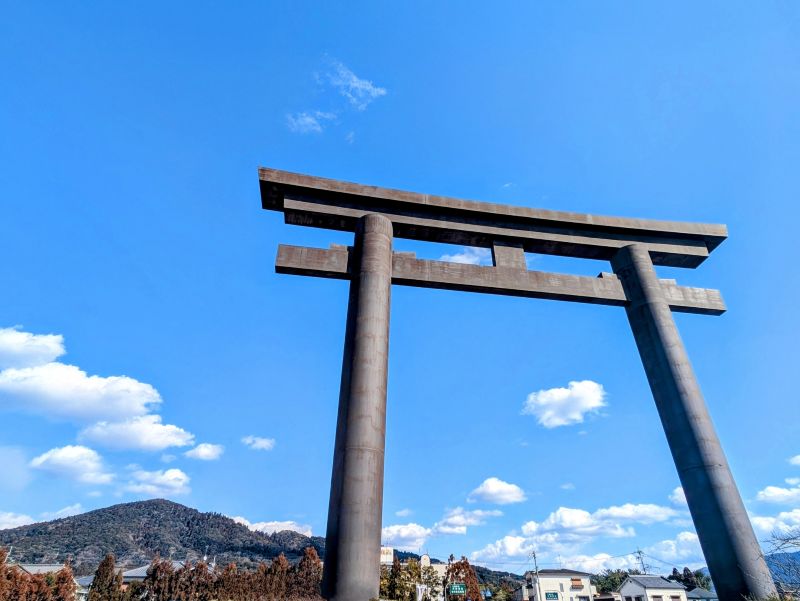
One of the most significant examples is Omiwa Shrine (大神神社) in Sakurai, Nara Prefecture.
Omiwa Shrine is closely associated with Mount Miwa, which is revered as a sacred mountain and serves as the shrine’s shintai.
What makes the shrine especially distinctive is that it does not have a conventional main sanctuary, or honden, housing a separate sacred object.
Instead, worshippers pray toward Mount Miwa from the shrine’s worship hall, known as the haiden.
This does not mean that Omiwa Shrine has no buildings. It has an established worship hall and other shrine structures.
The important distinction is that the mountain itself plays the role that a sacred object within a main sanctuary might play elsewhere.
Omiwa Shrine provides a particularly useful example of how a natural landscape can remain central to Shinto worship.
You can learn more from the official Omiwa Shrine English website.
Hananoiwaya Shrine: A Sacred Rock in Mie Prefecture
Another remarkable example is Hananoiwaya Shrine (花の窟神社) in Kumano, Mie Prefecture.
The shrine is associated with an enormous natural rock formation approximately 45 meters (148 feet) high.
Rather than placing the central object of worship inside a conventional main sanctuary, the shrine centers its religious tradition on the towering rock itself.
The location is associated with Izanami-no-Mikoto, a deity known from Japanese creation mythology, and traditions connected with the ancient chronicle Nihon Shoki.
One of the shrine’s most distinctive events is the Otsunakake Shinji, a sacred rope-hanging ritual.
During this ceremony, a long rope is suspended from the rock, connecting religious practice directly with the natural formation.
The ritual is more than a visual display. It represents a living tradition maintained through the participation of the local community.
Hananoiwaya illustrates how a sacred rock can serve simultaneously as a focus of worship, a link to mythology, and a center of community ritual life.
For additional information, see the Japan National Tourism Organization’s guide to Hananoiwaya Shrine.
The Giant Camphor Tree of Kamo
Not all sacred natural sites involve mountains or rocks. Ancient trees can be equally important.
One famous example is the Giant Camphor Tree of Kamo (蒲生のクス), located at Kamo Hachiman Shrine in Aira, Kagoshima Prefecture.
According to Japan’s Agency for Cultural Affairs, the tree is approximately 30 meters (98 feet) tall, with a trunk circumference of about 24 meters (79 feet).
It has been designated a Special Natural Monument of Japan.
Local tradition associates the tree with the shrine’s history and suggests that it was already considered sacred centuries ago.
However, the exact ages of extremely old trees are not always scientifically established. Historical accounts, estimates, and local traditions should not be confused with precise measurements.
Other notable ancient trees associated with Japanese religious sites include the large camphor tree at Kinomiya Shrine in Atami, Shizuoka Prefecture, and the Great Zelkova of Higashine in Yamagata Prefecture.
The Kinomiya tree is traditionally said to be around 2,000 years old, although such ages should be understood as estimates or traditional claims rather than automatically verified facts.
When visiting a sacred tree, look beyond its size. The shimenawa, surrounding structures, protective fences, and information signs may tell you more about the relationship between the tree and its community.
The Agency for Cultural Affairs database provides official information about the Giant Camphor Tree of Kamo.
Doso jin and Buddhist Stone Statues
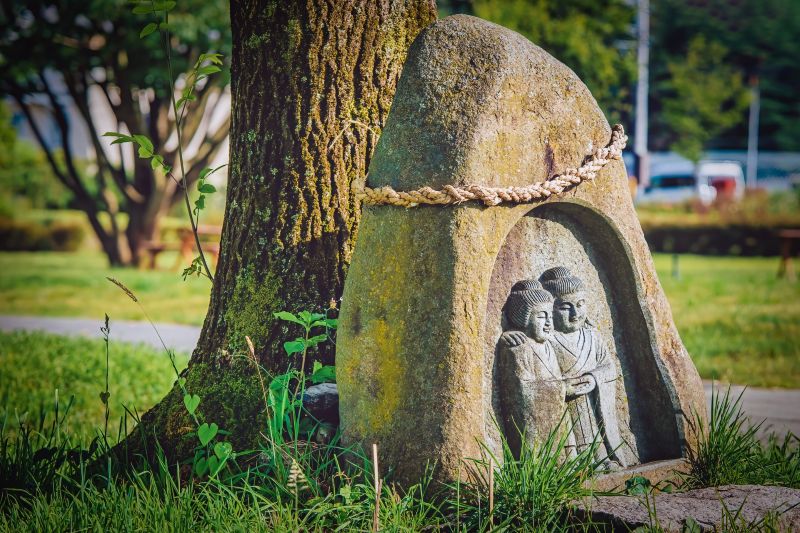
Sacred stones in Japan are not limited to enormous natural boulders.
Small stone figures and monuments can also carry considerable religious meaning.
One example is doso jin (道祖神), a type of guardian kami commonly associated with roads, village boundaries, crossroads, and mountain passes.
Traditionally, these guardians have been believed to help protect communities against harmful influences entering from outside.
In some areas, particularly parts of Nagano Prefecture, doso jin are represented by stone carvings depicting a male and female figure together.
Elsewhere, they may appear as inscribed monuments or relatively simple stones.
You may also encounter statues of Jizo and other Buddhist figures along Japanese roads.
These should not be confused with doso jin. Jizo is a Buddhist figure, while doso jin belongs to traditions of roadside and boundary guardianship associated with kami.
However, different religious customs have historically influenced one another, and some communities have maintained overlapping practices.
These small roadside monuments demonstrate that sacred places do not always require an impressive natural setting. They may also exist along the ordinary routes people use every day.
How Sacred Nature Differs Across Japan
There is no single form of nature-related worship shared identically by every region of Japan.
Local geography, historical experiences, and community traditions have influenced which natural features are considered sacred.
Mountain Worship and Local Traditions
Japan’s mountainous landscape has supported many forms of mountain-related religious practice.
Mountains provide water, timber, and other resources, but their steep slopes, dense forests, and unpredictable weather can also make them dangerous.
Some mountains are revered as sacred landscapes, while particular rocks, waterfalls, or trees may become important sites within them.
Regional traditions in northern Japan include beliefs and stories connected with mountains, forests, and ancient trees.
In other areas, roadside guardian stones and monuments such as koshin-to reflect the religious customs of villages and travelers.
However, it would be inaccurate to assign one religious practice to an entire region. Customs can differ between neighboring communities, even within the same prefecture.
The most useful approach is to consider the local environment and the specific history of each site.
Utaki: Sacred Places in Okinawan Culture
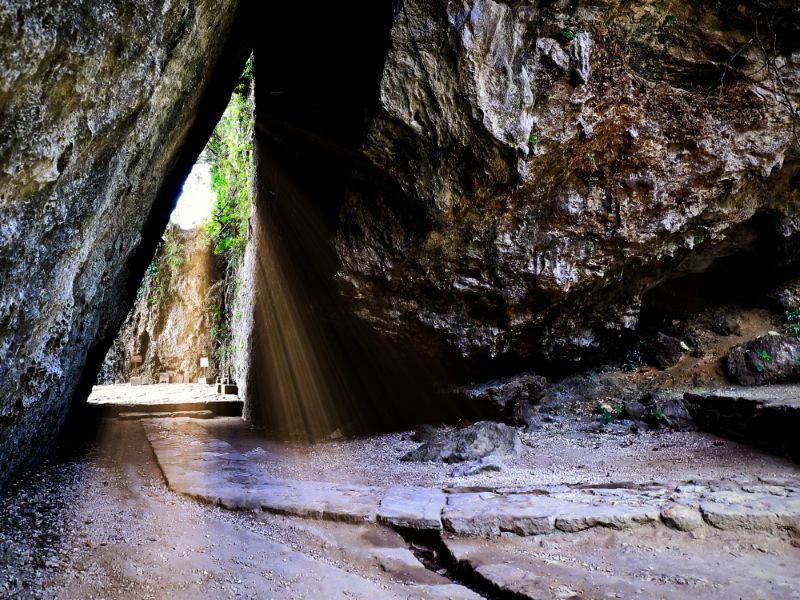
Okinawa has its own important traditions involving sacred natural places.
One example is the utaki (御嶽), a sacred site associated with Ryukyuan religious beliefs.
Utaki may include forests, groves, rocks, and other natural features. Some have no shrine building comparable to those commonly found in mainland Japan.
One well-known example is Sefa-utaki in Nanjo, Okinawa, which was an important religious site of the Ryukyu Kingdom.
Its natural rock formations and wooded landscape form part of its religious significance.
Although Okinawan sacred sites and mainland Shinto traditions may share certain features, they should not be treated as identical.
Ryukyuan religious traditions developed within Okinawa’s own historical and cultural context.
Utaki may also remain active places of prayer rather than simply historical attractions.
Visitors should respect restrictions on access, photography, and behavior, particularly where local people continue to perform religious ceremonies.
The official Sefa-utaki website provides visitor information and explains the significance of the site.
Sacred Shrine Forests in Modern Cities
You do not need to travel deep into the mountains to encounter Japan’s sacred natural landscapes.
In many towns and cities, small shrines are surrounded by trees even when neighboring streets are filled with buildings.
These green spaces may reflect generations of religious respect and community maintenance.
Shrine forests can provide shade, support birds and insects, and contribute to the local environment.
However, they are not necessarily untouched remnants of ancient nature.
The forest at Meiji Jingu in central Tokyo is an example of a sacred landscape deliberately created through human planning and planting.
Its history demonstrates that religious respect for nature can involve active care and long-term environmental management.
Preserving a shrine forest may help protect living habitats, but maintaining a healthy environment also requires practical knowledge about trees, soil, and ecological conditions.
How to Visit Sacred Trees and Rocks Respectfully
Understanding the religious meaning of sacred trees and rocks can make a shrine visit more rewarding.
It also helps visitors avoid actions that might damage a protected site or interfere with worship.
Can You Touch a Sacred Tree in Japan?
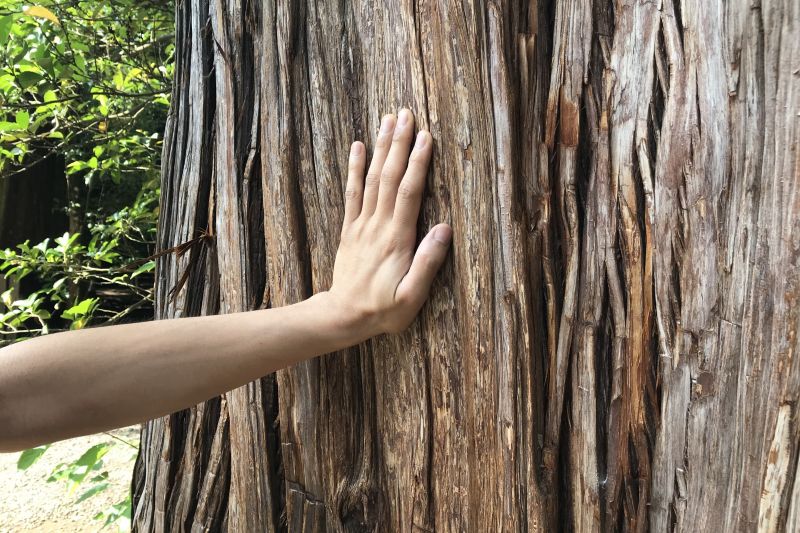
Some sacred trees are accessible to visitors, while others are protected by ropes, fences, or designated viewing areas.
You may hear stories claiming that touching a particular tree brings good luck, health, or spiritual energy.
Such beliefs may be part of local traditions, but they are not universal rules, and any claimed spiritual benefits are matters of faith rather than scientifically established effects.
Do not assume that touching or hugging a sacred tree is permitted.
Repeated contact can damage bark, while people walking over exposed root systems can compact the surrounding soil.
Avoid breaking branches, removing leaves, scratching the trunk, or entering fenced areas.
If you are unsure whether touching a tree is allowed, check the shrine’s signs or ask someone responsible for managing the site.
Showing respect does not require physical contact. Quietly observing a sacred tree from an appropriate distance can be just as meaningful.
Photography and Access Restrictions
Similar precautions apply to sacred rocks and mountain worship sites.
Some areas are open to visitors, while others may be restricted because of religious practices, conservation concerns, or physical hazards.
Large rocks can be surrounded by steep slopes, slippery surfaces, or unstable ground.
Do not climb on sacred formations or cross barriers to obtain a better photograph.
Photography policies vary. A site may permit general photographs while restricting images of religious ceremonies, worshippers, or certain sacred spaces.
At places such as Okinawa’s Sefa-utaki, visitors are expected to respect the site’s continuing religious importance and follow specific rules.
Before visiting, consult the relevant shrine, cultural heritage authority, or official visitor website for current guidance.
When in doubt, prioritize the people who maintain and worship at the site over obtaining a photograph.
Protecting Sacred Trees and Rock Formations
Religious traditions have sometimes helped preserve particular trees, forests, and natural landmarks over long periods.
Yet sacred status does not guarantee that a site will remain environmentally healthy without active management.
Ancient trees may suffer from disease, weakened branches, compacted soil, or changes to nearby construction and drainage.
Appropriate conservation measures can include protecting root zones, monitoring tree health, and carrying out professional maintenance when necessary.
Rock formations and historic ritual sites may also require careful management to prevent physical damage while preserving their cultural significance.
Good conservation depends on respecting both religious traditions and the expertise of people responsible for maintaining natural and cultural heritage.
When you encounter a sacred tree or rock, consider not only what it represents spiritually, but also the generations of people who have protected it and the responsibilities involved in preserving it for the future.
Frequently Asked Questions
Do Japanese people believe that every tree and rock contains a god?
No. Shinto includes many forms of respect for nature, but not every tree or rock is considered sacred. Particular objects and places gain religious significance through their associations with kami, local history, and established worship traditions.
What does the rope around a tree at a Japanese shrine mean?
The rope is called shimenawa. It marks a sacred object or boundary and indicates that the area should be treated with respect. White zigzag paper streamers called shide may hang from it. A tree marked with shimenawa is often a sacred tree, or goshinboku.
What is the difference between an iwakura and an ordinary rock?
An iwakura is associated with religious traditions involving the presence or worship of kami. Its importance comes from its sacred meaning and history, not simply its size. The identification of ancient iwakura sites can involve scholarly debate.
Did Japanese people worship sacred trees and rocks during the Jomon period?
Archaeological evidence suggests that Jomon communities practiced rituals and used symbolic objects. However, their precise beliefs about trees and rocks remain uncertain. A direct, continuous connection between Jomon rituals and modern Shinto practices has not been proven.
Is it okay to touch sacred trees or take photographs of sacred rocks?
It depends on the site. Some shrines allow visitors to approach certain objects, while others prohibit touching, entry, or photography. Always follow local signs and official guidance, and avoid disturbing people engaged in prayer.
Are sacred shrine forests in Japan always ancient natural forests?
No. Some contain longstanding woodland, while others have been planted or maintained by people. Meiji Jingu’s forest in Tokyo is a well-known example of a deliberately established sacred forest. A forest’s religious importance does not necessarily depend on being untouched wilderness.