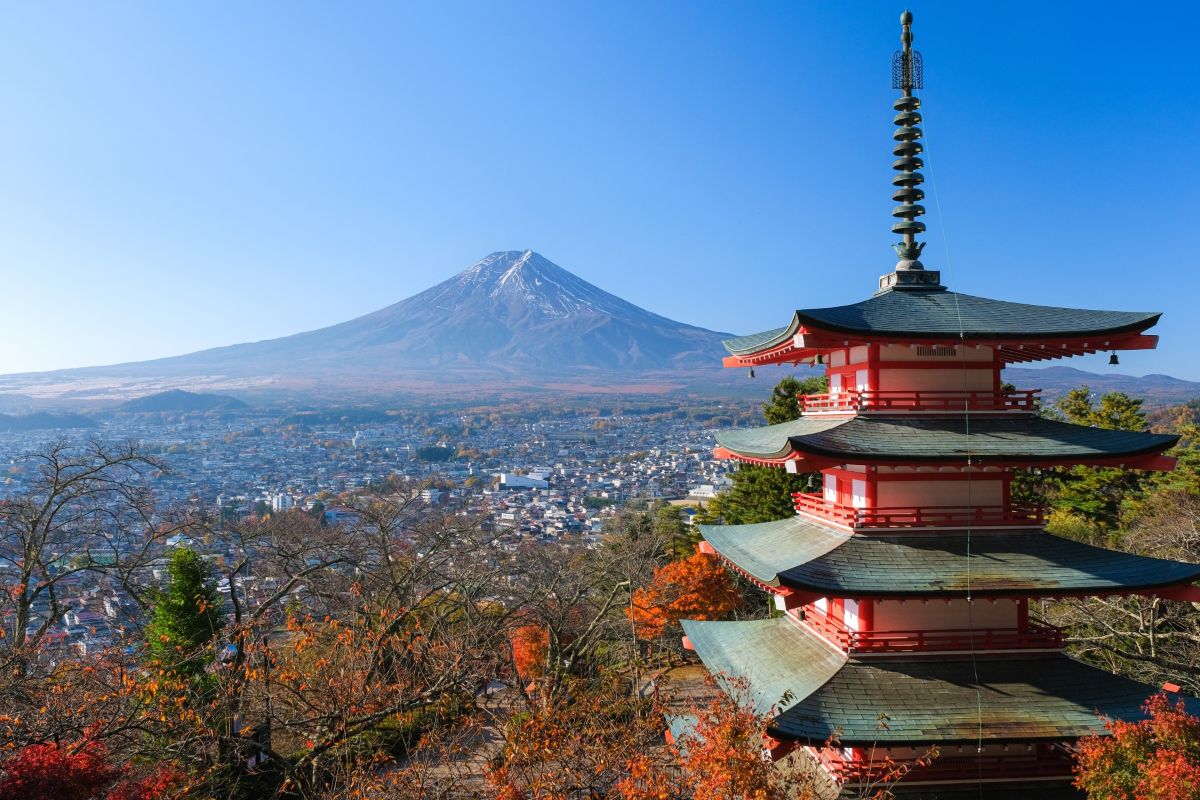
Why do some Japanese people avoid cutting their nails at night? Why is sleeping with your head facing north considered unlucky? And what does it mean when a tea stalk stands upright in your cup?
Japanese superstitions are full of everyday warnings, lucky signs, and traditions passed down through families. Some sound mysterious, others are surprisingly practical, and many reveal how people in Japan have understood life, death, nature, and good fortune.
But there is an important distinction. A superstition about bad luck is not necessarily the same thing as a religious practice or a local folk belief. Japan’s traditions have been shaped by Shinto, Buddhism, ancestor worship, and influences from other parts of East Asia.
In this guide, we’ll explore common Japanese superstitions, what they mean, where they may have come from, and how folk beliefs continue to shape everyday life in Japan.
What Are Japanese Superstitions?
Japanese superstitions are traditional beliefs about good luck, bad luck, omens, and actions thought to influence future events. They range from simple household warnings to customs surrounding weddings, funerals, and important life decisions.
Not every Japanese person believes in these traditions. Some people follow them seriously, others observe them out of respect for family customs, and many simply recognize them as familiar sayings.
Superstitions vs. Folk Beliefs in Japan
In English, the word “superstition” often suggests a belief that lacks scientific evidence. In Japanese, meishin (迷信) can carry a similar meaning.
Japanese folklore studies also use the term zokushin (俗信), referring to traditional sayings and beliefs involving omens, fortune-telling, taboos, and magical practices. This term allows researchers to study a belief as part of a culture without assuming that its claimed effects are real.
For example, a saying that a cat washing its face predicts rain can be studied as folklore. That does not mean the cat’s behavior reliably forecasts the weather.
Japan’s National Museum of Japanese History maintains a Popular Superstition Database containing more than 48,000 records involving animals, plants, the human body, illness, and related beliefs.
Folk beliefs, on the other hand, cover a broader range of practices. They include prayers to local guardian deities, rituals associated with farming, roadside religious monuments, and ceremonies honoring deceased family members.
These practices do not always belong exclusively to one organized religion. In Japan, local traditions often combine elements associated with Shinto, Buddhism, and other belief systems.
Not every folk belief should be treated as an unfounded prediction. Visiting a family grave or praying for a safe journey can have religious, emotional, and social meaning regardless of whether a supernatural effect can be scientifically demonstrated.
Omens, Taboos, and Protective Rituals
Many Japanese superstitions can be understood through three broad categories.
- Omens: Signs believed to predict something good or bad, such as a tea stalk standing upright in a cup.
- Taboos: Actions traditionally avoided, such as cutting nails at night or sleeping with one’s head facing north.
- Protective rituals: Practices intended to invite good fortune or prevent misfortune, such as carrying an omamori amulet or receiving a purification ceremony.
These categories can overlap. Yakudoshi, for example, involves the belief that certain ages are associated with misfortune and the practice of seeking protection through a ritual called yakubarai.
Common Japanese Superstitions and Their Meanings
Some of Japan’s best-known superstitions concern ordinary activities such as sleeping, drinking tea, or making noise at night. Their explanations are not always certain, and different regions may tell different versions of the same story.
Cutting Your Nails at Night
One traditional Japanese warning says that if you cut your nails at night, you won’t be able to be with your parents when they die.
This sounds frightening, but there are several possible explanations.
One interpretation connects the expression yozume, meaning cutting nails at night, with Japanese wordplay suggesting a shortened life. Another explanation points to the practical danger of trimming nails with a sharp blade before modern electric lighting became common.
There may also have been older beliefs about fingernails as significant parts of the human body. However, no single explanation has been established as the definitive origin.
Today, there is no scientific reason to believe that trimming your nails at night affects your parents’ lives or your own future. Using proper nail clippers in a well-lit room is what matters.
Whistling at Night and Hiding Your Thumbs
Another familiar Japanese superstition warns against whistling at night.
Depending on the region or family, people may say that nighttime whistling attracts snakes, thieves, demons, or other unwanted visitors.
One possible practical explanation is that the warning discouraged making noise late at night. Others connect whistling with secret signals or older supernatural beliefs.
These are interpretations rather than a single proven origin. Whistling does not magically attract snakes or spirits.
A different superstition involves hiding your thumbs when you see a hearse.
The Japanese word for thumb is oyayubi (親指), which includes the character oya, meaning “parent.” One explanation is that hiding your thumbs symbolically protects your parents from death.
Although the wordplay is memorable, it should not be mistaken for a historically established explanation or a method of preventing misfortune.
Sleeping With Your Head Facing North
In Japan, sleeping with your head pointing north is sometimes considered unlucky. This arrangement is called kitamakura (北枕), literally meaning “north pillow.”
The association comes from Japanese Buddhist funerary traditions.
In Buddhist accounts and artwork, the Buddha is traditionally depicted lying with his head toward the north at the time of his death. In some Japanese funeral customs, the deceased is also positioned with the head facing north.
Because of this connection with death, some families prefer not to arrange a living person’s bed in the same direction.
However, the direction of your pillow does not determine whether you will experience bad luck.
For comfortable sleep, practical factors such as temperature, light, noise, and bedding are more relevant than whether your head points north.
Tea Stalks, Black Cats, and Sneezing
Not all Japanese superstitions predict something unpleasant. Some are associated with good fortune.
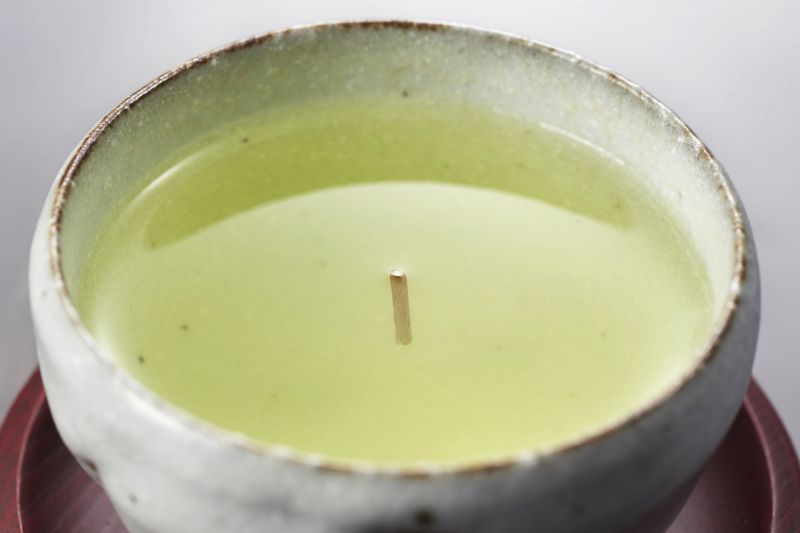
One charming example is chabashira (茶柱), a tea stalk standing upright in a cup of Japanese green tea.
Traditionally, finding an upright tea stalk is considered a lucky sign. The uncommon appearance of a floating stalk and the association of hashira, meaning “pillar,” with a stable household are among the explanations offered for the belief.
However, the exact origin is uncertain. A popular story claims that a tea merchant deliberately promoted the superstition to sell tea, but that account should not be treated as established historical fact.
Black cats provide another interesting example.
In some traditions, a black cat crossing your path is considered unlucky. Yet attitudes toward black cats have differed across countries, historical periods, and communities. Japan also has positive associations with cats, including the familiar maneki-neko, or beckoning cat, which symbolizes good fortune.
Even sneezing has its own folklore. One version says that sneezing once means someone is praising you, while sneezing twice means someone is criticizing you.
Other versions give the numbers different meanings. These sayings are playful pieces of folklore, not reliable methods of discovering what other people are thinking.
Why the Numbers 4 and 9 Are Unlucky
The numbers four and nine are sometimes avoided in Japan because of their pronunciation.
The number four can be pronounced shi (四), which sounds exactly like the Japanese word for death, shi (死).
The number nine can be pronounced ku (九), which sounds like ku (苦), a word associated with suffering.
Because of these associations, some hospitals, hotels, apartment buildings, and gift-giving customs avoid particular uses of these numbers.
That does not mean the numbers are universally forbidden. Four can also be pronounced yon, and nine can be pronounced kyū, so the associations depend on the words and context.
The numbers themselves have no scientifically demonstrated power to bring misfortune. Their significance comes from language and cultural associations.
Lucky and Unlucky Days in Japanese Culture
Japanese ideas about good and bad luck are not limited to daily habits. Traditional calendars and life-stage customs can also influence how people choose dates for weddings, ceremonies, or other important occasions.
Rokuyo: Taian, Butsumetsu, and Tomobiki
Rokuyo (六曜) is a traditional system that assigns one of six fortune-related labels to a day.
The six names are Sensho, Tomobiki, Senbu, Butsumetsu, Taian, and Shakku. Their traditional meanings are not identical, and they are not simply six consecutive days of the modern week.
Three names are particularly familiar in everyday Japanese life.
- Taian (大安): Considered especially auspicious and often favored for weddings and other celebrations.
- Butsumetsu (仏滅): Traditionally considered inauspicious, leading some people to avoid holding weddings on this day.
- Tomobiki (友引): Sometimes avoided for funerals because its written characters suggest drawing friends along, creating an association with following the deceased.
Despite the Buddhist-sounding name Butsumetsu, rokuyo is not a universal rule established by Buddhist teachings.
Its history is connected with calendrical traditions that developed and changed through cultural exchanges with China and Japan’s own interpretations.
Some families consider these labels when planning major events, while others prioritize convenience, cost, availability, and personal preference.
If you are arranging a wedding or funeral in Japan, it can be helpful to ask whether the family has preferences related to rokuyo. Observing those preferences is a cultural choice, not a scientific necessity.
Yakudoshi: Unlucky Ages and Purification
Yakudoshi (厄年) refers to ages traditionally associated with an increased risk of misfortune.
Commonly cited ages include 25, 42, and 61 for men, and 19, 33, and 37 for women. Some traditions also include 61 for women.
These ages often use kazoedoshi, a traditional age-counting system in which a child is considered one year old at birth and gains another year at the beginning of each new calendar year.
The exact ages, counting methods, and ceremonies can vary between shrines, temples, and regions. There is no single nationwide rule followed by everyone.
During yakudoshi, some people visit a shrine or temple for yakubarai or yakuyoke, rituals intended to purify or protect them from misfortune.
For many people, these rituals also provide an opportunity to reflect on their health, responsibilities, and changing stages of life.
There is no scientific evidence that supernatural misfortune concentrates at these specific ages.
Participating in a ceremony is a personal choice. It should not replace preventive healthcare, medical treatment, or other practical precautions.
The Fire Horse Superstition
One of the clearest examples of a Japanese superstition affecting real-world behavior is the belief surrounding hinoeuma (丙午), the Fire Horse year.
Hinoeuma is one of the combinations in the traditional 60-year East Asian calendar cycle.
A historical superstition claimed that women born in a Fire Horse year would have difficult personalities or bring misfortune to their husbands.
This belief contributed to harmful prejudice surrounding marriage and childbirth.
The effects were particularly visible in 1966, a Fire Horse year. Japan recorded 1,360,974 live births, compared with 1,823,697 in 1965, according to historical vital statistics cited in published research on the 1966 Fire Horse year.
The sharp decline is widely associated with the superstition and changes in reproductive behavior. It does not, however, prove that the superstition itself was true.
The year 2026 is also a Fire Horse year, 60 years after 1966. Historical figures from 1966 cannot be used to predict the final birth statistics for 2026.
A person’s character, worth, or future cannot be determined by their birth year. Decisions about pregnancy and childbirth should respect individual choice and reliable medical information, not discriminatory folklore.
Kimon: The Unlucky Northeast Direction
In some Japanese traditions, the northeast direction is known as kimon (鬼門), often translated as the “demon gate.”
This concept is associated with traditional directional beliefs and influences from Chinese cosmology and Japanese onmyodo.
Some people consider the northeast when designing a house, choosing a room layout, or planning renovations.
However, there is no scientific evidence that a northeast-facing entrance or room automatically attracts supernatural danger.
If you are building or buying a home, structural safety, ventilation, natural light, local building regulations, and disaster preparedness should take priority.
Japanese Folk Beliefs in Everyday Life
Japanese folk beliefs extend far beyond predictions of good or bad luck. They can also be seen in neighborhood shrines, roadside statues, seasonal rituals, and family traditions.
These practices often reflect people’s relationships with their communities, ancestors, and natural surroundings.
Local Guardian Deities and Inari Shrines
Many Japanese communities have a local shrine associated with a protective deity called an ujigami (氏神).
Historically, the term ujigami was associated with clan or lineage deities. Over time, it also came to refer to deities protecting a particular community.
Related terms such as chinju and ubusuna no kami have their own historical meanings, although they may overlap in local practice.
Inari worship is another widely recognized part of Japanese religious life.
Originally associated with rice cultivation and agriculture, Inari worship also developed connections with business prosperity, household well-being, and other everyday wishes.
Inari shrines are often recognized by their red torii gates and fox statues.
One important detail is that the fox is generally regarded as a messenger of Inari, rather than simply being the deity itself. Fushimi Inari Taisha’s official FAQ explains this distinction.
Visiting a local shrine can reveal how community festivals, agriculture, family life, and religious traditions have developed together.
Dosojin, Jizo, and Koshin Worship
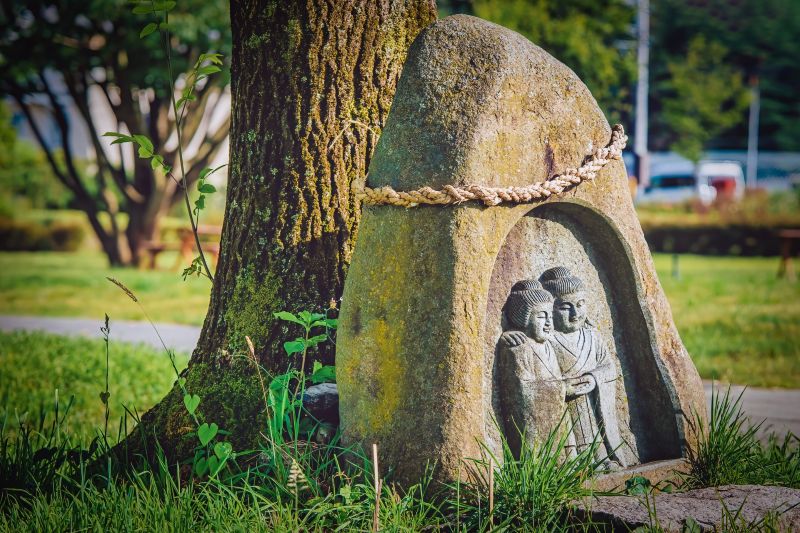
In older Japanese neighborhoods and rural areas, you may notice small stone monuments or statues standing beside roads.
Some represent dosojin (道祖神), protective deities traditionally associated with village boundaries, roads, and travelers.
Depending on the region, dosojin can also be connected with fertility, family continuity, or marriage. Their appearance varies, from simple inscribed stones to carvings of paired figures.
Another familiar sight is a statue of Jizo (地蔵), a Buddhist bodhisattva associated with compassion and protection.
Jizo statues may be found beside roads, near temples, or in cemeteries. They are often connected with prayers for children, remembrance of the deceased, and community safety.
Some are cared for by neighborhood residents rather than being maintained exclusively within temple grounds.
You might also encounter a koshinto (庚申塔), a stone monument related to Koshin worship.
Koshin traditions developed through a combination of beliefs that included Chinese religious ideas, Buddhism, Shinto, and local community practices.
One traditional practice involved staying awake through a designated Koshin night. This was connected with the belief that three beings within the human body could report a person’s wrongdoing to a heavenly authority while the person slept.
Community gatherings around Koshin observances were also important social occasions.
These roadside monuments are valuable evidence of how religious practices once formed part of ordinary neighborhood life.
Mountain, Rice Field, and Water Deities
For communities dependent on farming, forestry, fishing, and other activities connected with nature, the surrounding environment has long been important to religious life.
Mountain deities, known as yama no kami, could be associated with safety during forestry work, hunting, and life in mountainous areas.
Ta no kami, or rice field deities, were connected with agriculture and hopes for a successful harvest.
Suijin, or water deities, could be honored in relation to rivers, wells, water sources, and protection from flooding.
In some regional traditions, a deity associated with the rice fields is welcomed into the household after the harvest and ceremonially returned to the fields in spring.
These rituals express gratitude and acknowledge seasonal changes.
However, the identity, appearance, and role of these deities are not consistent throughout Japan. Local geography, occupations, and history have shaped different traditions.
Obon, Ohigan, and Ancestor Remembrance
Ancestor remembrance is an important part of Japanese family and religious life.
Obon (お盆) is a period when many families remember deceased relatives and honor their ancestors.
Common practices include visiting family graves, making offerings, and preparing a household Buddhist altar called a butsudan.
Some communities also practice mukaebi and okuribi, welcoming and sending-off fires symbolically associated with ancestral spirits.
Dates and customs vary by region. Although Obon is often observed in August, some areas follow a July schedule or other local arrangements.
Ohigan (お彼岸) is another important period of remembrance associated with the spring and autumn equinoxes.
Families may visit graves, clean memorial sites, and make offerings during this time.
These customs combine Buddhist practices with family traditions and older forms of ancestor remembrance.
For many people, the value of these ceremonies also lies in remembering loved ones, maintaining family relationships, and passing memories between generations.
Omamori, the Seven Lucky Gods, and Religious Groups
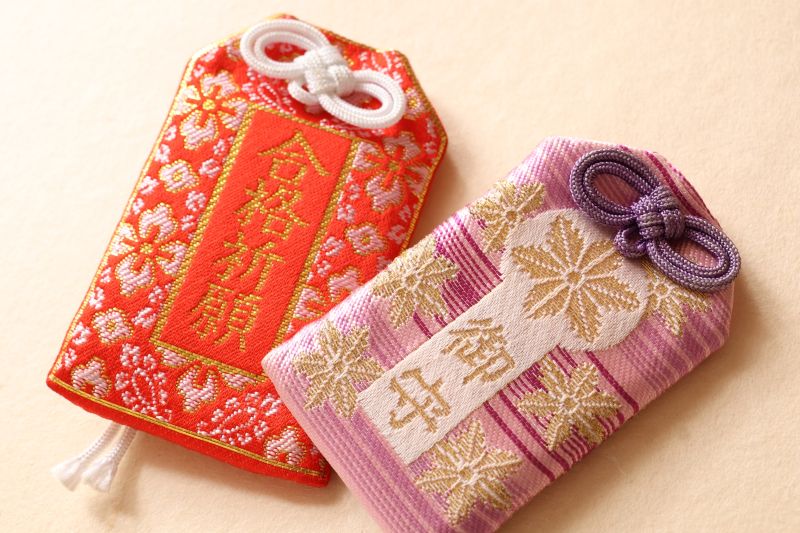
Omamori (お守り) are protective amulets commonly obtained from Japanese shrines and temples.
They may be associated with traffic safety, academic success, health, safe childbirth, or business prosperity.
For example, a student preparing for an important examination may carry an omamori intended to support success in studying.
There is no scientific evidence that an amulet directly changes examination scores or prevents traffic accidents. However, receiving one from a friend or family member can carry personal meaning and provide encouragement.
Another familiar part of Japanese folk religion is the Shichifukujin (七福神), or Seven Lucky Gods.
They are Ebisu, Daikokuten, Bishamonten, Benzaiten, Fukurokuju, Jurojin, and Hotei.
Their backgrounds reflect a mixture of Japanese, Buddhist, Chinese, and Indian religious traditions. Together, they became popular symbols of good fortune.
Japanese religious communities have also formed groups known as ko (講).
These groups historically brought people together for shared worship, pilgrimages, and mutual support.
Examples include Ise-ko, associated with pilgrimage to Ise, Fuji-ko, connected with Mount Fuji worship, and Koshin-ko, associated with Koshin observances.
Beyond their religious functions, some groups helped members save money for travel, organize community activities, and maintain social connections.
How Japanese Superstitions and Folk Beliefs Developed
Japan’s religious traditions did not all originate in a single historical period. They developed through centuries of local practices, cultural exchange, and changes in religious and political institutions.
Shinto, Buddhism, and Onmyodo
Local rituals involving deities, ancestors, and natural places existed in Japan before many of the religious institutions familiar today took their later forms.
The introduction and spread of Buddhism added new religious concepts, figures, ceremonies, and institutions.
Over time, worship of kami and Buddhist practices became closely connected through a process known as shinbutsu shugo (神仏習合), often described as the combination of kami and Buddhist traditions.
For much of Japanese history, visiting a shrine and worshipping at a Buddhist temple were not necessarily seen as contradictory activities.
Other influences also shaped Japanese beliefs.
Onmyodo (陰陽道) developed from ideas involving the calendar, directional symbolism, yin-yang theory, and the five phases.
Its practices influenced discussions of auspicious dates, directions, rituals, and protection from misfortune.
Shugendo, a tradition associated with mountain ascetic practices, also combined elements of mountain worship and Buddhist religious life.
However, it would be inaccurate to claim that every modern Japanese superstition comes directly from onmyodo or a single religious source.
Different beliefs often developed through overlapping traditions and changing interpretations.
The Edo Period and Popular Traditions
During the Edo period (1603–1868), pilgrimages, calendars, fortune-related customs, and local religious associations became important parts of popular culture.
Religious practices were not limited to isolated farming villages.
People living in towns and cities also visited shrines and temples, participated in festivals, purchased lucky objects, and used calendars when planning activities.
Travel, printed publications, and social networks helped traditions spread between communities.
Beliefs about health, business prosperity, family safety, and protection from disease reflected concerns that were relevant to everyday life.
Modernization and the Study of Folklore
During the Meiji period (1868–1912), government policies separated many institutions and practices associated with Shinto and Buddhism.
Religious organizations and traditions, including Shugendo, faced significant changes.
At the same time, modern education, science, and public health ideas encouraged people to reconsider customs increasingly described as superstitious.
Yet everyday religious practices did not simply disappear.
Some people continued to pray at shrines and temples while also embracing modern medicine, technology, and education.
Japanese folklore research, including the work of Kunio Yanagita and later scholars, helped document regional stories, festivals, and customs as subjects worthy of historical and cultural study.
Today, studying these traditions can reveal how different generations understood uncertainty, responsibility, relationships, and the world around them.
Regional Folk Beliefs Across Japan
It is tempting to describe a superstition as something that everyone in Japan believes. In reality, many customs differ significantly by region, community, and generation.
The warning against nighttime whistling, for example, may mention snakes in one family and thieves or supernatural beings in another.
When researching folklore, the place, date, and person associated with a recorded saying can be just as important as the saying itself.
Okinawan Utaki and Ancestor Worship
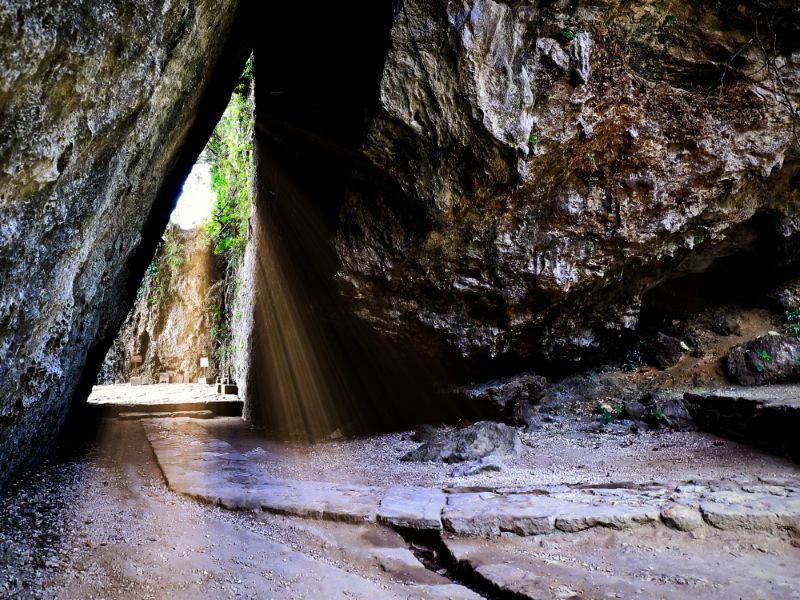
Okinawa has religious traditions shaped by the history of the Ryukyu Kingdom and the cultural development of the Ryukyu Islands.
One important example is the utaki (御嶽), a sacred place associated with worship and ritual observances.
Okinawan traditions also include religious roles such as noro priestesses, household practices involving the fire deity Hinukan, and forms of ancestor veneration.
These customs should not simply be treated as identical to guardian shrine traditions found on Japan’s main islands.
There are also differences between Okinawa Island, Miyako, Yaeyama, and individual communities.
One well-known sacred site is Sefa-utaki, located in Nanjo City, Okinawa. It has a particularly important place in the religious history of the Ryukyu Kingdom.
The site’s official website explains its history and provides current visitor information.
If you visit an utaki, remember that it may still be an active place of worship rather than simply a historical attraction.
Follow local guidance concerning restricted areas, photography, and appropriate behavior. Not every sacred place is open to tourists.
Ainu Traditions and Kamuy
The Ainu are an Indigenous people of northern Japan, particularly associated with Hokkaido, with their own language, history, and cultural traditions.
Ainu religious practices include relationships with kamuy, powerful spiritual beings connected with elements of the natural world and human life.
Kamuy may be associated with animals, plants, fire, water, mountains, and other important parts of the environment.
Rituals and offerings can express respect, gratitude, and relationships between humans and kamuy.
It would be misleading to describe these traditions simply as another version of mainstream Japanese Shinto or to reduce them to a generic form of nature worship.
Ainu communities have distinct histories and continue to preserve, interpret, and develop their cultural practices today.
For an introduction from a specialist institution, see the National Ainu Museum and Park’s guide to Ainu culture.
Understanding Japanese regional beliefs also means recognizing the distinct cultural identities of the people who maintain them.
Are Japanese Superstitions Still Relevant Today?
Japanese superstitions remain visible in everyday language, family advice, holiday traditions, and cultural practices. However, their meanings are not limited to whether the predictions behind them come true.
Scientific Evidence vs. Cultural Meaning
There is no scientific evidence that an upright tea stalk guarantees good luck, that a north-facing pillow causes misfortune, or that a particular birth year determines a person’s personality.
At the same time, traditions can affect human behavior and social relationships.
Choosing a wedding date that makes older relatives comfortable may ease family discussions. Receiving an omamori from someone you love may feel encouraging. Visiting a family grave can provide time to remember someone important.
These experiences do not establish the existence of supernatural powers. They show that cultural practices can have personal and social meaning.
The Fire Horse superstition illustrates a related but different point: a belief can influence real decisions even when the belief itself has no scientific foundation.
Japan’s Agency for Cultural Affairs recognizes customs involving religion, annual observances, and everyday life as part of the country’s folk cultural heritage.
Preserving a cultural tradition does not require proving that every supernatural claim associated with it is true.
Respecting Traditions Without Feeling Obligated
If a tradition matters to your family or community, there may be good reasons to continue it as a meaningful custom.
But respecting a tradition does not mean that everyone must believe in it or follow it without question.
Some warnings, such as avoiding sharp tools in the dark, may have practical interpretations. However, a plausible modern explanation should not automatically be presented as the original historical reason for a superstition.
It is also important to recognize when traditional beliefs can cause harm.
Superstitions should not be used to judge someone based on gender or birth year, pressure people about pregnancy, or discourage them from seeking medical treatment.
Religious practices and practical precautions can coexist. Someone may carry a traffic-safety amulet while still wearing a seat belt and driving carefully, or participate in a purification ritual while receiving appropriate medical care.
If you encounter a custom that seems unfamiliar, asking what it means to the people who practice it is often more useful than dismissing it or assuming everyone in Japan believes the same thing.
Frequently Asked Questions
Do all Japanese people believe in superstitions?
No. Attitudes vary widely. Some people take certain traditions seriously, others follow them to respect family customs, and many regard them as folklore rather than literal predictions. There is no single belief shared by everyone in Japan.
Are Japanese superstitions the same as Shinto beliefs?
No. Shinto is a religious tradition involving kami, shrines, and ritual practices. Japanese superstitions can also reflect Buddhist customs, folk traditions, regional beliefs, and influences from other parts of East Asia. The two categories sometimes overlap, but they are not interchangeable.
Can foreigners buy omamori at Japanese shrines?
Yes. Visitors can generally obtain omamori at shrines and temples that offer them. They are meaningful religious objects, so it is appropriate to handle them respectfully and follow any guidance provided by the institution.
Is it bad luck to visit a Japanese shrine and a Buddhist temple on the same day?
There is no universal Japanese religious rule that makes visiting both on the same day unlucky. Shrine and temple traditions have coexisted and influenced each other throughout much of Japanese history. Visitors should follow the etiquette appropriate to each location.
Why do Japanese families sometimes avoid certain wedding or funeral dates?
Some families consider the traditional rokuyo calendar when arranging important ceremonies. Taian is often favored for weddings, while Tomobiki may be avoided for funerals. These are cultural preferences rather than universally binding religious rules.
Are all sacred sites in Okinawa open to tourists?
No. Some utaki and other sacred places have restricted access or special rules because they remain important religious sites. Check official visitor information and respect local requests concerning entry, photography, and behavior.