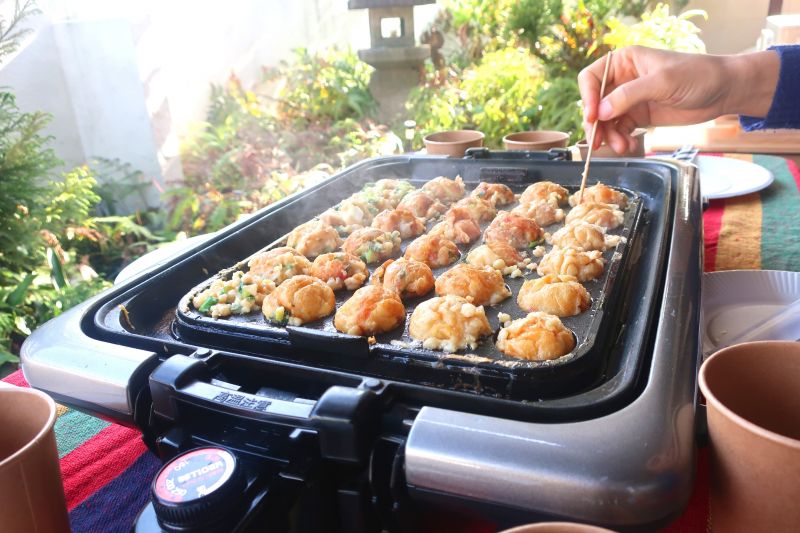
Yes, you can make takoyaki with bread flour. If you have bread flour left over from baking bread, there’s no need to buy a special takoyaki mix just to make these Japanese octopus balls at home.
The main difference is texture. Bread flour has more gluten-forming protein than most all-purpose or cake flours, so it tends to produce takoyaki with a firmer, chewier bite. That’s not necessarily a bad thing, especially if you enjoy a satisfying, slightly springy center.
The trick is to keep the batter thin, avoid excessive mixing, and cook it in a properly heated takoyaki pan. Here’s how to use bread flour without ending up with heavy, rubbery takoyaki.
Can You Make Takoyaki With Bread Flour?
Absolutely. Bread flour works in homemade takoyaki batter, even though lower-protein wheat flour is generally a better starting point for the delicate texture associated with traditional Osaka-style takoyaki.
Takoyaki is a Japanese dish made by cooking a thin, savory batter in a pan with round wells. The classic filling is a piece of cooked octopus, often accompanied by green onions, pickled ginger, and crunchy tempura scraps called tenkasu.
In Japan, lower-protein flour is commonly called hakurikiko, while stronger bread-making flour is known as kyorikiko. These categories describe different types of wheat flour, and the distinction matters because protein content influences how the batter behaves during cooking.
With bread flour, you can expect a slightly more elastic and substantial bite. Adding enough liquid helps prevent the finished balls from becoming overly dense.
If your goal is a light, delicate center, cake flour or a suitable all-purpose flour may be easier to work with. But if bread flour is what you have, it is still a practical choice.
Bread Flour vs. Other Flours for Takoyaki
Choosing the right flour starts with understanding gluten. Wheat flour contains proteins that form gluten when mixed with water. Gluten contributes structure, elasticity, and chewiness.
Different flour categories vary in protein content, although the exact percentages depend on the brand and country.
| Flour | Approximate Protein Content | Expected Takoyaki Texture |
|---|---|---|
| Cake flour | 7–10% | Tender and relatively delicate |
| All-purpose flour | 10–12% | Balanced, with moderate structure |
| Bread flour | 12–14% | Chewier, springier, and potentially firmer |
| Rice flour | Varies; no wheat gluten when pure | Can be lightly crisp outside with a different starch-based chew |
These protein ranges are general guides rather than universal standards. Some brands of all-purpose flour contain nearly as much protein as certain bread flours.
In the United Kingdom, all-purpose flour is generally called plain flour, while bread flour is often sold as strong white flour. Checking the protein percentage on the package is more reliable than comparing names alone.
Why Bread Flour Makes Takoyaki Chewier
Two important proteins in wheat flour are glutenin and gliadin. When flour is hydrated and mixed, these proteins interact to create gluten.
Glutenin contributes elasticity and strength, while gliadin helps give dough extensibility and flow. Together, they influence the structure of the finished food.
Bread flour generally contains more of these gluten-forming proteins than cake flour. This is useful for bread, where a strong dough needs to stretch and hold its shape.
Takoyaki, however, is made from a thin batter rather than a kneaded dough. You don’t need the same strong gluten network that makes bread chewy.
When using bread flour, prolonged or vigorous mixing can make the batter more elastic than necessary. The result may feel rubbery instead of pleasantly soft.
The solution is simple: use a sufficiently fluid batter, remove lumps without kneading, and let the hot pan create the outer shell.
Choosing Flour for Your Preferred Texture
If you prefer a soft, delicate takoyaki center, start with cake flour or lower-protein all-purpose flour. If you enjoy a firmer and more filling bite, bread flour can be a good choice.
You can also blend flours. Replacing part of the bread flour with cake flour or all-purpose flour is one way to reduce the batter’s overall gluten-forming potential.
Keep in mind that flour is only one variable. Water content, eggs, cooking temperature, oil, and the size of your takoyaki pan also affect the result.
Bread Flour Takoyaki Recipe (About 40 Pieces)
This homemade recipe uses bread flour, eggs, dashi seasoning, and a generous amount of water to create a thin batter.
It is based on a Japanese home-style bread flour takoyaki formula and is intended as a starting point rather than a universal ratio for every flour brand or takoyaki maker.
The batter will look much thinner than American pancake batter. That is normal for takoyaki.
Ingredients
| Ingredient | Amount | Notes |
|---|---|---|
| Bread flour | 200 g (7.1 oz) | Regular white bread flour |
| Water | 800 ml (about 3 3/8 US cups) | Add gradually and adjust if needed |
| Large eggs | 2 | For flavor and structure |
| Instant dashi powder | 2 tsp | Adjust according to the product’s saltiness |
| Japanese light-colored soy sauce | 1 tbsp (15 ml) | Regular Japanese soy sauce also works |
| Salt | A small pinch, if needed | Taste only after cooking a test piece |
| Cooked octopus | About 150 g (5.3 oz) | Cut into bite-size pieces |
| Chopped scallions | As desired | Also called spring onions in the UK |
| Beni shoga | As desired | Finely chopped red pickled ginger |
| Tenkasu | As desired | Crunchy fried tempura batter bits |
| Neutral cooking oil | As needed | For the wells and surrounding cooking surface |
Yield: Approximately 35–40 small takoyaki, depending on the size of the pan and how generously you fill the wells.
Japanese light-colored soy sauce is called usukuchi shoyu. Despite the English word “light,” it does not necessarily contain less sodium. If your dashi powder and soy sauce are already salty, reduce or omit the added salt.
Using a kitchen scale for flour is preferable to measuring it by volume. A cup of flour can weigh different amounts depending on how it is filled.
How to Make Takoyaki With Bread Flour
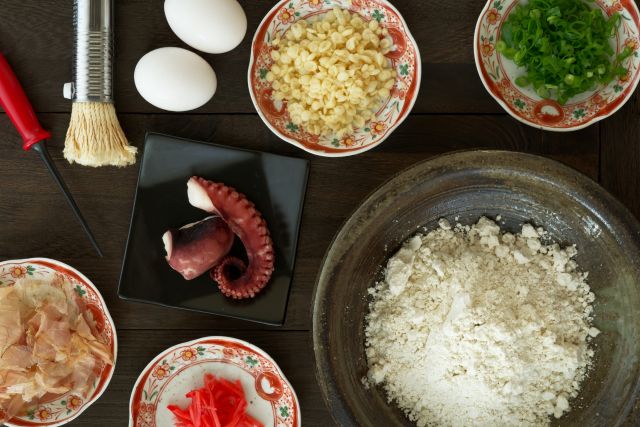
- Prepare the fillings. Cut the cooked octopus into small pieces, chop the scallions and pickled ginger, and arrange the ingredients near your takoyaki maker. Have everything ready before heating the pan.
- Start the batter. Place the bread flour in a large bowl. Add a small amount of the measured water and whisk until you have a smooth paste. This helps remove lumps before the batter becomes very thin.
- Mix the remaining liquids. In a separate container, beat the eggs with the dashi powder, soy sauce, and most of the remaining water. Gradually pour this mixture into the flour paste while whisking.
- Adjust the consistency. Add the rest of the water gradually, up to the full 800 ml. The batter should pour easily and look considerably thinner than pancake batter. Stop mixing once it is smooth and combined.
- Preheat the takoyaki pan. Follow the manufacturer’s directions. If your appliance allows temperature adjustment, around 200°C (392°F) is a useful reference for some takoyaki makers, but the appropriate setting depends on the equipment. Do not overheat a nonstick plate or let the oil smoke.
- Oil the cooking surface. Brush a suitable amount of neutral oil into each well and across the surrounding surface. This helps the batter release and develop a browned crust.
- Pour in the batter. Stir the batter briefly, then pour it into the wells. Allow some batter to flow over the flat areas between the wells so you have enough to form round balls.
- Add the fillings. Place a piece of cooked octopus in each well. Scatter the scallions, pickled ginger, and tenkasu over the batter.
- Wait for the edges to set. Let the batter cook until the edges become firm enough to lift. Depending on the pan, this may take approximately 1–2 minutes or longer. Do not force the balls to turn before they release.
- Turn and shape. Use bamboo skewers or nonstick-safe takoyaki picks to separate the batter between wells. Rotate each ball approximately 90 degrees, tucking the surrounding batter underneath. Continue turning as the shape becomes round.
- Finish cooking. Rotate the takoyaki until the outside is evenly browned and the center is thoroughly cooked. A soft center is desirable, but it should not contain raw flour-and-egg batter. Serve hot with your favorite toppings.
If this is your first time using bread flour, consider making a small test batch before pouring all the batter. Very thin batter can take practice to turn, especially on lower-powered electric appliances.
If the mixture is too difficult to shape, use slightly less water for the next batch. If the balls feel heavy and overly firm, try a little more water or a lower-protein flour blend next time.
How to Get a Crisp Outside and Soft Center
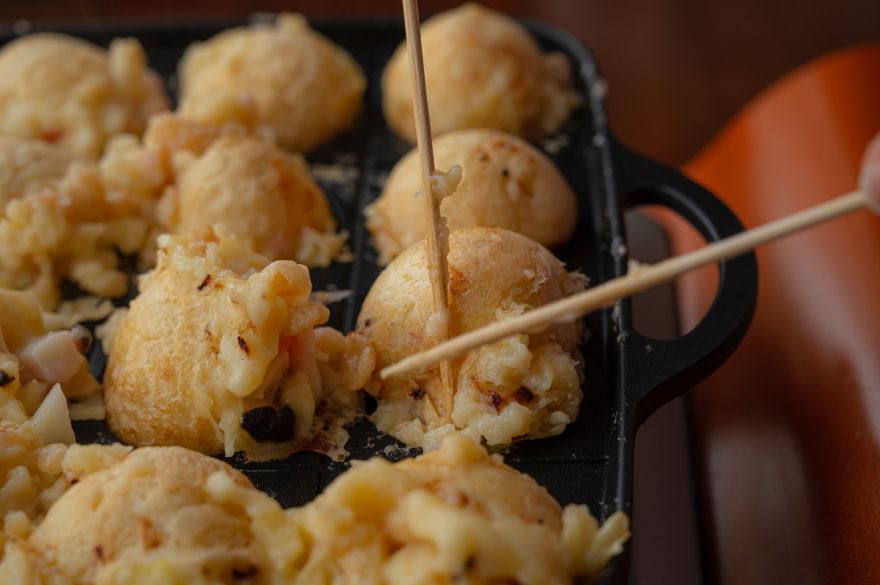
One of the most appealing features of Osaka-style takoyaki is the contrast between a lightly crisp exterior and a soft, almost creamy center.
You can work toward this texture with bread flour, although the finished takoyaki will usually have more chew than a comparable version made with lower-protein flour.
Adjusting the Batter and Mixing
A thin batter helps prevent takoyaki from becoming dense. The relatively high proportion of water allows the center to stay moist while the outside sets and browns.
However, adding more water is not always better. If the batter is excessively diluted, the balls may be difficult to shape or may collapse when you try to turn them.
For a reliable result:
- Measure the flour by weight.
- Add the liquid gradually rather than all at once.
- Whisk enough to remove lumps, but avoid prolonged vigorous mixing.
- Stir the batter briefly before each batch because solids can settle.
- Adjust one variable at a time when testing different ratios.
For an even softer texture, some Japanese home cooks add a small amount of grated nagaimo, a type of Japanese mountain yam. Its naturally viscous texture can make the batter feel smoother.
Nagaimo is optional, and its effect depends on how much is used. Start with a small amount rather than replacing a large portion of the liquid.
Preheat, Oil, and Turn at the Right Time
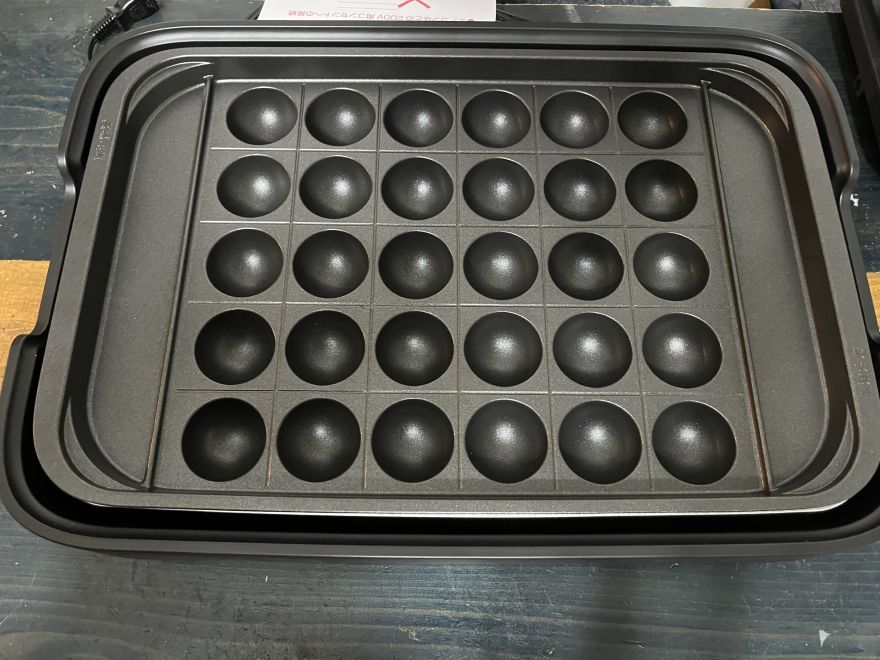
Getting a crisp exterior is not just about the flour. Proper heating and enough oil are particularly important.
A well-preheated pan allows the outside to set while the center remains moist. Oil promotes browning, helps prevent sticking, and can create a lightly fried surface.
The most common mistake is turning the balls too early. When the edge is still completely liquid, it cannot hold a round shape.
Wait until a thin cooked shell has formed. Then use a quarter-turn motion to fold the extra batter inside the well.
Once the balls become round, continue rotating them for even cooking. You can brush on a little extra oil near the end if the surface needs more browning, provided your appliance allows it.
Remember that creamy does not mean uncooked. Egg-containing batter must be cooked thoroughly, even when the finished interior is intentionally soft.
Flour and Batter Variations
Once you understand the basic recipe, changing the flour blend or liquid can create different flavors and textures.
Bread Flour and Potato Starch
In Japan, katakuriko usually refers to potato starch. It is commonly used for thickening sauces and making crisp coatings on fried foods.
Because potato starch contains no wheat gluten, replacing some bread flour with it changes the batter’s structure. It may help produce a different, less elastic bite and influence the texture of the cooked outer layer.
A useful experimental blend is:
- 160 g (5.6 oz) bread flour
- 40 g (1.4 oz) potato starch
This gives an 80:20 ratio of bread flour to potato starch, keeping the total dry weight at 200 g.
Try the blend with the basic recipe’s liquid as a starting point, then adjust if needed after cooking a test batch. Starch can change how the batter thickens during heating, so the result is not guaranteed to be crispier with every pan and recipe.
If you are concerned about the balls holding their shape, begin with a smaller substitution, such as 20 g of potato starch and 180 g of bread flour.
In American supermarkets, potato starch is often available in the baking aisle, gluten-free section, or Asian grocery stores.
Cornstarch is another possible substitute, although it can produce a somewhat different texture.
Rice Flour for a Gluten-Free Version
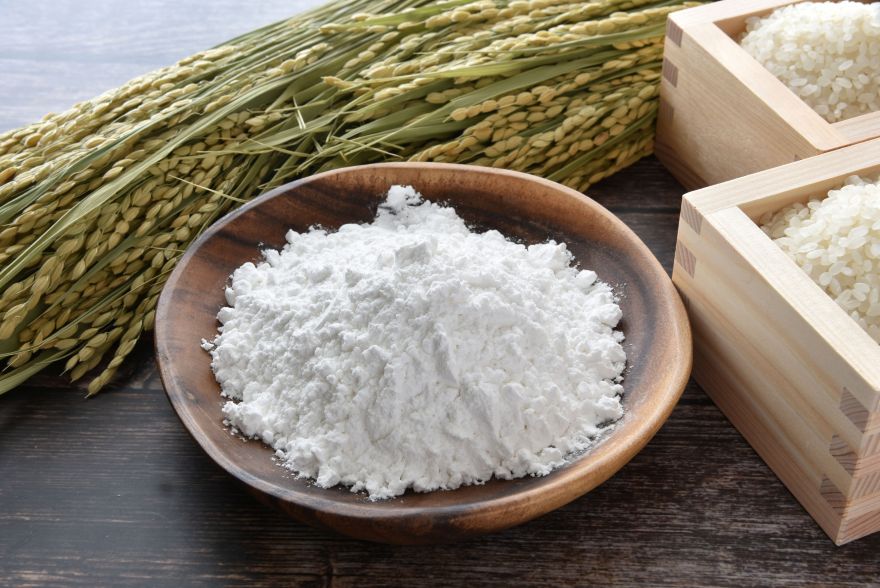
Rice flour is another interesting option for homemade takoyaki. Unlike wheat flour, pure rice flour does not contain the proteins that form wheat gluten.
This means rice-flour batter behaves differently from bread-flour batter. The finished texture may be lightly crisp outside with a softer, starch-based chew in the center, depending on the flour and recipe.
For people who need to avoid gluten, use a takoyaki recipe specifically formulated for rice flour or a suitable gluten-free flour blend. A simple gram-for-gram replacement in the bread-flour recipe may not give the same results.
Rice flour particles may settle while the batter sits, so stir the mixture thoroughly from the bottom before pouring each batch.
Some rice-flour recipes also use a small amount of gluten-free baking powder to improve lightness, but the amount depends on the complete formula.
Important for gluten-free cooking: Check every ingredient, including soy sauce, dashi powder, tenkasu, sauces, and seasonings. Regular soy sauce and traditional tenkasu often contain wheat. Use appropriately labeled gluten-free alternatives and clean equipment to avoid cross-contact.
Rice flour does not automatically make an entire takoyaki recipe gluten-free if other ingredients contain gluten.
Also, rice-flour takoyaki is not guaranteed to remain soft when refrigerated. Rice starch can firm up during storage, so reheat leftovers thoroughly for a more pleasant texture.
Egg-Free Takoyaki
Yes, you can make takoyaki without eggs. Eggs normally contribute richness, binding, and structure, but they are not the only ingredients capable of holding the batter together.
For an egg-free experiment, start with the bread flour and dashi base, omit the two eggs, and adjust the water until the batter is thin but manageable. Cook a few test pieces before making a full batch.
The finished takoyaki may be slightly less rich and may require more careful turning.
You can also experiment with ingredients that help modify the texture:
- Grated nagaimo: Adds viscosity and can help the batter hold together. Try a small amount, such as 2 tablespoons, as a starting experiment.
- Silken tofu: Adds moisture and a softer texture when mashed until smooth.
- Egg-free mayonnaise: Can add richness through its oil content. Check that the product is specifically labeled egg-free.
These ingredients do not behave exactly like eggs, so use small test batches rather than assuming a direct substitution will always work.
If you are avoiding eggs because of an allergy, check all packaged ingredients and cooking utensils for possible cross-contact. Ordinary Japanese mayonnaise usually contains eggs.
Adding Milk to the Batter
Milk is an optional way to give takoyaki a richer, slightly sweeter flavor.
Instead of adding milk on top of the recipe’s water, replace some of the water with an equal volume of milk.
For example, you could try:
- 530 ml water plus 270 ml milk
- 400 ml water plus 400 ml milk
Both options maintain approximately 800 ml of total added liquid, although the batter may behave differently because milk contains proteins, fat, and lactose.
Milk pairs particularly well with cheese, cooked sausage, bacon, and sweet corn fillings.
The main thing to watch is browning. Milk can encourage faster browning and make the batter more prone to scorching. Reduce the heat slightly if necessary and keep an eye on the cooking surface.
For a more traditional dashi-forward flavor, water or dashi stock remains the simpler choice.
The Best Fillings and Toppings
Classic Japanese takoyaki contains cooked octopus, but experimenting with fillings is a popular part of making it at home.
A bread-flour batter has a substantial texture that can work well with both traditional and creative fillings.
| Filling | Flavor and Texture | Preparation Tip |
|---|---|---|
| Cooked octopus | Savory and pleasantly firm | Cut into small pieces and pat dry |
| Scallions | Fresh, mild onion flavor | Chop finely |
| Beni shoga | Tangy and sharp | Use a small amount |
| Tenkasu | Rich and lightly crunchy | Scatter into the batter |
| Cheese | Creamy and salty | Use small cubes or shredded cheese |
| Fully cooked sausage | Savory and juicy | Cut into bite-size pieces |
| Kimchi | Spicy and tangy | Chop and drain excess liquid |
| Mochi | Very chewy | Cut into tiny pieces; avoid for young children due to choking risk |
| Konnyaku | Firm, springy texture | Use small pieces of prepared konnyaku |
| Cooked shrimp | Sweet seafood flavor | Use fully cooked |