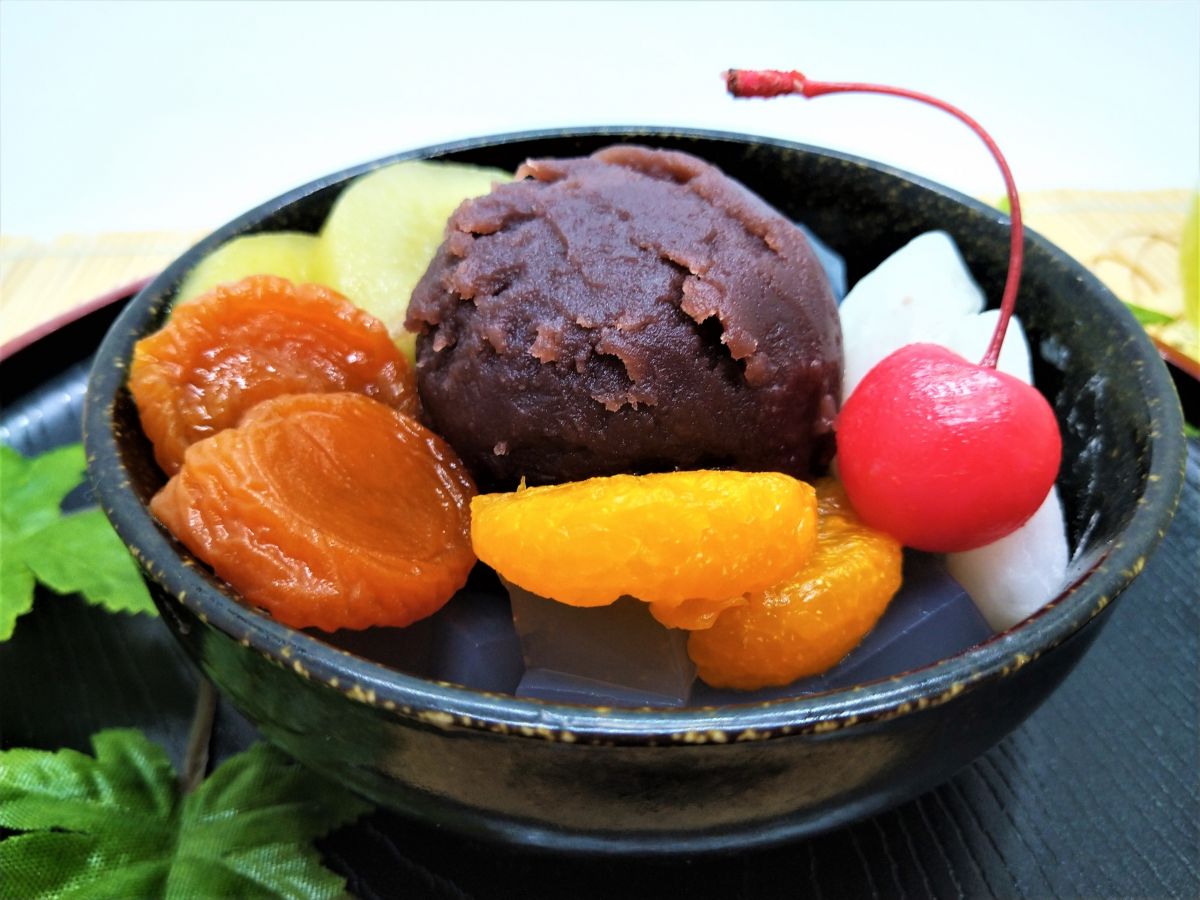
Anmitsu is a traditional Japanese dessert made with kanten jelly, sweet red bean paste, fruit, and kuromitsu syrup. It is cool, colorful, and refreshing, with a mix of jelly-like, chewy, fruity, and sweet flavors in one bowl.
If you are curious about Japanese sweets beyond matcha and mochi, anmitsu is a lovely place to start. It feels light compared with many cream-heavy desserts, but it still gives you that satisfying “I had something sweet” feeling.
What Is Anmitsu?
Anmitsu is a classic Japanese dessert usually served in a bowl. The base is made with small cubes of kanten, a firm jelly made from seaweed. On top, you will usually find anko, which is sweet red bean paste, along with fruit and kuromitsu, a dark brown sugar syrup.
For English speakers, anmitsu may be easiest to imagine as a Japanese-style jelly dessert or a lighter kind of Japanese-style parfait. It is not usually creamy unless ice cream is added, and the main experience comes from the clean texture of kanten, the rich sweetness of anko, and the deep flavor of kuromitsu.
Anmitsu is usually eaten cold, so it is especially enjoyable on warm days. It is sweet, but not in the same way as a cake or pudding. The sweetness comes in layers: the syrup, the red bean paste, the fruit, and sometimes chewy toppings like shiratama or gyuhi.
What’s Inside Anmitsu?
The fun of anmitsu is that it is not just one texture or one flavor. Each ingredient plays a different role, and each spoonful can taste slightly different depending on what you scoop up.
“`
Kanten Jelly
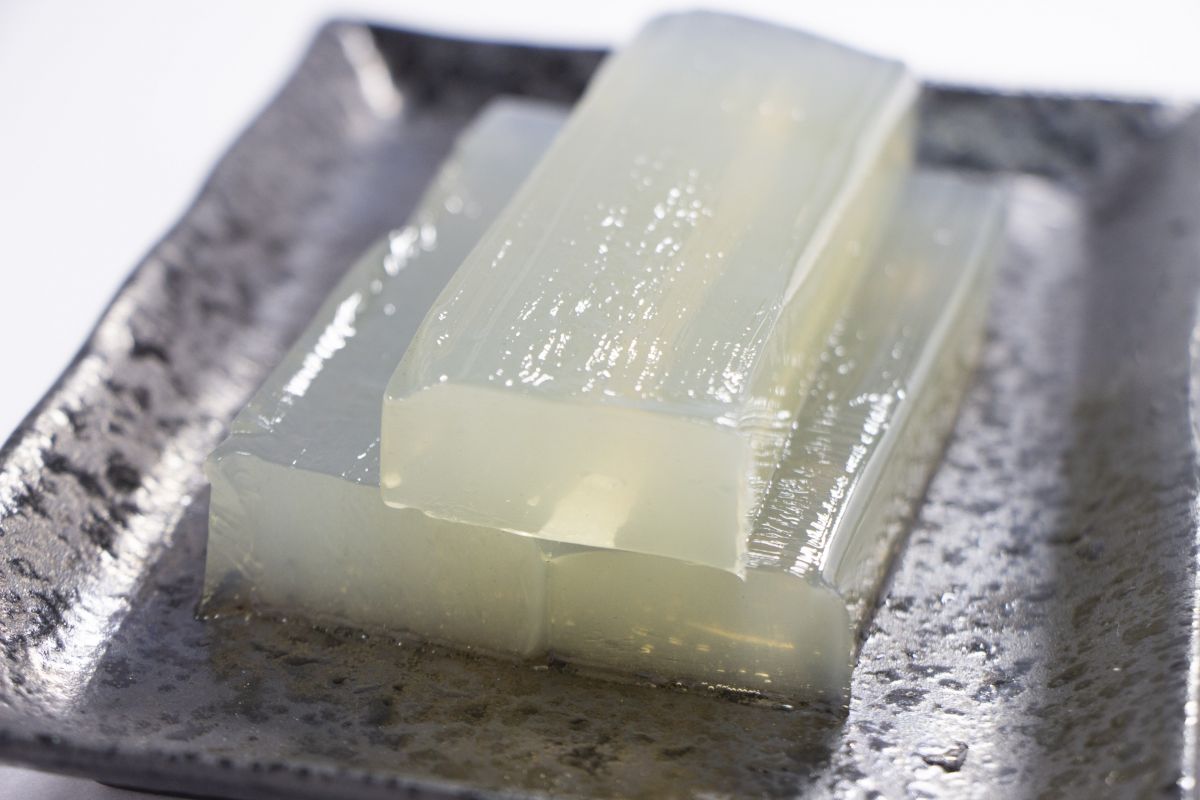
Kanten is a jelly made from seaweed. In English, it is often called agar jelly or agar-agar jelly. It may look a little like gelatin, but the texture is usually firmer, cleaner, and less bouncy.
Because kanten is plant-based, it is different from animal-derived gelatin. It is also very low in calories and contains dietary fiber, which is one reason anmitsu can feel lighter than many Western desserts made with butter or cream.
Anko: Sweet Red Bean Paste
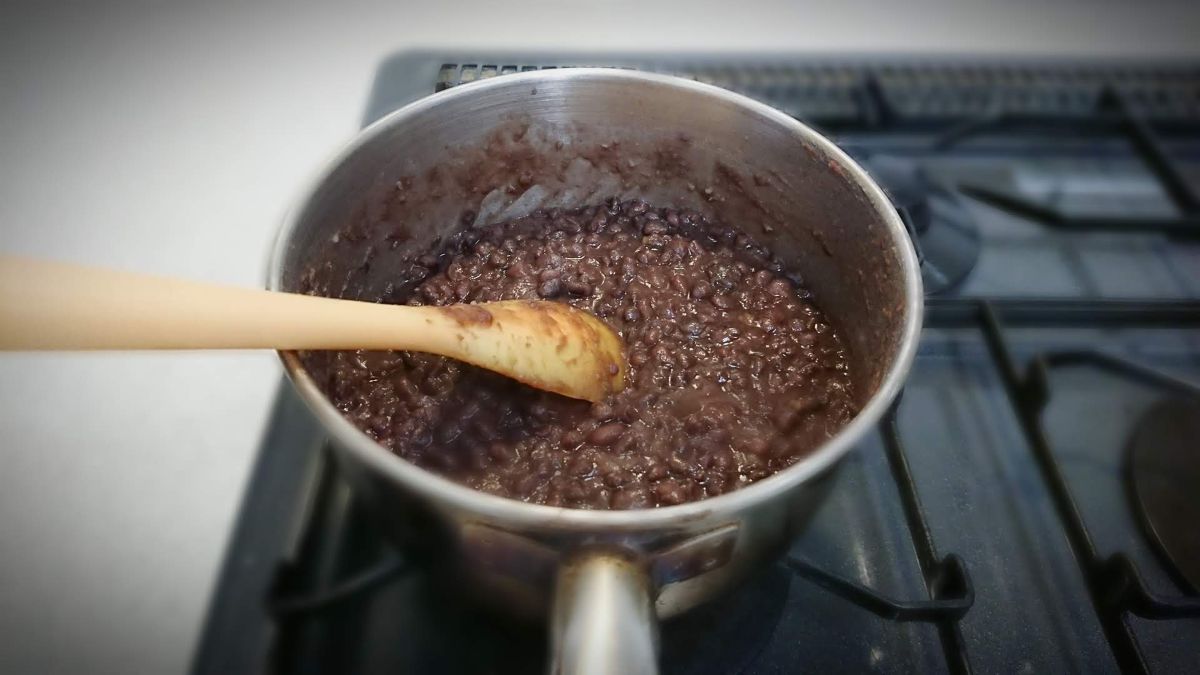
Anko is sweet red bean paste made from azuki beans and sugar. It gives anmitsu its rich, traditional Japanese sweetness.
There are two common styles of anko. Koshian is smooth red bean paste, while tsubuan keeps some of the bean texture. Both can be used in anmitsu, and each gives the dessert a slightly different feel.
Kuromitsu Syrup
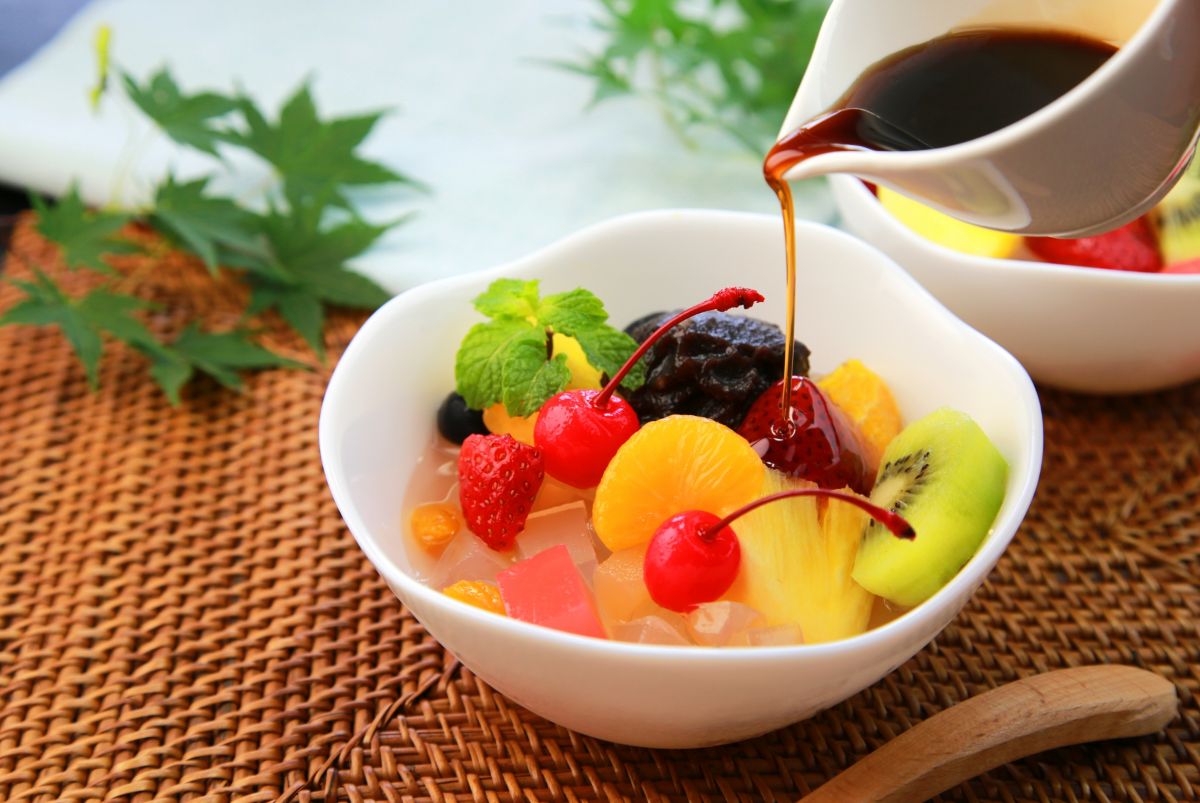
Kuromitsu is a dark Japanese syrup often made from brown sugar or black sugar. It has a deep, rich flavor that can taste a little like caramel or molasses, but with a Japanese-style softness.
In many cafés, kuromitsu is served separately in a small container. This is helpful because you can decide how sweet you want your anmitsu to be.
Fruit
Fruit adds color, freshness, and a little acidity. Common fruits include mandarin orange, peach, pineapple, cherry, kiwi, and seasonal fruit.
The fruit is more than decoration. It helps balance the sweetness of the anko and kuromitsu, making the dessert feel brighter and more refreshing.
Shiratama
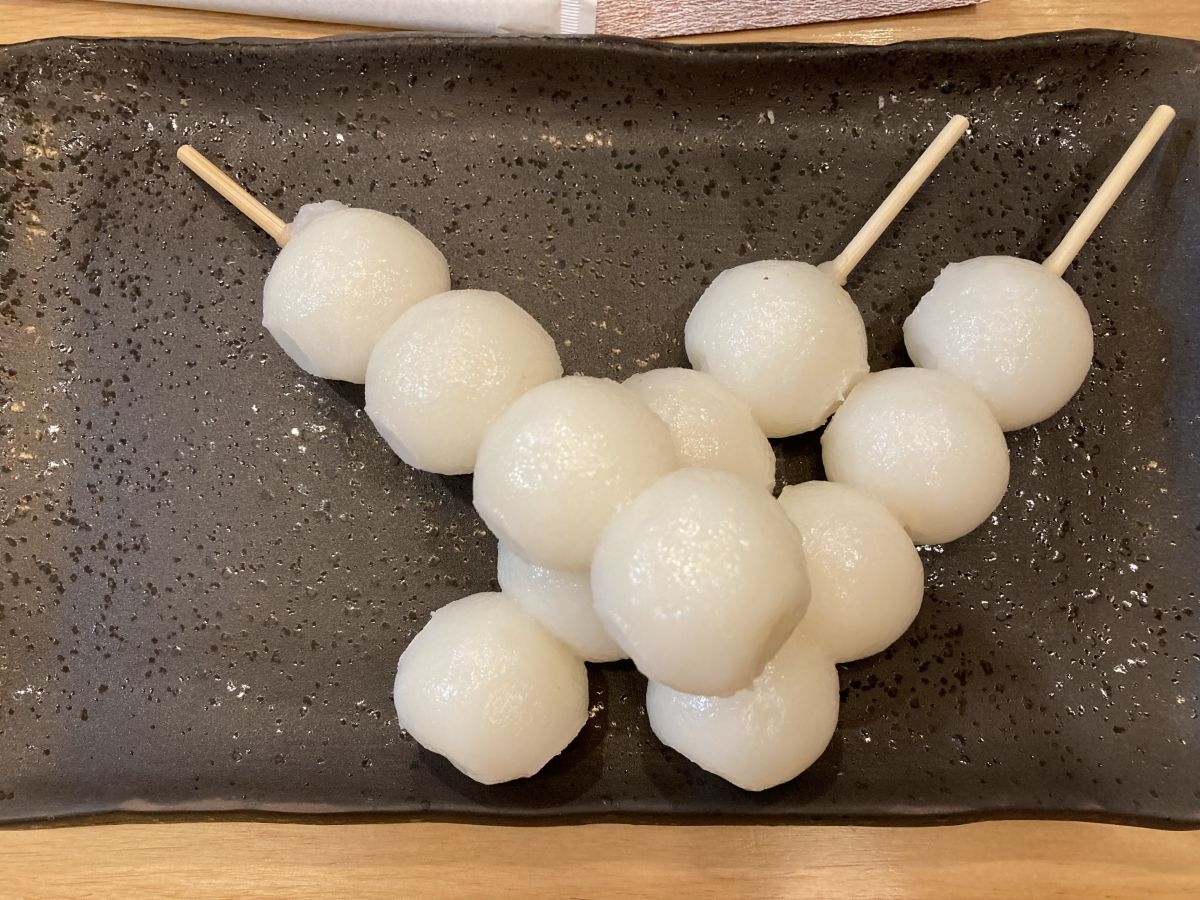
Shiratama are small chewy dumplings made from rice flour. They are soft, round, and mochi-like, but often lighter and smaller than regular mochi.
When shiratama is added, the dessert is usually called shiratama anmitsu. If you enjoy chewy textures, this is a very easy version to love.
Gyuhi
Gyuhi is a soft, sweet, mochi-like confection. It is often cut into small colorful pieces and used in traditional Japanese sweets.
In anmitsu, gyuhi adds a gentle chewiness that contrasts nicely with the firm kanten jelly and juicy fruit.
Ice Cream
Some versions of anmitsu include ice cream, usually vanilla or matcha. This version is often called cream anmitsu.
Ice cream makes the dessert richer and more familiar if you are used to Western-style desserts. Matcha ice cream is especially popular because its slight bitterness works well with sweet red bean paste and kuromitsu.
“`
How to Eat Anmitsu
Anmitsu is usually served cold and eaten with a spoon. There is no strict rule for how to eat it, so you can enjoy it in the way that feels most natural.
If the kuromitsu syrup comes separately, pour it over the dessert before eating. If you are not sure how sweet you want it, start with a small amount and add more later.
A good way to enjoy anmitsu is to scoop up different ingredients together. Try a bite of kanten with kuromitsu, then anko with fruit, then shiratama or ice cream if your bowl has them. The dessert changes a little with every spoonful.
“`
- Pour kuromitsu syrup over the anmitsu.
- Use a spoon to scoop up kanten, fruit, and anko together.
- Mix gently as you eat instead of stirring everything completely at once.
- Add more kuromitsu if you want a deeper sweetness.
- Enjoy it while it is still cold and refreshing.
If this is your first time trying anmitsu, taste the kanten jelly by itself first. It has a very mild flavor, so the syrup, fruit, and anko are what bring the bowl to life.
“`
Popular Types of Anmitsu
Once you know the basic version, Japanese café menus become much easier to understand. Here are some popular types of anmitsu you may see in Japan.
“`
Cream Anmitsu
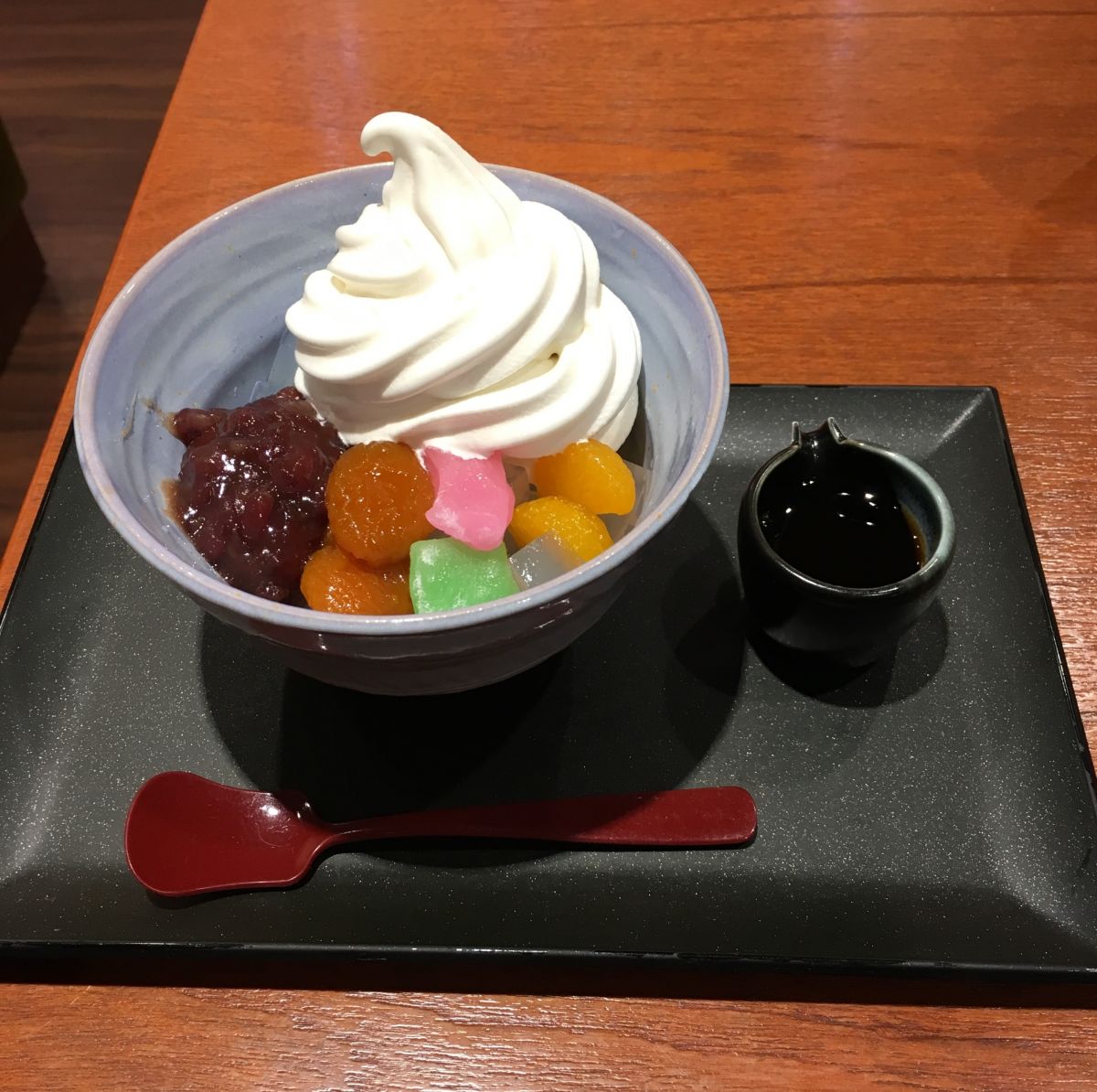
Cream anmitsu is anmitsu topped with ice cream or sometimes whipped cream. It is richer, creamier, and more dessert-like than the classic version.
Vanilla ice cream is common, but matcha ice cream is also a popular choice. This is a good option if you want something a little more indulgent.
Shiratama Anmitsu
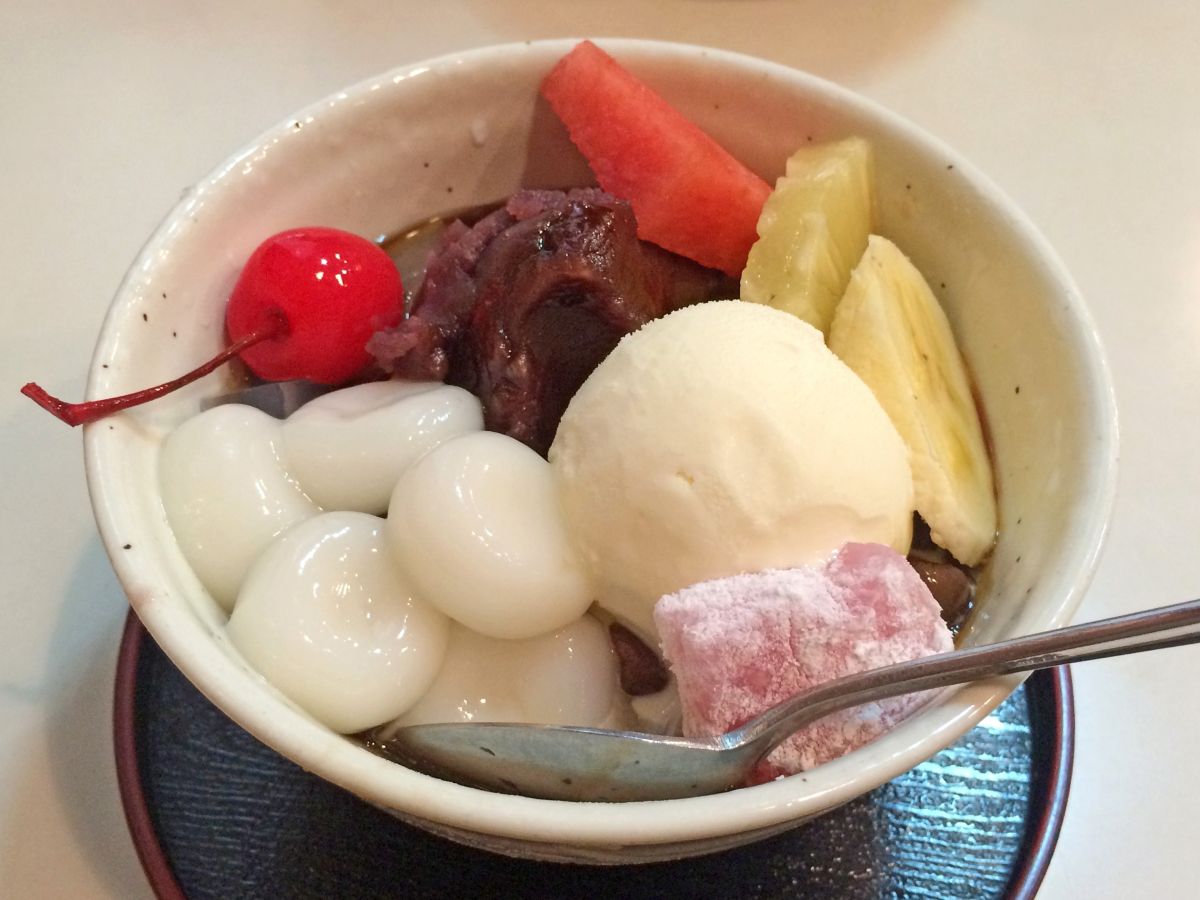
Shiratama anmitsu includes chewy rice-flour dumplings. The soft, bouncy texture of shiratama goes well with the firm kanten jelly and smooth anko.
This version is especially nice if you enjoy mochi-like textures but want a dessert that still feels refreshing.
Matcha Anmitsu
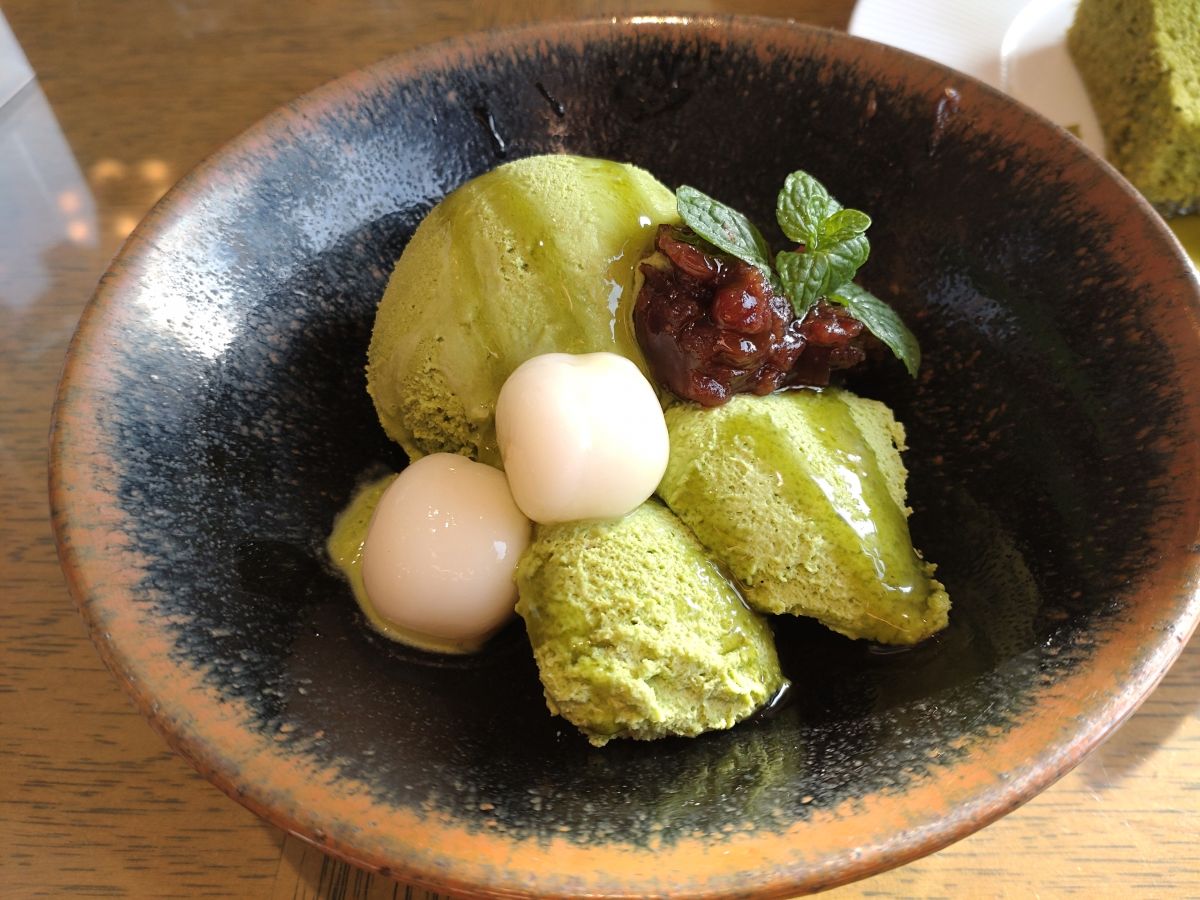
Matcha anmitsu may include matcha ice cream, matcha syrup, matcha jelly, or other green tea-flavored toppings. The slight bitterness of matcha helps balance the sweetness of anko and kuromitsu.
If you already like matcha sweets, matcha anmitsu is probably one of the easiest versions to try first.
Fruit Anmitsu
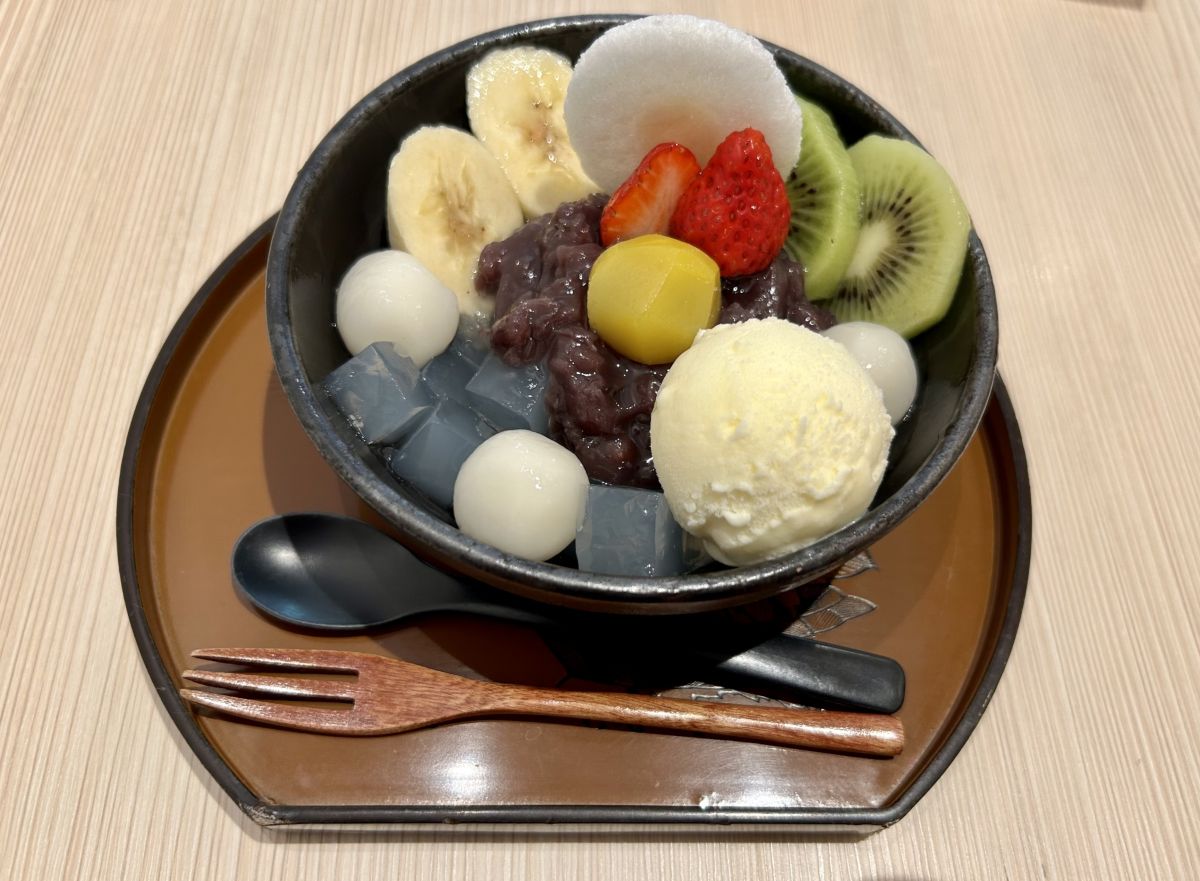
Fruit anmitsu puts extra focus on fruit. It is colorful, bright, and refreshing, making it a friendly choice for people who are new to Japanese red bean desserts.
The fruit makes the bowl feel lighter and adds a fresh contrast to the sweet syrup and red bean paste.
Anmitsu vs. Mitsumame
Mitsumame is a similar Japanese dessert made with kanten jelly, beans, fruit, and syrup. The main difference is simple: anmitsu includes anko, while mitsumame usually does not.
| Dessert | Main Ingredients | Key Difference |
|---|---|---|
| Mitsumame | Kanten jelly, beans, fruit, syrup | No anko |
| Anmitsu | Mitsumame ingredients plus anko | Includes sweet red bean paste |
| Cream Anmitsu | Anmitsu plus ice cream or cream | Richer and creamier |
| Shiratama Anmitsu | Anmitsu plus rice-flour dumplings | Adds a chewy texture |
“`
Is Anmitsu Vegan or Vegetarian?
Basic anmitsu can often be vegetarian-friendly, and in some cases it may also be vegan-friendly. The main reason is that kanten is made from seaweed, not animal gelatin.
The basic ingredients, such as kanten jelly, anko, fruit, and kuromitsu syrup, are usually plant-based. However, not every bowl of anmitsu is automatically vegan.
Some versions include ice cream, whipped cream, or other toppings that may contain dairy. Recipes can also vary from shop to shop, so it is always safest to check before ordering if you avoid animal-derived ingredients completely.
“`
Usually Plant-Based Ingredients
- Kanten jelly
- Anko, or sweet red bean paste
- Fruit
- Kuromitsu syrup
Ingredients to Check
- Ice cream
- Whipped cream
- Some mochi-like toppings
- Shop-specific syrups or prepared ingredients
If you are ordering in Japan, you can ask “Is this vegan?” or “Does this contain dairy?” A simple Japanese phrase is “Kore wa vegan desu ka?”, which means “Is this vegan?”
“`
Easy Anmitsu Recipe
You can make a simple version of anmitsu at home, even outside Japan. The easiest approach is to prepare the kanten jelly, then add store-bought anko, canned fruit, and a quick kuromitsu-style syrup.
“`
Ingredients
- 2 g kanten powder or agar powder
- 300 g water
- 30 g sugar
- Sweet red bean paste, also called anko
- Kuromitsu syrup or dark brown sugar syrup
- Canned mandarin oranges, peaches, pineapple, or other fruit
- Shiratama dumplings or small mochi pieces, optional
- Vanilla or matcha ice cream, optional
Ingredient Substitutions Outside Japan
If you do not live near a Japanese grocery store, you can still make a simple anmitsu-inspired dessert with easy substitutes.
| Japanese Ingredient | English Name | Possible Substitute |
|---|---|---|
| Kanten | Agar powder or agar-agar | Plain agar jelly |
| Anko | Sweet red bean paste | Canned red bean paste from an Asian grocery store |
| Kuromitsu | Japanese brown sugar syrup | Dark brown sugar syrup or a light molasses-style syrup |
| Shiratama | Rice-flour dumplings | Small mochi pieces |
| Gyuhi | Soft sweet mochi | Mochi candy or omit |
| Mikan | Mandarin orange | Canned mandarin oranges |
How to Make Kanten Jelly
- Add 2 g kanten powder and 300 g water to a small pot.
- Heat the mixture while stirring.
- Once it reaches a boil, continue heating for about 2 minutes so the kanten fully dissolves.
- Add 30 g sugar and stir until dissolved.
- Pour the mixture into a container.
- Let it cool, then chill until firm.
- Cut the kanten into small cubes.
Simple Kuromitsu-Style Syrup
For a quick homemade syrup, combine equal parts dark brown sugar and water. For example, use 50 g dark brown sugar and 50 g water.
- Add the sugar and water to a small pot.
- Heat gently while stirring.
- Simmer until slightly thickened.
- Let the syrup cool before using it on anmitsu.
How to Assemble Anmitsu
- Place kanten jelly cubes in a bowl.
- Add fruit such as mandarin oranges, peaches, or pineapple.
- Add a spoonful of anko.
- Add shiratama, gyuhi, or small mochi pieces if using.
- Pour kuromitsu syrup over the top.
- Add ice cream if you want to make cream anmitsu.
- Serve cold and enjoy with a spoon.
This homemade version may not look exactly like a traditional Japanese sweet shop’s anmitsu, but it gives you the same basic idea: cool kanten jelly, sweet red bean paste, fruit, and rich syrup coming together in one refreshing bowl.