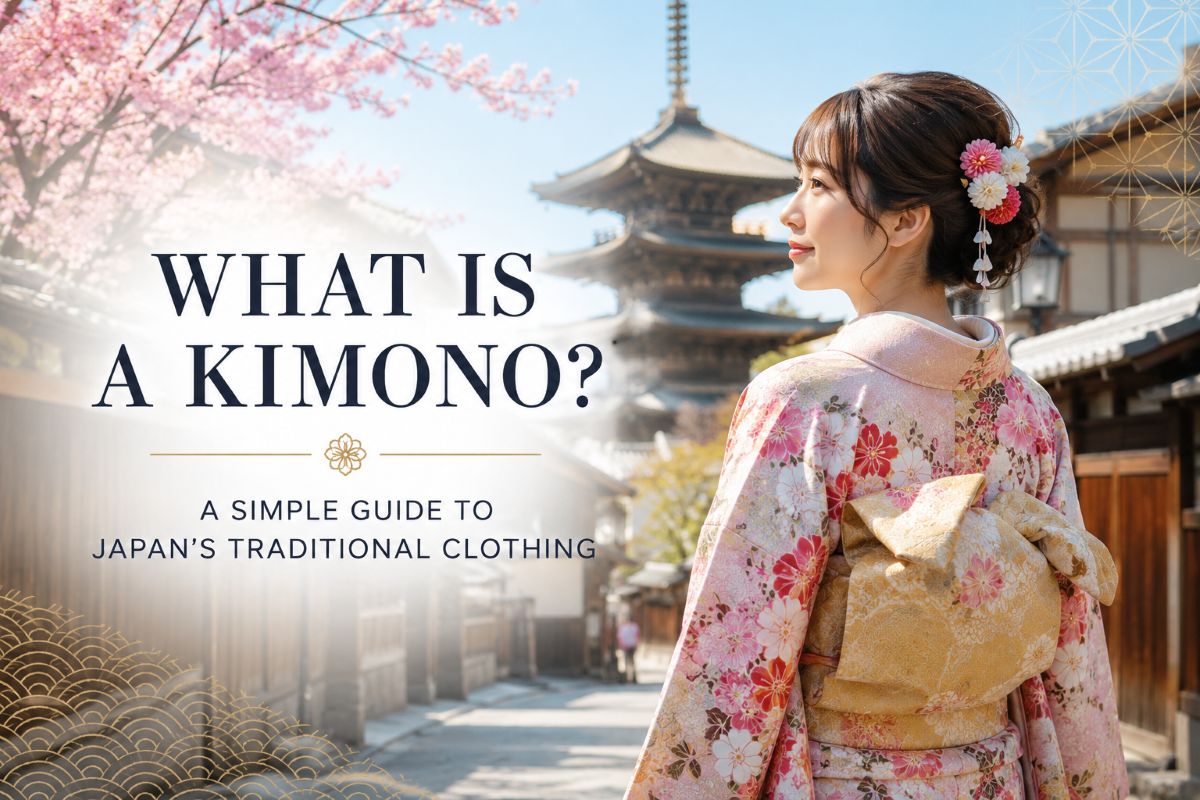
A kimono is one of the most recognizable symbols of Japanese culture, but it is more than just a beautiful robe. It has its own history, rules, accessories, seasons, and meanings. If you have ever wondered what is a kimono, this guide explains it in a simple, beginner-friendly way.
1. What Is a Kimono?
A kimono is a traditional Japanese garment worn by wrapping the left side over the right side and securing it with a wide belt called an obi. Its shape is usually long, straight, and robe-like, with wide sleeves and a flat, elegant silhouette.
Today, the word “kimono” usually refers to Japan’s traditional clothing. It can be formal, semi-formal, or casual depending on the fabric, pattern, family crests, accessories, and occasion.
For many people outside Japan, a kimono may look like one simple garment. In reality, it is part of a full clothing system. A complete kimono outfit may include an undergarment, obi, cords, collar accessories, special socks, and traditional footwear.
In modern Japan, most people do not wear kimono every day. Instead, kimono are often worn for weddings, coming-of-age ceremonies, tea ceremonies, graduation ceremonies, funerals, traditional performances, festivals, and special cultural experiences.
2. What Does “Kimono” Mean?
The word kimono comes from Japanese. It literally means “thing to wear”.
Originally, the word was a very general term for clothing. It did not only mean traditional Japanese clothing. However, after Western-style clothing became common in Japan during the Meiji period, people needed a way to distinguish Japanese clothing from Western clothing.
That is why words like wafuku, meaning Japanese-style clothing, became more commonly used. Over time, “kimono” also came to mean traditional Japanese clothing specifically.
You may also see the word gofuku, especially in Japan. Historically, gofuku referred more to fine woven fabrics and silk textiles rather than finished garments. Today, however, kimono shops are still sometimes called gofukuten.
3. A Brief History of the Kimono
The kimono did not appear suddenly in the form we know today. It developed over many centuries as Japanese clothing changed with society, climate, and culture.
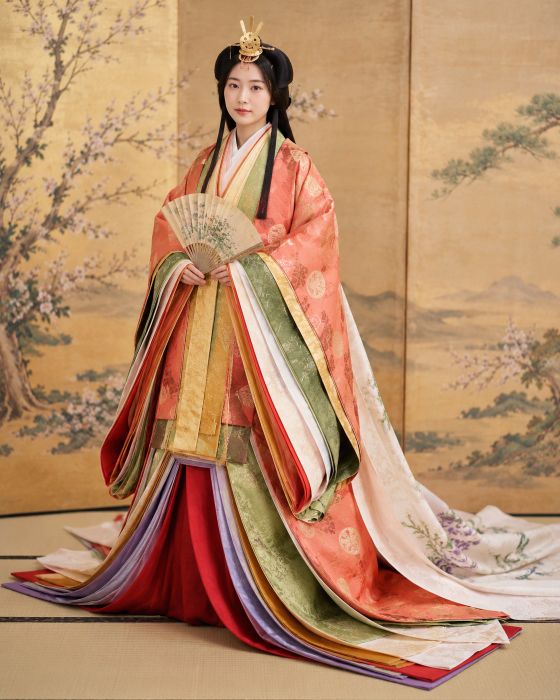
In ancient Japan, clothing styles were influenced by the Asian continent, especially China and Korea. During the Heian period, aristocratic women wore highly layered clothing, including the famous jūnihitoe, often translated as “twelve-layer robe.”
Inside those layered court garments was a simpler garment called the kosode. The kosode had smaller sleeve openings and was originally worn as an undergarment. This kosode is considered the direct root of the modern kimono.
From the Kamakura and Muromachi periods onward, Japanese society became more practical and warrior-centered. The kosode gradually moved from underwear to outerwear, and it became more widely worn by many classes of people.
By the Edo period, kimono culture had become highly developed. Patterns, dyeing techniques, weaving, and obi styles became more elaborate. The kimono became not only clothing, but also a way to express taste, class, season, age, and occasion.
4. Kimono vs Yukata: What Is the Difference?
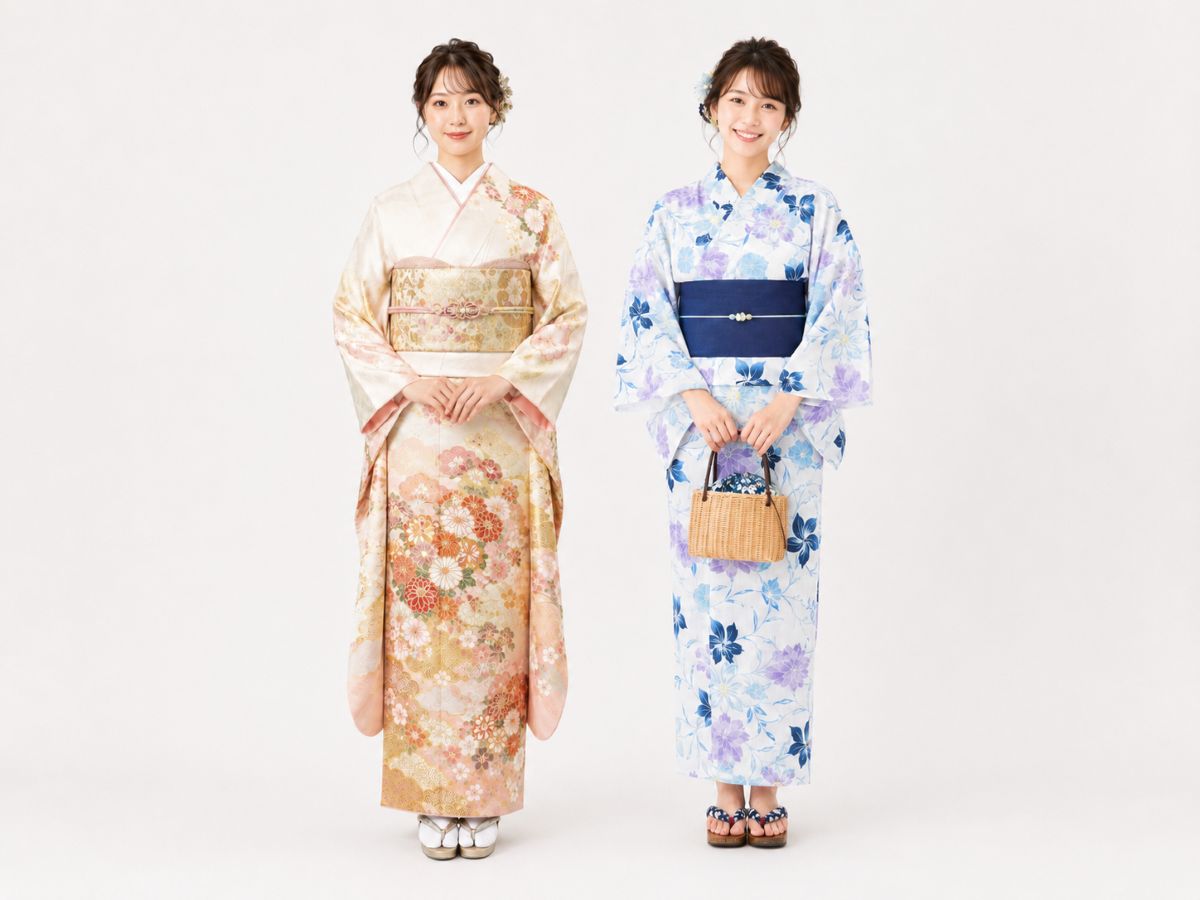
One of the most common questions is the difference between a kimono and a yukata. They look similar at first, but they are not used in exactly the same way.
“`
| Category | Kimono | Yukata |
|---|---|---|
| Formality | Can be formal, semi-formal, or casual | Usually casual |
| Season | Can be worn in different seasons depending on fabric and lining | Mainly worn in summer |
| Material | Often silk, but also cotton, wool, or polyester | Usually cotton or polyester |
| Layers | Usually worn with a long undergarment called nagajuban | Usually worn more simply, without nagajuban |
| Footwear | Often worn with tabi socks and zori sandals | Often worn with geta sandals, sometimes without tabi |
| Common occasions | Weddings, ceremonies, tea ceremonies, formal visits, cultural events | Summer festivals, fireworks, hot spring towns, casual sightseeing |
A yukata is technically a type of Japanese traditional clothing, and in a broad sense it can be considered part of the kimono family. But in everyday conversation, Japanese people usually separate “kimono” and “yukata” because the feeling and occasions are different.
The yukata originally came from a simple bathrobe-like garment worn around bathing. Today, it is best known as casual summer clothing for festivals, fireworks, and relaxed travel experiences.
“`
5. When Do People Wear Kimono in Japan Today?
In the past, kimono were everyday clothing in Japan. Today, most Japanese people wear Western-style clothing in daily life. Kimono are now more often worn for special occasions, cultural events, or personal enjoyment.
Common occasions for wearing kimono include:
- Weddings and wedding receptions
- Coming-of-age ceremonies
- Graduation ceremonies
- Tea ceremonies
- Funerals and memorial events
- Traditional dance, music, and theater performances
- Shichi-Go-San celebrations for children
- New Year visits to shrines
- Tourism in places such as Kyoto, Asakusa, and Kamakura
There are also people who enjoy kimono as casual fashion. They may wear more relaxed types such as komon or tsumugi for lunch, museum visits, theater, walks, or seasonal outings.
So, the simple answer is: Japanese people still wear kimono, but usually not every day. Kimono culture is still alive, but it is now connected more strongly with special moments, tradition, and personal style.
6. Main Types of Kimono
There are many types of kimono, and each one has its own level of formality. This can feel complicated at first, but the basic idea is simple: the kimono should match the occasion and the wearer’s role.
“`
Furisode
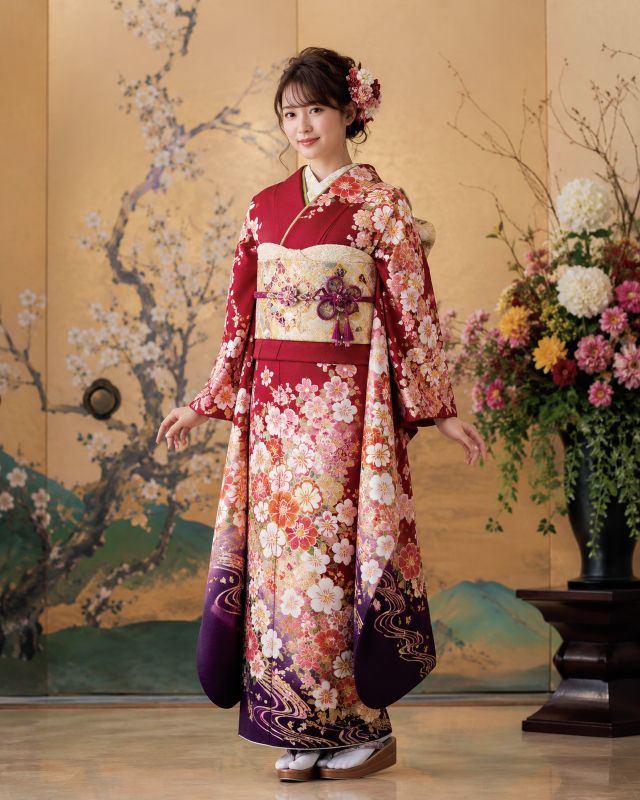
Furisode are formal kimono for unmarried women. They are easy to recognize because of their very long sleeves and bright, beautiful patterns.
Furisode are often worn at coming-of-age ceremonies, graduation events, and weddings where the wearer is a guest. The long sleeves are not only decorative; they also carry traditional meanings connected to purity, youth, and celebration.
Tomesode
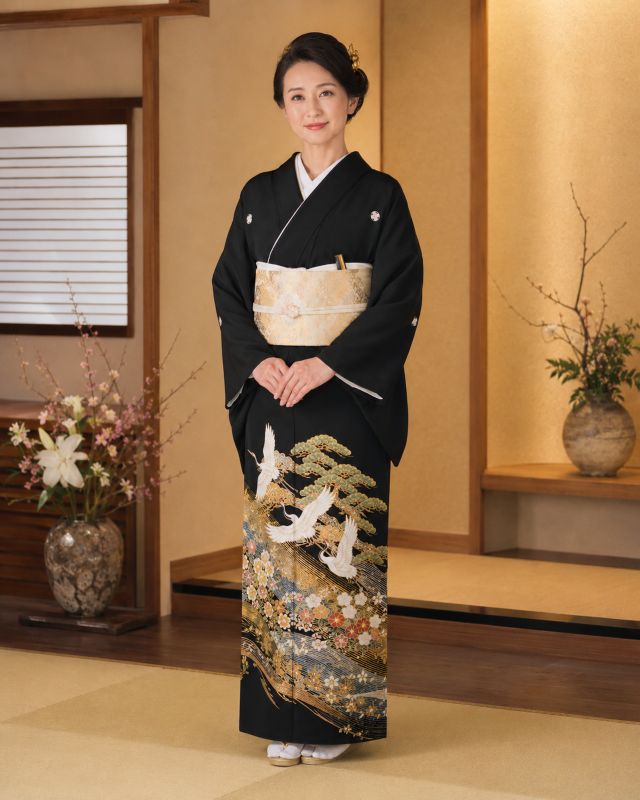
Tomesode are highly formal kimono, often worn by married women. The most formal type is the kurotomesode, a black tomesode with patterns mainly near the hem.
Kurotomesode are commonly worn by the mothers or close female relatives of the bride and groom at weddings.
Homongi
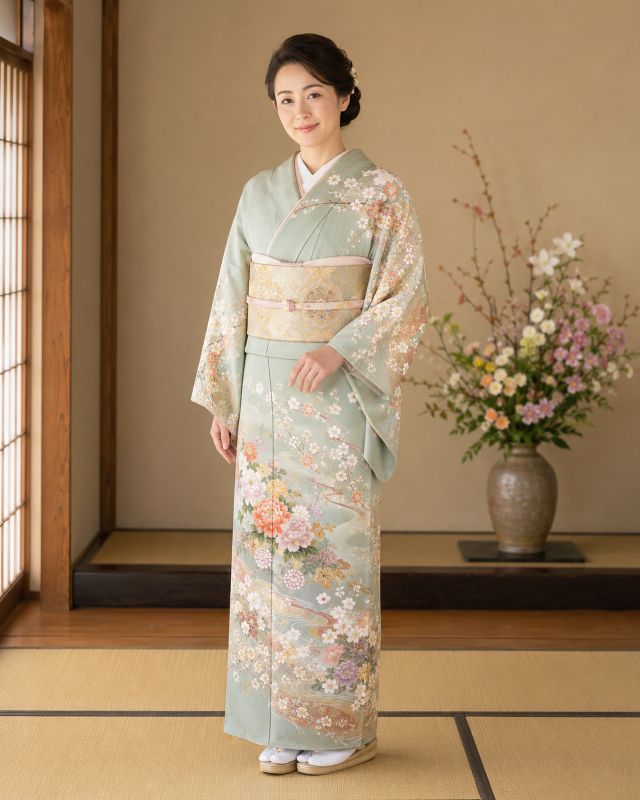
Homongi are semi-formal kimono that can be worn by both married and unmarried women. The patterns often flow across the shoulders, sleeves, chest, and hem like one connected picture.
Homongi are suitable for wedding receptions, tea gatherings, school ceremonies, formal meals, and other elegant social occasions.
Tsukesage
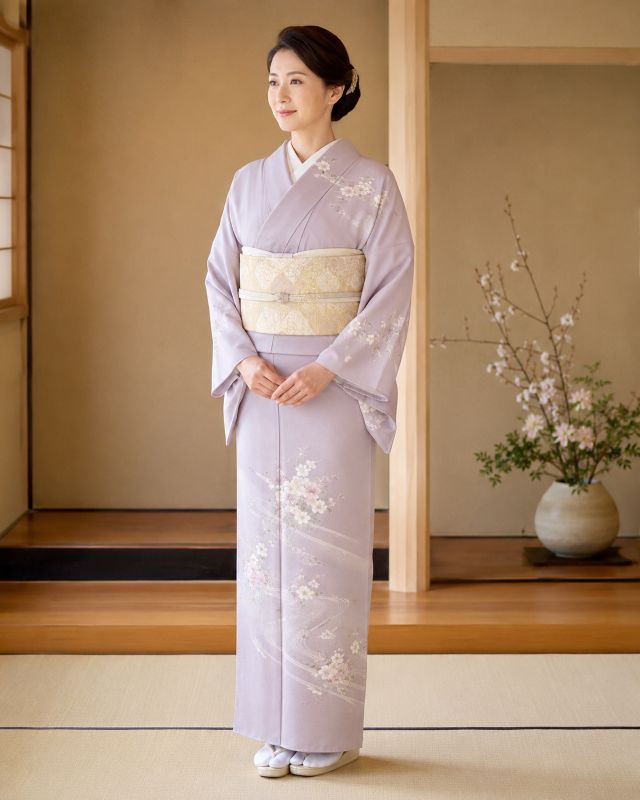
Tsukesage are slightly more modest than homongi. They are often used for similar occasions but give a more understated impression.
They can be a good choice for formal meals, school events, cultural gatherings, and situations where the wearer wants to look refined without being too showy.
Iromuji
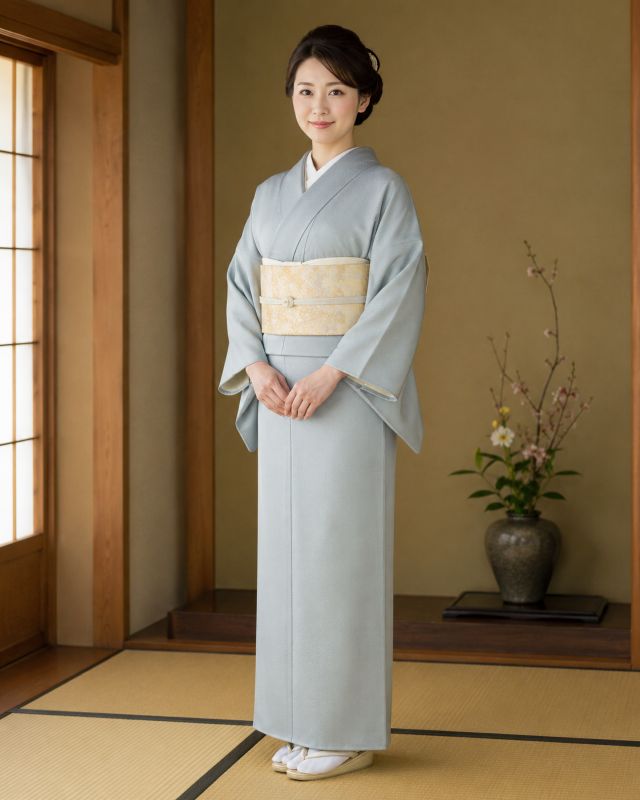
Iromuji are single-color kimono without visible patterns. They may look simple, but they are very versatile.
With a family crest, an iromuji can be worn for semi-formal occasions such as tea ceremonies or graduation ceremonies. Without a crest, it can also be styled more casually.
Komon
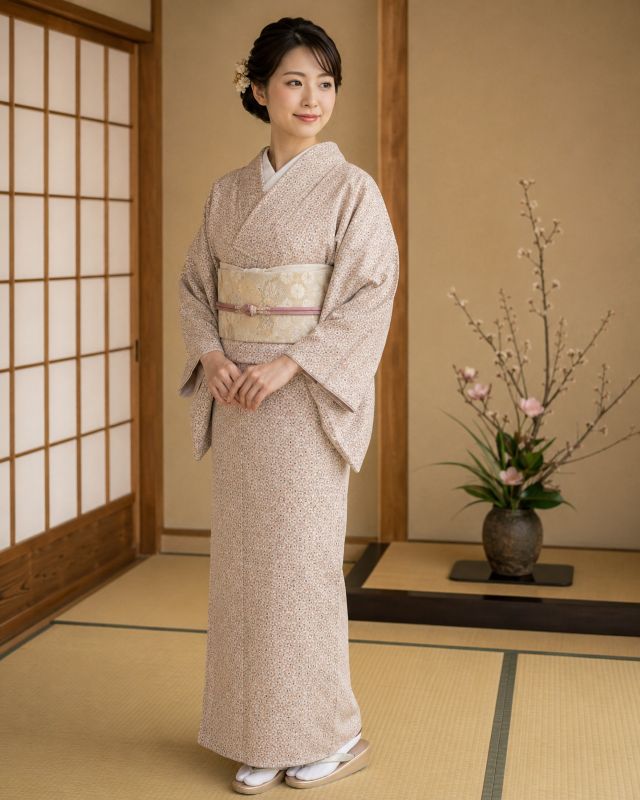
Komon are casual kimono with repeated patterns all over the fabric. They are often compared to a nice dress in Western fashion.
Komon are suitable for relaxed outings such as lunch with friends, theater visits, dates, shopping, or walking around town.
Tsumugi
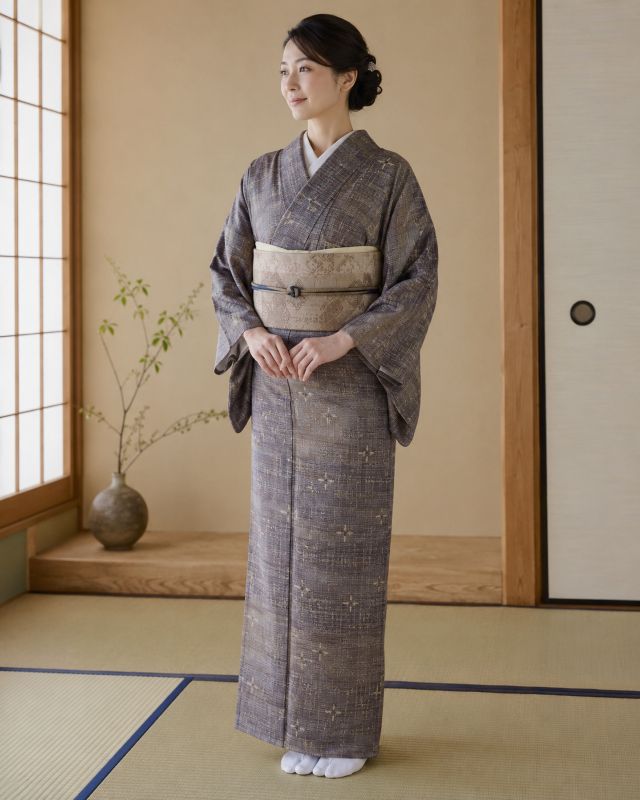
Tsumugi are woven kimono made from pre-dyed threads. They are known for being durable, comfortable, and often more casual.
A tsumugi kimono is not usually worn for formal ceremonies, even if it is expensive. It is more like stylish everyday clothing, suitable for casual outings, cafés, travel, or relaxed cultural events.
“`
7. Do Men Wear Kimono?
Yes, men also wear kimono. Men’s kimono are usually simpler in color and pattern than women’s kimono, but they have their own elegance.
For very formal occasions, men may wear a black kimono with family crests, a haori jacket, and hakama. This formal outfit is often seen at weddings, ceremonies, and traditional events.
A haori is a short coat worn over the kimono, somewhat like a jacket. Hakama are traditional pleated garments worn over the lower body. They can look like wide trousers or a divided skirt.
Men may also wear kimono in tea ceremony, martial arts, traditional performances, graduation ceremonies, or as stylish casual clothing.
8. How Is a Kimono Worn?
A kimono is not simply put on like a bathrobe. It is made from mostly flat pieces of fabric, and the wearer adjusts that flat shape to the body using folds, ties, and accessories.
The ideal kimono silhouette is often smooth and straight rather than curvy. For that reason, people may use towels, special undergarments, or padding to create a balanced, tube-like shape.
A typical kimono outfit may include:
- Hadagi or simple undergarments worn closest to the skin
- Nagajuban, a long under-kimono
- Koshihimo, thin ties used to hold the kimono in place
- Datejime, a wider sash used to smooth and secure the layers
- Obi, the wide belt worn around the waist
- Obiita, a board that keeps the front of the obi flat
- Obimakura, a small pillow used to shape certain obi knots
Because many pieces must be adjusted carefully, formal kimono dressing can be difficult for beginners. For important events, many people ask a professional kimono dresser to help.
One very important rule is the direction of the front overlap. When wearing kimono, the left side goes over the right side. Wearing it the opposite way is associated with dressing the dead, so it is considered a serious mistake.
9. What Is an Obi?
An obi is the wide belt or sash worn around a kimono. It holds the kimono in place, but it is much more than a practical belt.
The obi is one of the most important parts of kimono styling. Its color, material, pattern, and knot can change the whole impression of the outfit.
For formal kimono, a fukuro obi is often used. It is long and elegant, and it is commonly tied in a style called nijū-daiko, or double drum knot. This knot is often used for celebratory occasions because the double layer can suggest repeated happiness.
For less formal or casual kimono, a nagoya obi is very common. It is easier to handle than a formal fukuro obi and is often used with komon or tsumugi kimono.
10. Kimono Accessories: Tabi, Zori, Geta and More
A kimono outfit includes many accessories. Some are visible and decorative, while others are hidden but important for keeping the outfit in place.
“`
Tabi
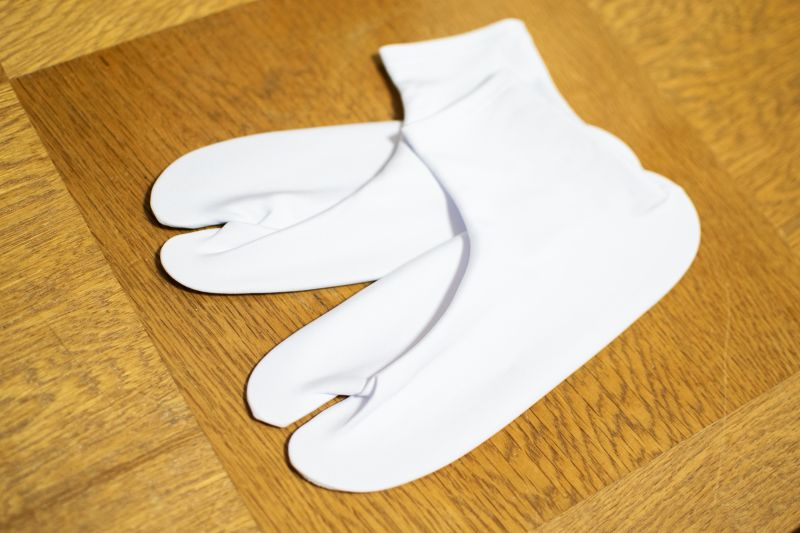
Tabi are traditional split-toe socks. They are usually white for formal kimono and are worn with sandals such as zori.
Zori
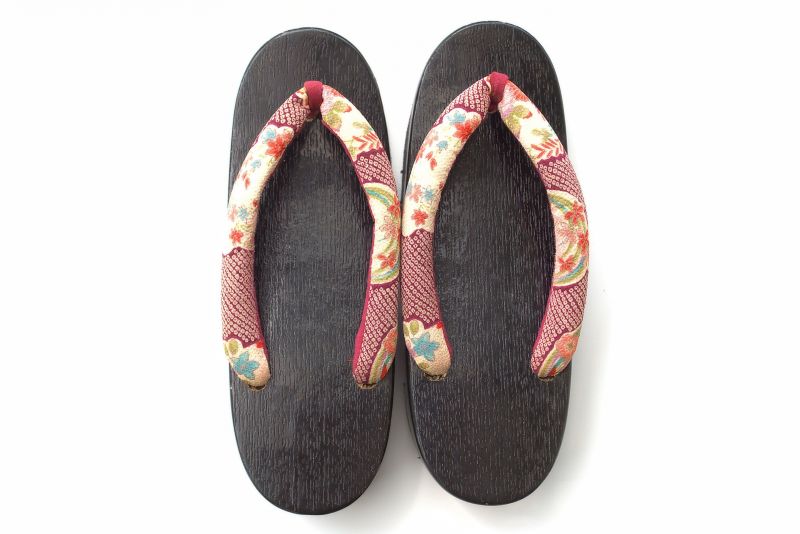
Zori are traditional sandals often worn with kimono. Higher and more elegant zori are usually used for formal occasions, while lower styles are more casual.
Geta
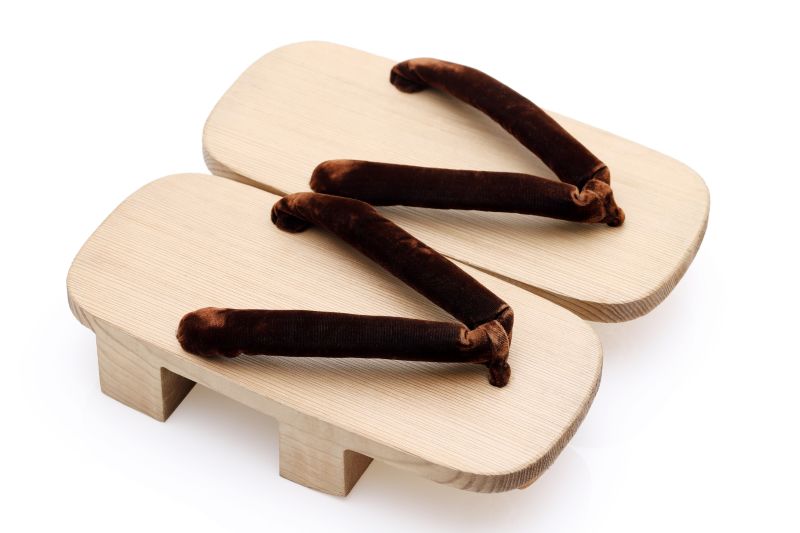
Geta are wooden sandals. They are often worn with yukata, especially at summer festivals or in hot spring towns.
Nagajuban
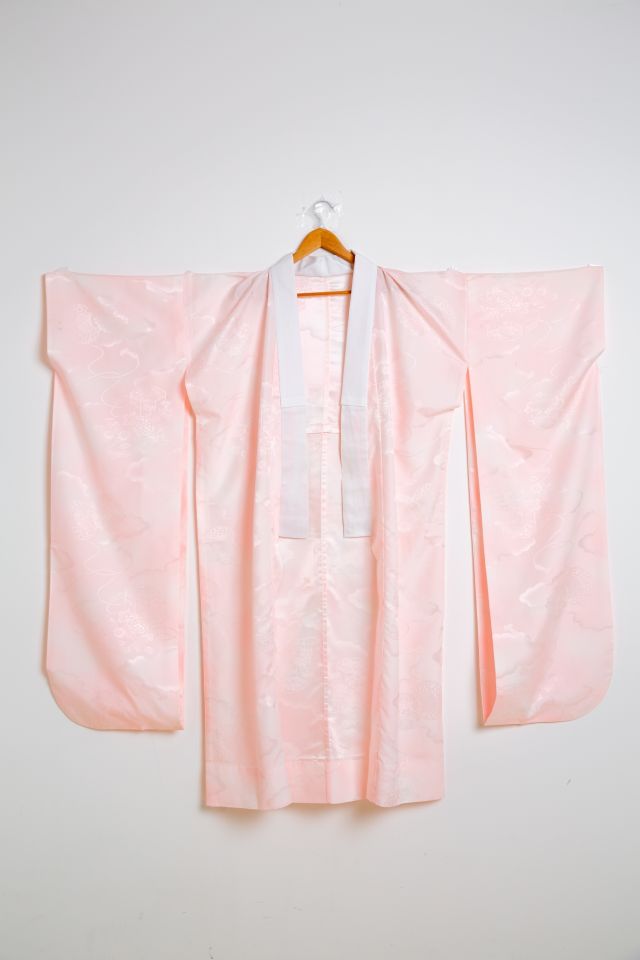
Nagajuban is the long under-kimono worn beneath the outer kimono. It helps protect the kimono from sweat and body oils, and its collar can be seen at the neckline.
Haneri
Haneri is a decorative and protective collar attached to the nagajuban. A plain white haneri is common for formal outfits, while colorful, embroidered, or lace designs may be used for casual styling.
Obijime and Obiage
Obijime is a cord tied around the obi to help secure the knot. Obiage is a piece of fabric used to cover and support part of the obi structure. Both are also important for adding color and balance to the outfit.
“`
11. What Are Kimono Made Of?
Kimono can be made from different materials depending on the season, formality, budget, and purpose.
Silk is the classic high-quality material for formal kimono. It has a beautiful texture and shine, but it can be expensive and needs careful maintenance.
Cotton is more casual and easier to handle. Yukata are often made from cotton because it is breathable and comfortable in summer.
Wool has also been used for everyday kimono, especially for colder seasons or casual wear.
Polyester is common in modern washable kimono. It is practical, more affordable, and easier for beginners or tourists who do not want to worry too much about stains and cleaning.
The material matters because it affects not only comfort, but also formality. A fine silk kimono may be suitable for a ceremony, while a cotton or polyester garment may be better for casual wear or rental experiences.
12. How Much Does a Kimono Cost?
The price of a kimono can vary a lot. A simple second-hand kimono may be surprisingly affordable, while a new formal silk kimono can be very expensive.
A new formal furisode can cost around 200,000 to 500,000 yen or more. Other formal or semi-formal kimono, such as homongi, may also cost tens or hundreds of thousands of yen depending on fabric, dyeing, weaving, and craftsmanship.
However, not every kimono is that expensive. Vintage kimono and recycled kimono can sometimes be found for just a few thousand yen to several tens of thousands of yen. This is one reason many people enjoy collecting and styling second-hand kimono.
For travelers, kimono rental is often the easiest option. In tourist areas, rental plans may start around 5,000 yen, often including dressing help, hair styling, and accessories depending on the shop and plan.
Buying a kimono is more personal and can be meaningful, especially if it is tailored to your size. Renting is easier, more affordable, and practical for a one-day cultural experience.
13. Can Tourists Wear Kimono in Japan?
Yes, tourists can wear kimono in Japan. In many tourist areas, kimono rental is a popular and normal experience. Places such as Kyoto, Asakusa, Kamakura, and hot spring towns often have rental shops for visitors.
Rental shops usually help with dressing, because wearing kimono correctly can be difficult for beginners. Some plans also include hairstyling, hair accessories, bags, sandals, and seasonal options.
For many visitors, wearing kimono is a memorable way to enjoy traditional streets, temples, shrines, gardens, and photos. It is also a chance to understand that kimono is not just a costume, but a living part of Japanese culture.
That said, it is good to wear kimono respectfully. Walk carefully, avoid damaging the garment, follow the rules at temples and shrines, and remember the important dressing rule: left side over right.
If you are unsure whether you rented a kimono or a yukata, the season and style are good clues. If it is summer, made of cotton, worn casually, and paired with geta, it may be a yukata. If it has more layers, a formal obi, tabi, and zori, it is more likely to be a kimono.