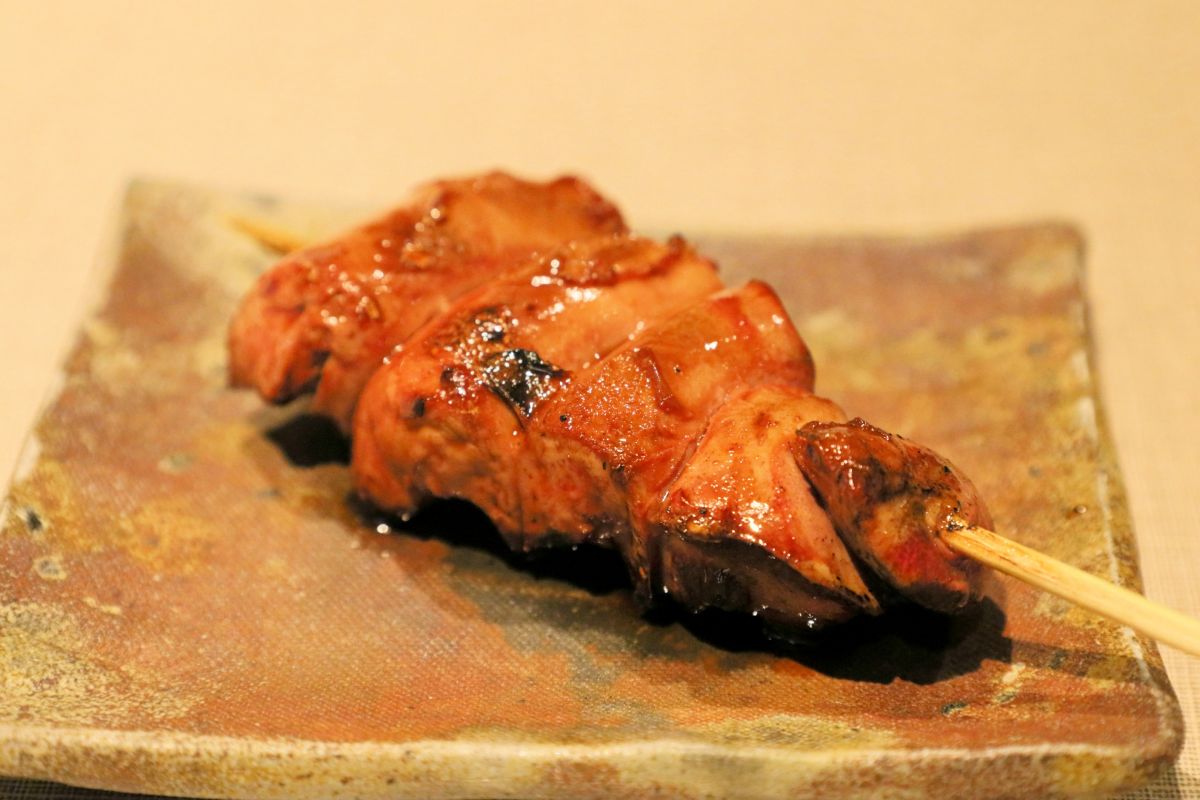
Chicken liver yakitori is a rich offal skewer often found at Japanese yakitori restaurants. In Japan, it is called reba, and it is usually enjoyed with sweet-savory tare sauce or simple salt. It has a bold flavor, but with the right prep and cooking, it becomes much easier to enjoy.
What Is Chicken Liver Yakitori?
Chicken liver yakitori is grilled chicken liver served on a skewer. At Japanese yakitori restaurants, it is usually written as レバー or reba. In English, it can simply be described as chicken liver yakitori.
Compared with chicken thigh or breast skewers, liver has a much richer taste. When cooked well, it is soft, moist, and slightly creamy. If it is not prepared properly, it can taste bloody, metallic, or too gamey.
What Does “Reba” Mean on Japanese Yakitori Menus?
Reba is the Japanese menu word for liver. It comes from the English word “liver,” but it is pronounced in a Japanese way. If you see レバー on a yakitori menu in Japan, it usually means chicken liver skewer.
Here are a few useful phrases for ordering:
| Meaning | Japanese / Romaji |
|---|---|
| Chicken liver, please. | Reba kudasai. / レバーください。 |
| With tare, please. | Tare de onegaishimasu. / タレでお願いします。 |
| With salt, please. | Shio de onegaishimasu. / 塩でお願いします。 |
| Please cook it well done. | Yoku yaki de onegaishimasu. / よく焼きでお願いします。 |
If you are worried about undercooked chicken liver, “yoku yaki de onegaishimasu” is a useful phrase. It means “please cook it well done.”
What Does Chicken Liver Yakitori Taste Like?
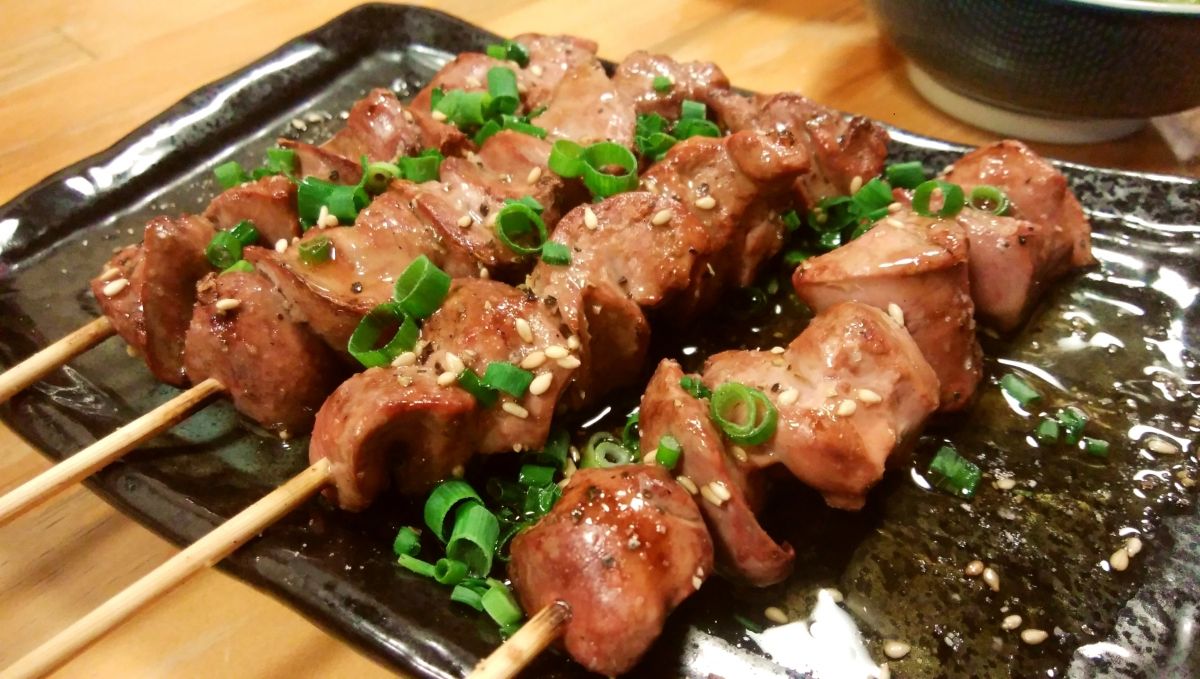
Chicken liver yakitori tastes rich, savory, and slightly iron-like. In English, it is often described as rich, creamy, or slightly metallic.
- It has a bold, concentrated flavor.
- The texture is soft, moist, and creamy.
- It can have a slight metallic taste from its iron content.
- Tare sauce makes the flavor milder and easier to enjoy.
- Salt lets you taste the liver more directly.
If you are trying chicken liver yakitori for the first time, tare is usually the easiest choice. The sweet soy-based sauce softens the stronger liver flavor. If you already enjoy liver, shio, or salt, is also a great option.
Chicken Liver Yakitori vs Other Yakitori Offal Skewers
Yakitori restaurants often serve several offal or giblet skewers besides liver. Heart and gizzard are especially common, and each one has a very different texture.
Reba vs Hatsu, Sunagimo, and Tsunagi
| Japanese Name | English | Main Feature |
|---|---|---|
| Reba | Chicken liver | Rich, soft, and creamy |
| Hatsu | Chicken heart | Springy, firm, and meaty |
| Sunagimo | Chicken gizzard | Crunchy, lean, and mild |
| Tsunagi / Kokoro nokori | Connecting vessel between heart and liver | Elastic, savory, and slightly fatty |
Reba is the richest and softest of these skewers. Hatsu, or chicken heart, has a firmer bite. Sunagimo, or gizzard, is crunchy and mild. Tsunagi, also called kokoro nokori, is a less common part that connects the heart and liver.
If liver feels intimidating, hatsu or sunagimo can be an easier starting point. But if you like rich foods such as pâté, foie gras, or liver mousse, chicken liver yakitori may be right up your alley.
Is Chicken Liver Yakitori Safe to Eat Pink?
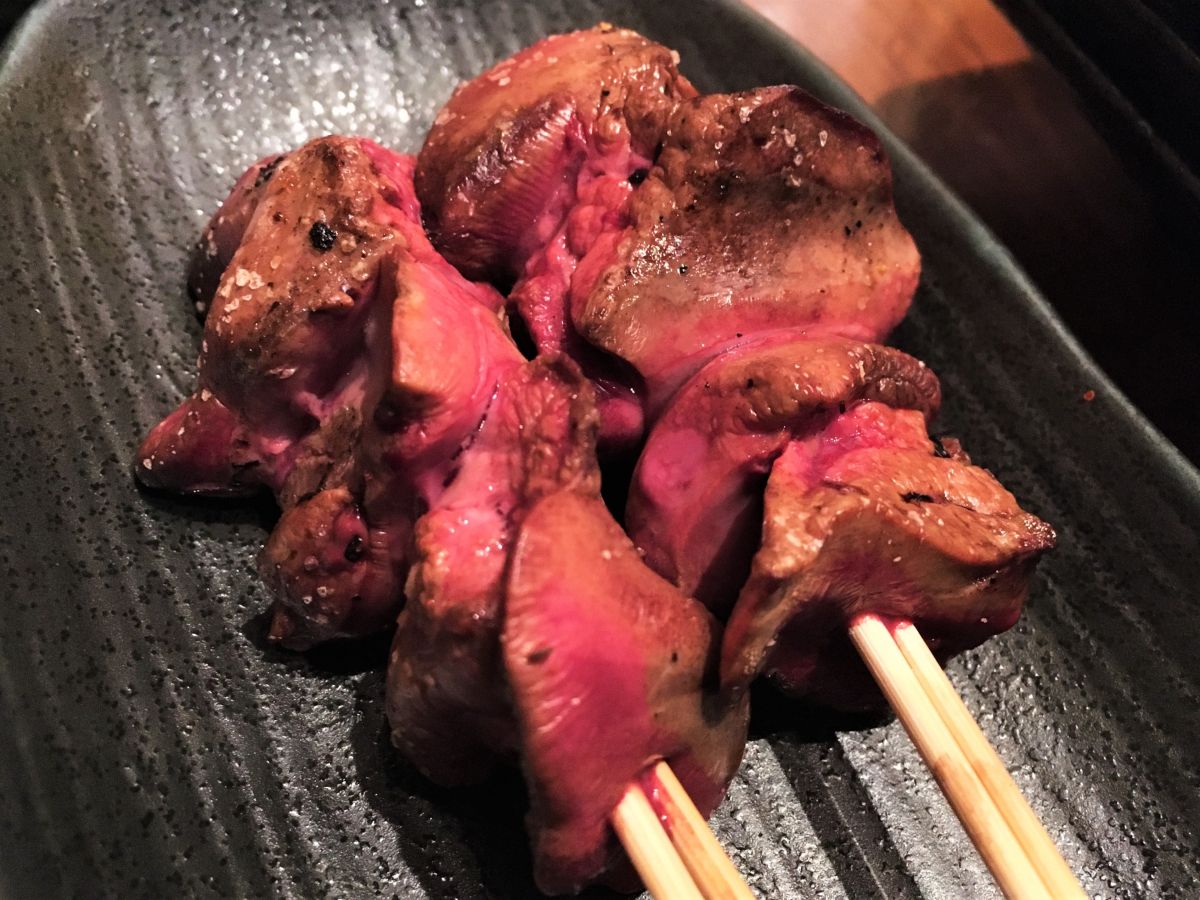
One of the biggest questions about chicken liver yakitori is doneness. In some Japanese yakitori restaurants, the center of the liver may look slightly pink. However, when cooking at home, it is safer to cook chicken liver thoroughly to reduce the risk of food poisoning.
Why Undercooked Chicken Liver Is Risky
Chicken liver can carry harmful bacteria such as Campylobacter. Freshness alone does not guarantee safety. Eating raw or undercooked chicken liver can cause symptoms such as diarrhea, stomach pain, and fever.
That is why it is not a good idea to judge safety by color alone. A pink center does not automatically mean the liver is unsafe, but it also does not prove that it is safe.
Safe Internal Temperature for Chicken Liver Yakitori
For home cooking, checking the internal temperature is the safest approach. A useful target is to heat the center of the liver to 75°C / 167°F for at least 1 minute. If you cook at a lower temperature, the liver needs to be held there longer.
| Internal Temperature | Holding Time |
|---|---|
| 75°C / 167°F | 1 minute or more |
| 70°C / 158°F | 3 minutes or more |
| 63°C / 145°F | 30 minutes or more |
A food thermometer can remove a lot of guesswork. Flavor matters, of course, but chicken liver is one ingredient where safe cooking should come first.
How to Prevent Cross-Contamination at Home
When handling chicken liver, cooking temperature is not the only safety point. Cross-contamination can happen when bacteria from raw liver move to cutting boards, knives, hands, plates, or other foods.
- Use a separate cutting board and knife for raw liver.
- Wash your hands well after touching raw liver.
- Use separate tongs or chopsticks for raw and cooked skewers.
- Do not place cooked skewers back on a plate that held raw liver.
These steps may feel small, but they matter when making chicken liver yakitori at home.
How to Prepare Chicken Liver for Yakitori
Good preparation makes chicken liver much more enjoyable. Removing blood clots and tough parts, then soaking the liver in milk or salt water, can reduce the gamey or metallic flavor.
How to Remove the Gamey or Metallic Flavor
The strong flavor of liver mainly comes from blood and iron-rich components. First, remove visible blood clots and stringy parts, then rinse the liver gently under cold water. After that, soak it in milk or salt water and pat it dry very well.
- Cut the chicken liver into bite-size pieces.
- Remove blood clots and stringy parts.
- Rinse gently under cold water.
- Soak in milk or salt water.
- Pat dry thoroughly with paper towels.
If the surface is too wet, the liver may steam instead of grill. It can also stick more easily to the grill or pan, so drying it well is important.
Milk Soaking Method
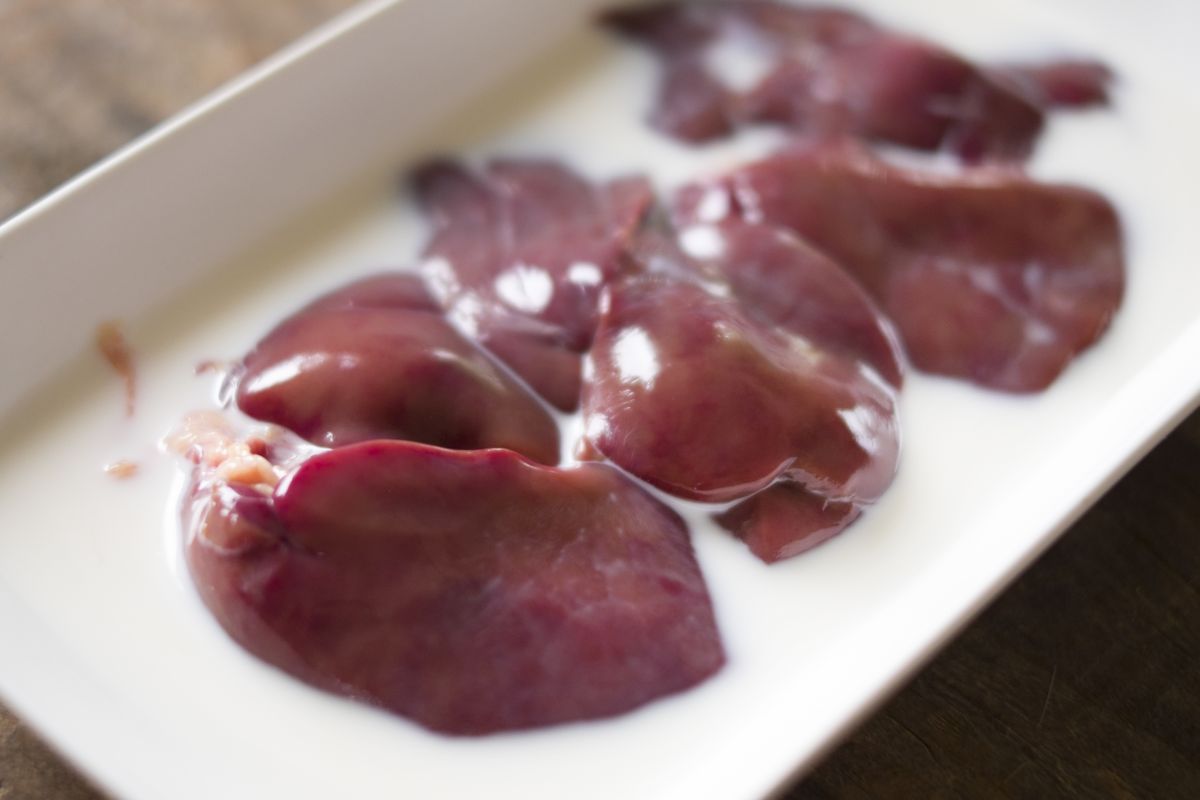
Soaking liver in milk is useful when you want to soften its stronger flavor. Milk contains casein, which can help bind some odor-causing compounds.
- Place the cleaned liver in a bowl.
- Add enough milk to cover it.
- Soak in the refrigerator for 1 to 3 hours.
- Discard the milk and pat the liver dry.
This method is especially helpful if you are not used to liver or if you dislike its metallic taste.
Salt Water Method
The salt water method is quicker than milk soaking. It helps draw out extra blood and moisture while keeping more of the natural liver flavor.
- Add cold water and salt to a bowl.
- Add the cleaned liver pieces.
- Soak for about 20 minutes.
- Drain and pat dry thoroughly.
As a simple rule, choose milk for a milder taste and salt water if you want to keep more of the liver’s natural character.
How to Skewer Chicken Liver Yakitori Without Breaking It
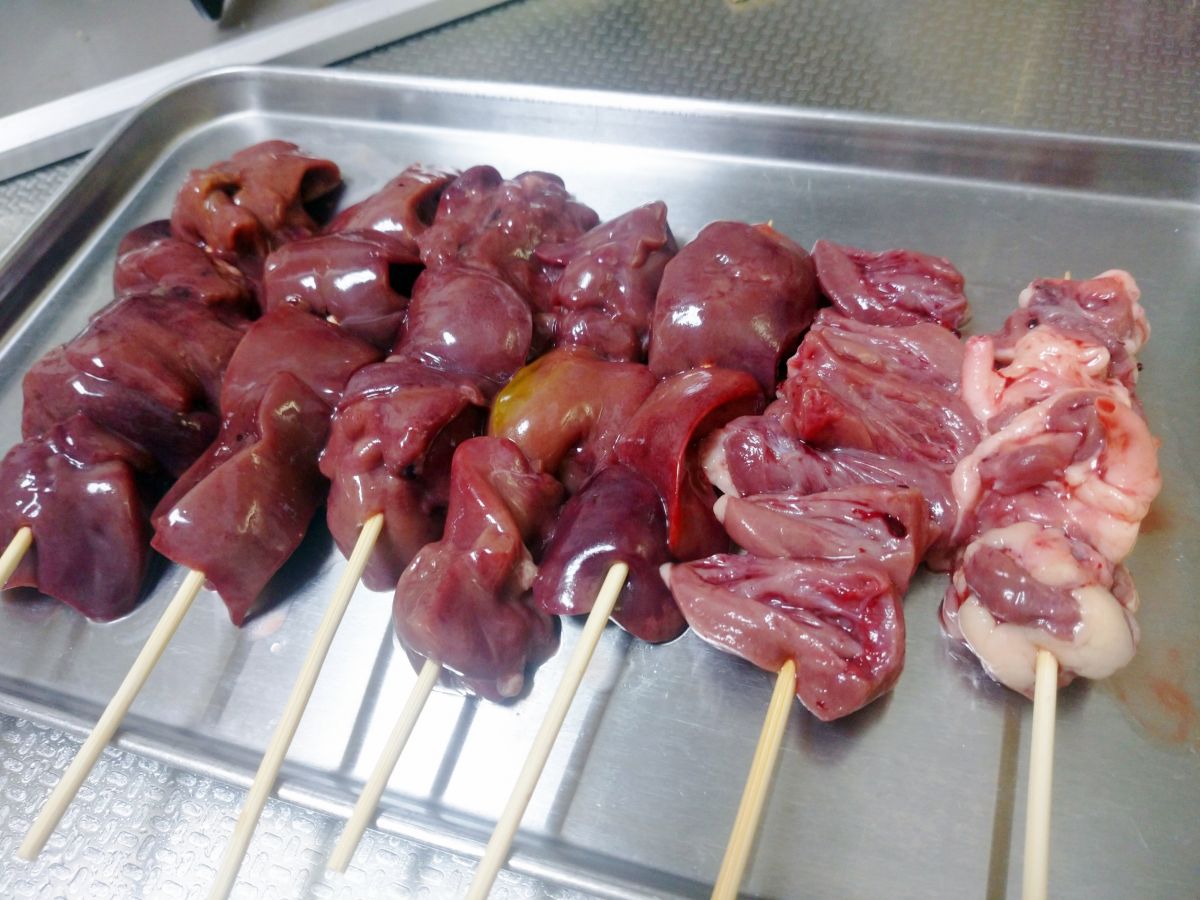
Chicken liver is soft and easy to break when skewered. The key is to be gentle and guide the skewer through the center without forcing it.
Why Chicken Liver Is Hard to Skewer
Liver has a delicate structure compared with muscle meat. If you push too hard, it can tear and fall off during grilling. It also shrinks as it cooks, so keeping the pieces similar in thickness helps them stay secure and cook evenly.
Japanese Skewering Technique
Some yakitori shops make liver skewers with chicken heart attached. Heart is firmer than liver, so placing it near the handle side of the skewer can help support the softer liver pieces.
- If using chicken heart, place it near the handle side.
- Add smaller liver pieces next.
- Place larger, thicker liver pieces toward the tip.
- Keep the thickness as even as possible.
Soak bamboo skewers in water before using them so they are less likely to burn. When skewering liver, do not force the skewer straight through. A gentle twisting motion helps prevent tearing.
How to Grill Chicken Liver Yakitori at Home
Good chicken liver yakitori should be moist, lightly browned, and cooked safely through the center. High heat can dry it out quickly, so low to medium heat is usually easier to control.
Charcoal Grill, Broiler, or Pan?
A charcoal grill gives the most authentic yakitori aroma, but you can also use a broiler, fish grill, or frying pan at home. Charcoal gives more smokiness, while a pan gives you better control over the heat.
If using a broiler or fish grill, preheat it first. A hot surface helps the outside set quickly, which can reduce sticking and improve the final texture.
How to Keep Chicken Liver Moist, Not Dry
Liver becomes dry when it is overcooked and loses too much moisture. At the same time, undercooking should be avoided, so the goal is gentle heat plus a safe internal temperature.
- Cook over low to medium heat.
- Preheat the grill or pan before cooking.
- Turn the skewers gently without pressing them down.
- Brush tare near the end because it burns easily.
- Check the internal temperature.
The goal is not to make it rare. The goal is to cook it safely while keeping it as moist as possible.
How to Prevent Sticking
Chicken liver contains a lot of moisture, so it can stick to a grill or pan. Drying the surface, preheating the cooking surface, and using a thin layer of oil can help.
- Pat the liver dry before skewering.
- Lightly oil the grill or pan.
- Preheat well before cooking.
- Do not move the skewers too early.
- Brush tare at the end.
If the liver does not release easily, wait a little longer. Moving it too soon can tear it apart.
Tare Sauce for Chicken Liver Yakitori
Tare is one of the easiest ways to enjoy chicken liver yakitori, especially for beginners. This sweet soy-based sauce balances the rich liver flavor and makes the skewer more approachable.
What Is Tare?
Tare is a sweet-savory yakitori sauce made by simmering soy sauce, mirin, sake, and sugar. When brushed onto liver near the end of grilling, it adds shine, aroma, and a deep savory-sweet taste.
For chicken liver, tare rounds out the strong iron-like flavor and makes it easier to eat. Since tare burns easily, it is better to brush it on near the end rather than at the beginning.
Basic Yakitori Tare Ratio
A simple and reliable ratio is soy sauce : mirin : sake : sugar = 2 : 2 : 1 : 1.
| Ingredient | Amount |
|---|---|
| Soy sauce | 4 tablespoons |
| Mirin | 4 tablespoons |
| Sake | 2 tablespoons |
| Sugar | 2 tablespoons |
Add the ingredients to a small saucepan and heat over medium heat. Once it starts to simmer, lower the heat and stir until the sauce becomes slightly thick and glossy. Be careful not to use heat that is too high, because the sugar can burn.
Optional Aromatics
For a more fragrant tare, add aromatics after the sauce has simmered:
- Grated garlic
- Grated ginger
- Chopped green onion or scallion
Garlic and ginger can help soften the metallic taste of liver. Green onion adds a more classic yakitori-style aroma.
Tare or Salt: Which Is Better?
If you are trying chicken liver yakitori for the first time, tare is usually easier to enjoy. Its sweet-savory flavor wraps around the liver and makes the taste feel more balanced.
Salt is better if you want to taste the liver itself more clearly. It works especially well with very fresh liver or richer styles such as white liver. If you are unsure, start with tare first.